
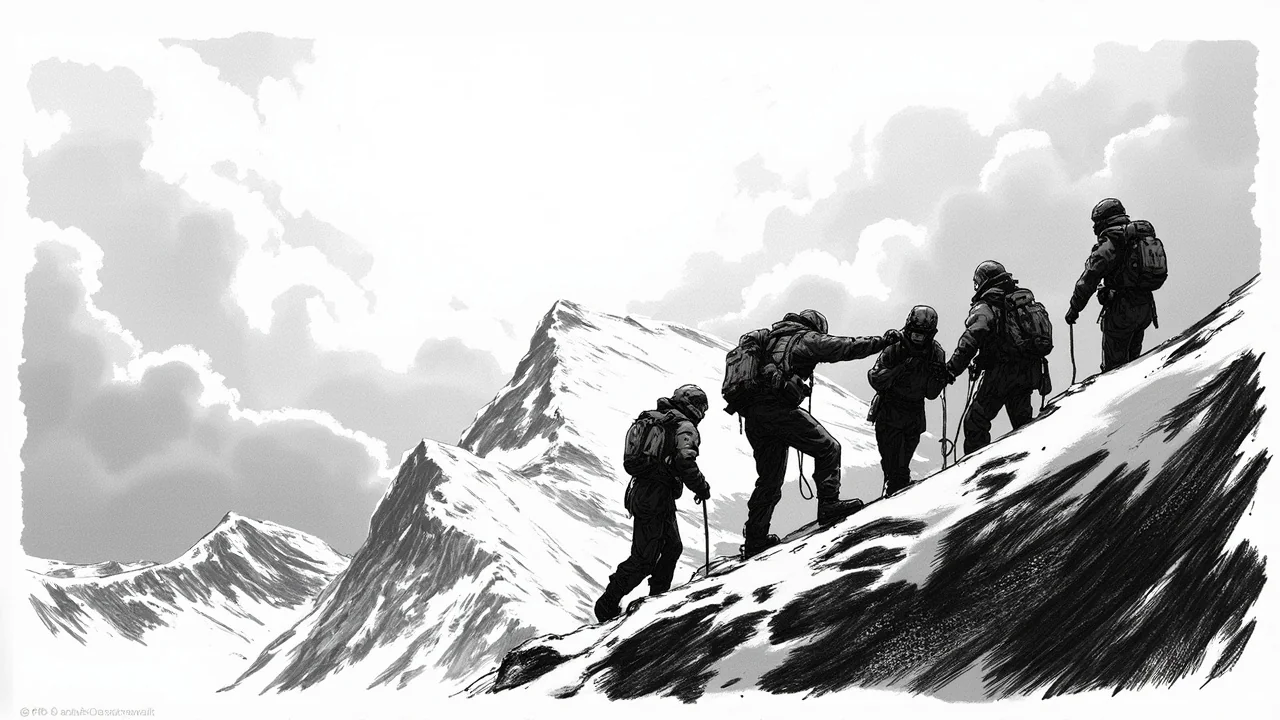
Norway's mountain rescue services located five foreign teenage boys on the summit of Gaustatoppen late Saturday night. The group, described as inadequately dressed for extreme winter conditions, triggered a major emergency response in minus 25-degree Celsius temperatures. Rescue helicopters and volunteer teams from the Voluntary Organisations' Rescue Forum (FORF) were mobilized in a coordinated operation to bring the hikers to safety.
Operational leader Sigurd Edvardsen confirmed the details. "We are working to locate five boys in their late teens," Edvardson said in a statement. "Volunteer crews are in the process of taking the Gaustabanen funicular up to start the search in the area." The alarm was raised after someone from the hiking party called the national emergency number AMK. Rescuers established telephone contact with members of the group, who reported being cold on the exposed summit.
"We wish to get them down as quickly as possible," Edvardsen stated, emphasizing the urgency. "It is about trying to get them located and get them down." A rescue helicopter was dispatched and expected to arrive at the scene by 20:10. The Local Rescue Centre (LRS) coordinated the complex operation, which involved both aerial and ground-based assets navigating treacherous terrain in darkness and severe cold.
A Race Against Extreme Cold
The core challenge for rescuers was the lethal combination of inadequate clothing and extreme temperatures. Weather service Yr reported temperatures of minus 25 degrees Celsius on Gaustatoppen at the time of the incident. This level of cold presents an immediate risk of hypothermia and frostbite, especially for individuals not equipped with proper thermal layers, wind protection, and insulated footwear.
Gaustatoppen, standing at 1,883 meters in Telemark county, is a popular but demanding hiking destination. Its exposed summit plateau is notorious for rapidly changing weather. Summer trails become hazardous winter routes requiring specific skills and equipment. The iconic mountain, offering views over one-sixth of Norway's mainland, transforms into an arctic environment in winter. The fact the group was "not dressed for the weather," as stated by officials, points to a critical lack of preparation for these conditions.
The Norwegian Rescue Model in Action
This incident showcases Norway's integrated emergency response system for mountain and wilderness incidents. The operation activated multiple layers: the police operational command, the Norwegian Rescue Helicopter Service, the Local Rescue Centre (LRS), and the Frivillige Organisasjoners Redningsfaglige Forum (FORF). FORF is a collective of volunteer rescue organisations with specialized terrain knowledge, crucial for searches in difficult landscapes.
The use of the Gaustabanen funicular, a railway that tunnels up the mountain, was a strategic move to rapidly insert volunteer ground teams closer to the summit. This allowed for a simultaneous approach from air and land. Norway's rescue philosophy emphasizes using local volunteer expertise alongside professional emergency services, a model honed over decades to address the specific dangers of its vast and rugged outdoors.
A Persistent Safety Challenge
This rescue operation, while successful, underscores an ongoing public safety issue in Norway. The country's right to roam, or 'allemannsretten,' encourages outdoor access but comes with the responsibility of being prepared. Every year, rescue services respond to hundreds of incidents involving tourists and inexperienced hikers who underestimate Norwegian mountain conditions.
The Norwegian Trekking Association (DNT) and authorities continuously campaign about the need for proper equipment and checking forecasts. The "Ten Golden Rules" for mountain hiking are widely promoted, stressing the need to plan according to ability, bring necessary equipment for bad weather and cold, and turn back in time. Incidents involving foreign visitors often highlight gaps in understanding just how severe and fast conditions can change, even on mountains with established infrastructure like Gaustatoppen.
The Broader Implications for Mountain Tourism
Gaustatoppen is a significant tourist draw, with the funicular making the summit accessible to many. This accessibility can create a false sense of security. Visitors may see a railway and assume the ascent is safe without special preparation, not realizing the alpine environment that awaits at the top. The mountain's southern location does not protect it from arctic blasts.
Local municipalities and tourism boards face the delicate task of promoting natural attractions while ensuring visitor safety. There is an increasing focus on providing clearer, multi-lingual risk communication at trailheads and points of departure like the funicular station. Some experts advocate for more direct interventions during extreme weather warnings, such as advising against summit trips for poorly equipped groups.
Analysis: When Accessibility Meets Harsh Reality
This event is a classic case of infrastructure creating a perception gap. The Gaustabanen funicular, an engineering marvel, allows people to ascend nearly 1,000 vertical meters with minimal physical effort. However, it does not change the fundamental nature of the high-mountain climate. The five teenagers likely embarked on what they perceived as a straightforward excursion, not a serious winter mountaineering challenge.
Norway's rescue services are among the world's best, but their resources are finite. Each large-scale operation in extreme weather diverts personnel and equipment, potentially risking other emergencies. While rescue is always free of charge for the individual in Norway, funded by the state, the societal cost is high. It reinforces the argument for preventative measures, including stronger educational outreach targeted at international visitors through hostels, rental services, and digital platforms.
The successful location and evacuation of the group will be recorded as another effective mission. Yet, it also serves as a stark reminder. Norway's breathtaking nature demands respect. The difference between a memorable adventure and a life-threatening situation can be as simple as a windproof jacket, an extra wool layer, and the wisdom to postpone a trip when conditions are beyond one's experience and gear. As spring approaches with its deceptive weather, the lessons from this cold night on Gaustatoppen remain vitally relevant for all who seek the Norwegian mountain experience.