
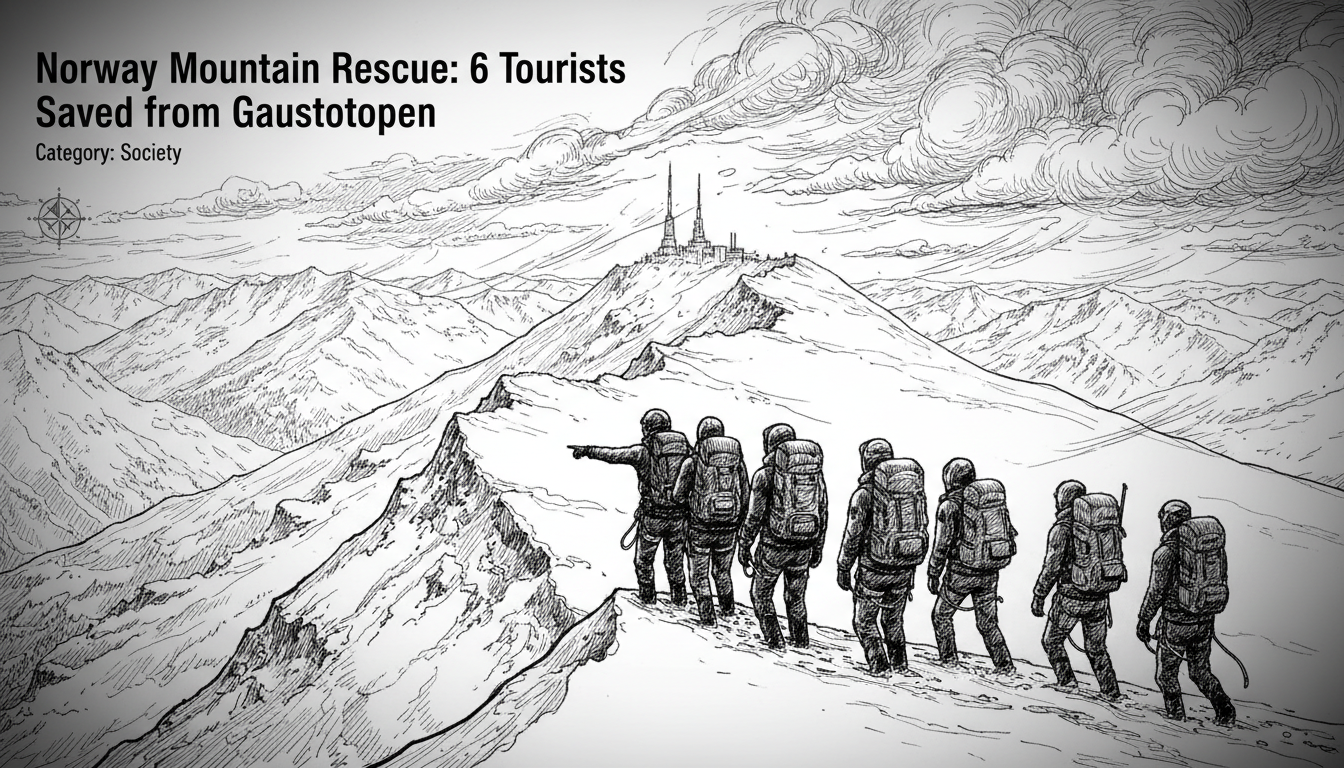
Norway mountain rescue teams successfully saved six foreign tourists stranded on Gaustatoppen on New Year's Eve. The group was stuck in -10 degree Celsius temperatures and high winds on the exposed peak, prompting a major emergency response that concluded just hours before midnight.
Emergency services received the alert around 2:30 PM local time. Police and medical personnel mobilized immediately for the high-altitude operation. By 5:00 PM, all six tourists were safely brought down from the mountain in good condition, according to official statements. The successful rescue on a holiday afternoon prevented a potential tragedy on one of Norway's most recognizable peaks.
A Race Against Time and Weather
The operation unfolded under challenging winter conditions. Gaustatoppen, standing at 1,883 meters (6,178 feet), is notorious for its rapidly shifting weather. On December 31st, the stranded group faced a dangerous combination of sub-zero temperatures and significant wind chill. These factors dramatically increase the risk of hypothermia and frostbite for unprepared hikers.
Rescue coordinators had limited daylight hours to work with during the short Nordic winter day. The team's efficiency in locating and extracting the tourists within two and a half hours was critical. Mountain rescue services in Telemark county, where Gaustatoppen is located, are highly trained for such scenarios, but each operation carries inherent risks for both rescuers and those in distress.
The Allure and Peril of Gaustatoppen
Gaustatoppen is a premier hiking destination, offering a 360-degree panoramic view of roughly one-sixth of mainland Norway. On a clear day, hikers can see from the Oslo fjord to the mountains of Jotunheimen. This very appeal, however, contributes to its dangers. The mountain's exposed, dome-like shape leaves no shelter from sudden storms, and its accessibility can lure inexperienced hikers into overestimating their capabilities.
“The weather in our mountains can change from calm to life-threatening in a matter of minutes, especially in winter,” said a representative from the Norwegian Trekking Association (DNT), who requested anonymity as they were not directly involved in this rescue. “Gaustatoppen is a beautiful but serious mountain. People see the well-trodden path in summer and don't realize that in winter, it's a completely different environment.”
Winter hiking in Norway requires specific skills and equipment, including navigation tools, insulated clothing, and an understanding of avalanche risk. The DNT and other organizations consistently promote the “Fjellvettreglene” – the Norwegian mountain safety code – which includes turning back in time, respecting the weather, and being prepared for bad weather and cold.
A Pattern of Preventable Rescues
This incident is not an isolated event. Rescue operations on Gaustatoppen and other popular Norwegian mountains occur with concerning frequency, particularly involving tourists unfamiliar with Arctic conditions. Just last autumn, multiple rescues were conducted in the same region after hikers were caught in early snowfalls.
Experts point to a gap between perception and reality. The postcard image of Norway's natural beauty sometimes overshadows the very real and present dangers of its wilderness. A lack of preparation is the most common factor in these emergencies. This includes insufficient clothing, inadequate footwear, no headlamps for fading light, and a failure to check the detailed, localized weather forecasts provided by the Norwegian Meteorological Institute.
“Checking the general weather for the region is not enough,” the DNT representative emphasized. “You must check the mountain weather forecast for the specific altitude you plan to reach. Wind speed and temperature at 1,800 meters are vastly different from conditions in the valley where you start your hike.”
The Cost and Ethos of Rescue
Norway operates a world-class volunteer-based rescue service, with organizations like Red Cross Rescue, Norwegian People's Aid, and local mountain rescue teams. These services are free for those rescued, a policy rooted in the Norwegian principle of “fellesskap” or community. The goal is to encourage people to call for help early, without fear of a crippling financial burden, which could lead to riskier attempts at self-extraction.
However, this system places a voluntary burden on hundreds of trained rescuers, who are called away from families and jobs, including on holidays like New Year's Eve. The financial cost of deploying helicopters, personnel, and equipment is borne by the state. While there is broad public support for the free rescue model, repeated incidents involving avoidable negligence spark ongoing debates about potential fines for blatant recklessness.
Lessons from a New Year's Eve Scare
The successful rescue on Gaustatoppen serves as a stark reminder ahead of the winter hiking season. For international visitors, understanding the environment is crucial. Norwegian nature is accessible under the right of common access (“Allemannsretten”), but this right comes with the responsibility to act with caution and respect.
Key preparations for winter hiking include:
- Consulting detailed mountain weather forecasts (yr.no or storm.no).
- Carrying a map, compass, and GPS, and knowing how to use them.
- Dressing in multiple insulating layers with wind and waterproof outer shells.
- Packing extra food, water, and emergency shelter.
- Informing someone of your planned route and return time.
As the rescued tourists likely welcomed the New Year with renewed perspective, their experience underscores a permanent truth about the Norwegian outdoors. Its beauty is matched by its severity, demanding preparation and humility from all who seek to explore it. The mountains do not compromise, and neither should a hiker's planning. Will this close call lead to greater awareness, or will the next emergency call come all too soon?