
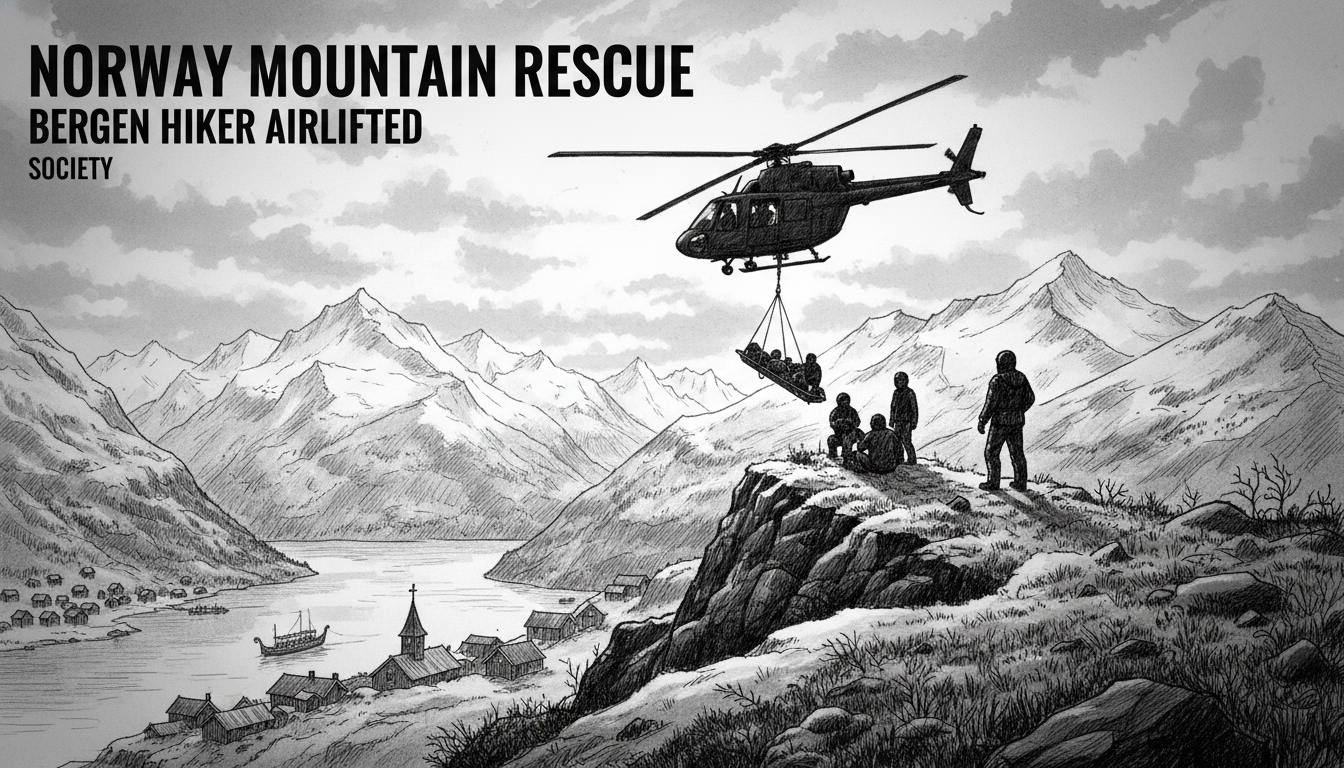
Norway mountain rescue teams launched a major operation after a hiker suffered a serious fall near the popular Turnerhytta cabin in Bergen's city mountains. The injured person was airlifted by helicopter to Haukeland University Hospital, the region's primary trauma center, on Tuesday. Police confirmed the rescue but have not disclosed the extent of the hiker's injuries. The individual was part of a self-sufficient hiking group, which required no further assistance from emergency services after the evacuation.
A Dramatic Evacuation in Rugged Terrain
The accident occurred in the iconic 'byfjellene' or city mountains that form a dramatic backdrop to Norway's second-largest city. These peaks, including Mount Ulriken and Mount Fløyen, are crisscrossed with trails used daily by thousands. Turnerhytta sits on the famous Vidden trail connecting these two landmarks. Rescuers faced the challenge of extracting an injured person from steep, rocky terrain where ground access is extremely difficult. The use of a helicopter was essential for a rapid evacuation, a common requirement in Norwegian mountain rescue operations coordinated by local police.
Weather conditions at the time of the incident, while not specified by authorities, are always a critical factor. Bergen is known for its rapid weather shifts, where fog, rain, and wind can descend on the mountains without warning. These changes turn familiar trails hazardous, increasing the risk of slips and falls. The successful airlift to Haukeland Hospital highlights the integrated emergency response system Norway maintains for such incidents, prioritizing speed in what medical professionals call the 'golden hour' after a traumatic injury.
The Allure and Risk of Norway's Outdoor Culture
This accident underscores a national paradox. Norwegians have a deep-seated cultural connection to nature, encapsulated in the concept of 'friluftsliv' or open-air living. Hiking in the mountains is a fundamental part of life, from childhood onwards. Yet this accessibility can sometimes breed complacency. The trails in Bergen's city mountains are so integrated into urban life that people may venture out without adequate preparation, treating a mountain hike with the same casualness as a walk in a city park.
“The mountains are always sovereign,” says Lars Fykerud, a veteran mountain guide and safety instructor based in Western Norway. “The proximity to the city does not reduce the objective dangers. Terrain is steep, rock can be loose, and weather is unpredictable. People must prepare for a mountain trip, even if they can see their apartment building from the trailhead.” This latest rescue operation near Turnerhytta is a stark reminder of that reality. It is at least the second significant rescue in the Bergen mountains this year, following similar incidents that required helicopter extractions.
How Norway's Rescue Machinery Responds
When a call comes in, a precise chain of command activates. The local police district takes operational control. They assess the situation using information from the caller, GPS coordinates, and weather data. For injuries in difficult terrain, the police helicopter service, often assisted by the Norwegian Society for Sea Rescue's helicopters, is typically dispatched. These aircraft are equipped for winch operations and carry paramedics.
On the ground, volunteer organizations like the Norwegian Red Cross Search and Rescue Corps and local mountain rescue teams may be mobilized. These volunteers, who train extensively for alpine and technical rescues, are a cornerstone of Norway's safety network. Their local knowledge of specific trails, like those around Turnerhytta, is invaluable. The goal is a coordinated response that delivers advanced medical care to the patient as quickly as possible and transports them to definitive care at Haukeland University Hospital.
Dr. Kari Nilsen, an emergency medicine consultant at Haukeland, explains the hospital's role. “As the regional trauma center, we are on standby for exactly these types of incidents. When the alarm sounds, our trauma team assembles. The helicopter gives us a critical time advantage. Getting a patient with serious injuries from a mountainside to our operating room within an hour can make the difference between life and death, or between a full recovery and permanent disability.”
A Global Model with Local Challenges
Norway's search and rescue system is internationally respected, built on a model of professional coordination and dedicated volunteerism. However, it faces growing pressures. The popularity of hiking has surged, with both residents and tourists. Social media drives people to seek out photogenic vistas, sometimes beyond their skill level. This increases the strain on rescue resources, which are funded by the state but rely on finite numbers of trained personnel and aircraft.
Each rescue mission carries significant cost and risk. Helicopter flight hours are expensive, and every winch operation exposes pilots and crew to danger. There is an ongoing public debate about whether individuals who need rescue due to clear negligence should bear some of the cost. Currently, rescue is free for the individual in Norway, viewed as a public service akin to healthcare. The philosophy is that fear of a bill might delay a crucial emergency call, making a bad situation worse.
Safety in the Shadow of the City
The Bergen municipality and outdoor organizations continuously work to promote safety. Trailheads feature signage about conditions and necessary equipment. The Norwegian Trekking Association (DNT) advocates the simple, vital message: “Be prepared for the mountains.” This means checking forecasts, packing extra warm clothing, food, and water, carrying a map and compass, and informing someone of your route. For hikes like the Vidden trail past Turnerhytta, proper hiking boots are a necessity, not a suggestion.
Yet, as this incident shows, accidents can happen to anyone, even those in groups and on well-trodden paths. A momentary lapse in concentration, a loose stone, or a slippery patch of wet rock can lead to a fall with serious consequences. The response to this accident demonstrates the system working as intended: a swift, professional rescue leading to specialized hospital care. The hiker’s condition remains unknown, but their chances were maximized by Norway's integrated response.
As the sun sets over Ulriken and Fløyen, the trails will empty. But the mountains will remain, both a beloved playground and an ever-present challenge. This rescue near Turnerhytta is a somber chapter in Bergen's relationship with its defining landscape. It asks every hiker, local and visitor alike, a simple question: Are you truly prepared for the mountain's changing mood, just a bus ride from home?