
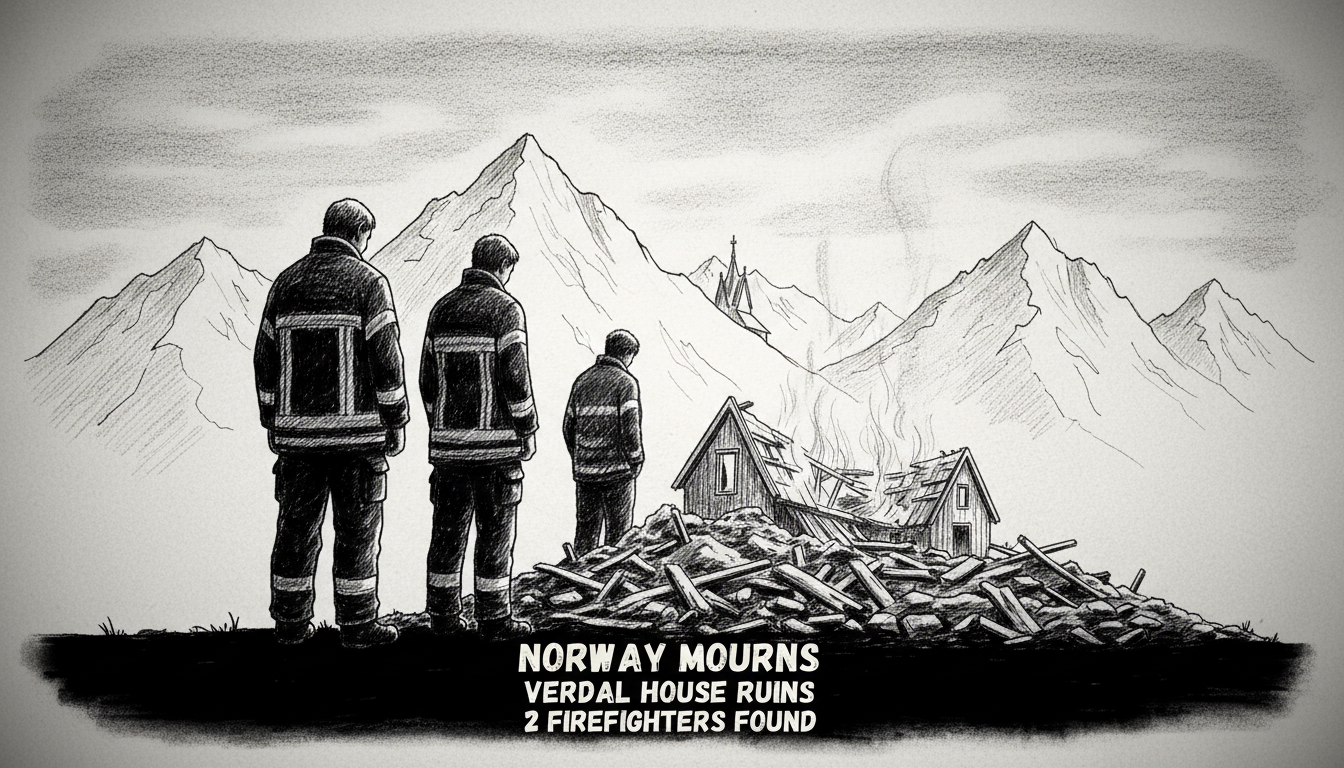
Norway's firefighting community is in mourning after two firefighters were found dead in the ruins of a house fire in Verdal. The two smoke divers, whose identities have not yet been publicly released, were discovered Wednesday night after contact with them was lost during operations in the early hours. The tragedy has sent shockwaves through the small Trøndelag municipality and prompted a major investigation into the fatal incident.
Contact with the two firefighters was lost at 02:50 local time. The fire in the single-family home was burning so intensely that it was impossible for other crews to enter the structure immediately to search for their colleagues. This left the community and the emergency services in a state of agonizing uncertainty throughout Wednesday. The National Criminal Investigation Service, known as Kripos, is expected on the scene Thursday to assist local police with the investigation into the cause of the fire and the circumstances surrounding the deaths.
A Community Gathers to Grieve
On Wednesday evening, as the grim discovery was confirmed, the local community gathered at Verdal Chapel for a memorial service. Residents, relatives, and those affected by the tragedy came together to remember the two firefighters. Such gatherings are a profound expression of communal solidarity in Norwegian towns, where emergency service personnel are often neighbors and friends. The loss is deeply personal for Verdal, a municipality of approximately 15,000 people where local fire departments are tightly woven into the social fabric.
Firefighter fatalities in Norway are statistically rare events, which makes this incident particularly devastating. The country has strict building codes, advanced fire safety regulations, and well-equipped, professionally trained emergency services. These systems are designed to prevent tragedies precisely like this one. When they occur, they trigger not only grief but also urgent questions about what went wrong. The upcoming investigation led by Kripos will be scrutinized for answers that could prevent future losses.
The Investigation and Unanswered Questions
The involvement of Kripos, Norway's national criminal investigation service, underscores the seriousness with which authorities are treating this case. While their participation does not automatically imply criminal suspicion, it ensures a highly specialized forensic examination of the fire scene. Investigators will work to determine the fire's point of origin, its cause, and the sequence of events that led to the firefighters becoming trapped. They will examine the structural integrity of the building, the materials involved in the fire, and the operational decisions made during the response.
Key questions will focus on the moments leading up to 02:50. What was the assigned task for the two smoke divers inside the structure? Were there sudden changes in fire behavior, such as a flashover or backdraft? Was there a structural collapse? The answers will be critical for the national fire service's ongoing work on safety protocols. Every firefighter death in Norway leads to a thorough review of equipment standards, training procedures, and operational guidelines. This process, though born of tragedy, is a cornerstone of Norway's commitment to continuous safety improvement.
The Human Toll on Norway's Emergency Services
Beyond the official investigation, the psychological impact on the Verdal fire brigade and the wider Norwegian fire service will be profound. Firefighters operate as a close-knit team where trust and reliance on one another are absolute. The loss of two colleagues in the line of duty creates a trauma that resonates through every station in the country. Peer support systems and critical incident stress management teams will be mobilized to assist the firefighters who responded to the call and those who conducted the search.
Experts in emergency service psychology note that such events challenge the core resilience of first responders. "These are not just operational failures to analyze; they are profound human losses," said one expert familiar with Scandinavian emergency services, speaking on the condition of anonymity due to the sensitivity of the ongoing case. "The community loses its protectors, and the brigade loses its family members. The process of healing is long, and it must be supported with the same intensity as the physical investigation." The memorial service at Verdal Chapel was a first, crucial step in that communal healing process.
A National Tradition of Safety Under Scrutiny
Norway prides itself on a comprehensive approach to public safety. From the design of wooden houses to the regulation of electrical systems and the training of municipal fire crews, layers of prevention are in place. The fire service is a mix of professional and dedicated volunteer forces, especially in rural areas like Trøndelag. These firefighters train rigorously to handle everything from kitchen fires in villages to complex industrial blazes. This context makes a fatal residential fire an anomaly that demands explanation.
The tragedy in Verdal will inevitably lead to a national discussion. Fire service unions and safety directors will examine whether current protective gear is sufficient against modern synthetic materials that burn hotter and faster. They will review communication systems used inside burning structures. Budgetary pressures on municipal services, which can affect training frequency and equipment upgrades, may also come under review. While it is too early for specific conclusions, the incident serves as a stark reminder that no safety system is ever completely infallible.
Looking Ahead: Grief and the Search for Answers
For now, the focus in Verdal remains on supporting the families of the fallen firefighters and their colleagues. The flag will likely fly at half-mast at fire stations across Norway. The coming days will see an influx of support from brigades nationwide, a tradition among emergency services. Meanwhile, the blackened ruins of the house will become a meticulous forensic site, picked over by experts searching for clues in the ash.
The ultimate goal is to translate this profound loss into actionable knowledge. The detailed findings from Kripos and the subsequent internal reviews by the fire service will be compiled, studied, and used to update training manuals. New safety advisories may be issued to every fire station in the country. In this way, the legacy of the two firefighters from Verdal could become embedded in the protocols that protect future generations of first responders. Their sacrifice, mourned by a small town in Trøndelag, will echo through the very foundations of Norway's emergency response systems, challenging the nation to live up to its own high standards of safety and protection.