
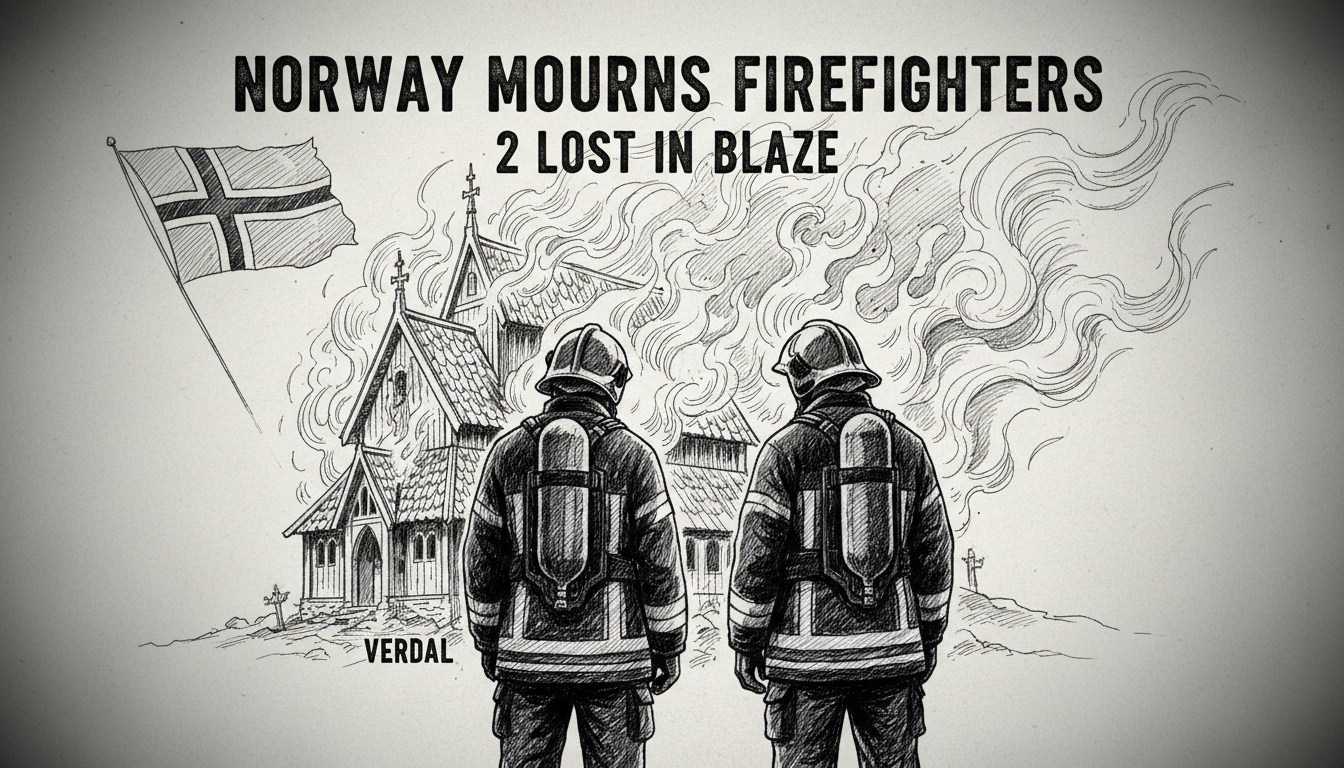
Norway firefighter deaths in a single-family home blaze near Trondheim have shaken the nation's emergency services. Two firefighters are presumed dead after a fierce fire in Verdal, Trøndelag, with police stating the inferno was so intense that rescue became impossible. The tragedy marks one of the deadliest operational incidents for Norwegian firefighters in recent years and has triggered a major investigative response.
The fire erupted overnight in a detached wooden house, a common architectural style across rural Norway. The sole resident managed to escape and alerted authorities. Fire crews from Verdal Fire and Rescue Service responded to the call. During interior attack operations, contact was lost with a team of smoke divers working inside the structure. The intensity of the fire prevented immediate rescue attempts by their colleagues, leading to the presumed deaths of two fire constables.
A Community and Service in Mourning
Flags across fire stations in Trøndelag and beyond are flying at half-mast. The incident has sent shockwaves through Norway's tightly-knit firefighting community, where line-of-duty deaths are exceptionally rare. The Norwegian Firefighters Association has expressed profound grief, offering immediate support to the families of the fallen and to their colleagues who witnessed the event. The psychological impact on the responding crew is a primary concern, with critical incident stress management teams deployed to the region.
“This is a dark day for the fire service in Norway,” said a senior official with the Norwegian Directorate for Civil Protection (DSB). “Our deepest condolences go to the families, friends, and colleagues. A thorough investigation is already underway to understand exactly what happened.” The names of the firefighters have not yet been released, pending notification of next of kin.
The Inherent Risks in Wooden Structures
Norway boasts stringent building and fire safety codes, particularly for new constructions and public buildings. However, a significant portion of the national housing stock, especially older detached homes like the one in Verdal, is built primarily of wood. While treated for fire resistance, these structures, when fully involved, can burn with tremendous speed and heat. Fire experts note that modern synthetic materials in furnishings can create extremely toxic smoke and contribute to flashover conditions—a rapid, simultaneous ignition of all combustible materials in a room.
“Fighting fires in older wooden homes presents specific challenges,” explained Lars Thorstensen, a former fire chief and now a safety consultant. “The fire load can be very high, and construction methods may allow fire to spread quickly through voids in walls and ceilings. For smoke divers, the environment can become untenable in seconds. This underscores the absolute necessity of constant risk assessment during operations and having immediate rapid intervention teams ready.”
The Investigation and National Protocols
The Norwegian police have launched a formal investigation, standard procedure in all fire-related deaths. The Technical Investigation Committee, an independent body under the DSB, will also conduct a parallel safety investigation. This dual-track process aims to determine both any potential criminal cause and, crucially, identify lessons for operational safety. Investigators will meticulously examine the site, review communication logs, and interview all personnel involved.
Norway’s fire services are organized at the municipal level, leading to variations in equipment and crew sizes, though all adhere to national training standards. This incident will likely prompt a review of protocols for offensive interior attacks in certain building types. Questions will focus on the initial size-up of the fire, the decision-making process to commit personnel inside, and the availability and readiness of backup teams.
A Statistical Anomaly in a Safe Society
The deaths are a stark anomaly in a country with an otherwise exceptional record of firefighter safety. Comprehensive data from DSB shows that fatal incidents during firefighting operations are exceedingly uncommon. The last comparable tragedy occurred several years ago. Norway invests heavily in fire prevention, public education, and professional firefighter training, contributing to a generally declining trend in fire-related fatalities overall, both civilian and responder.
This investment includes regular drills, advanced personal protective equipment, and simulation training. Yet, as this event tragically demonstrates, the profession remains inherently dangerous. The unpredictable nature of fire, especially in residential settings where the layout and contents are unknown, means risk can never be fully eliminated.
The Human Element Beyond the Flames
Beyond the official investigations, the human story resonates across the Nordics. The resident who escaped the fire must now cope with the loss of their home and the traumatic knowledge that responders perished trying to save it. The local Verdal community, a municipality of around 15,000 people, is rallying to support all affected. Neighboring fire departments are providing coverage to allow the Verdal service time to grieve and debrief.
The incident also casts a light on the quiet bravery of municipal firefighters across Norway, particularly in smaller towns. These are often mixed forces of professional and dedicated volunteer firefighters who know the communities they protect personally. The loss is therefore felt not just as a professional catastrophe, but as a deeply personal one.
As the investigation continues in the charred remains of the Verdal house, the broader conversation has begun. How can a nation with such advanced safety standards further protect its protectors? The answers sought in Trøndelag will be scrutinized by fire chiefs from Oslo to Kirkenes, all united in a somber goal: ensuring such a farewell is not repeated.