
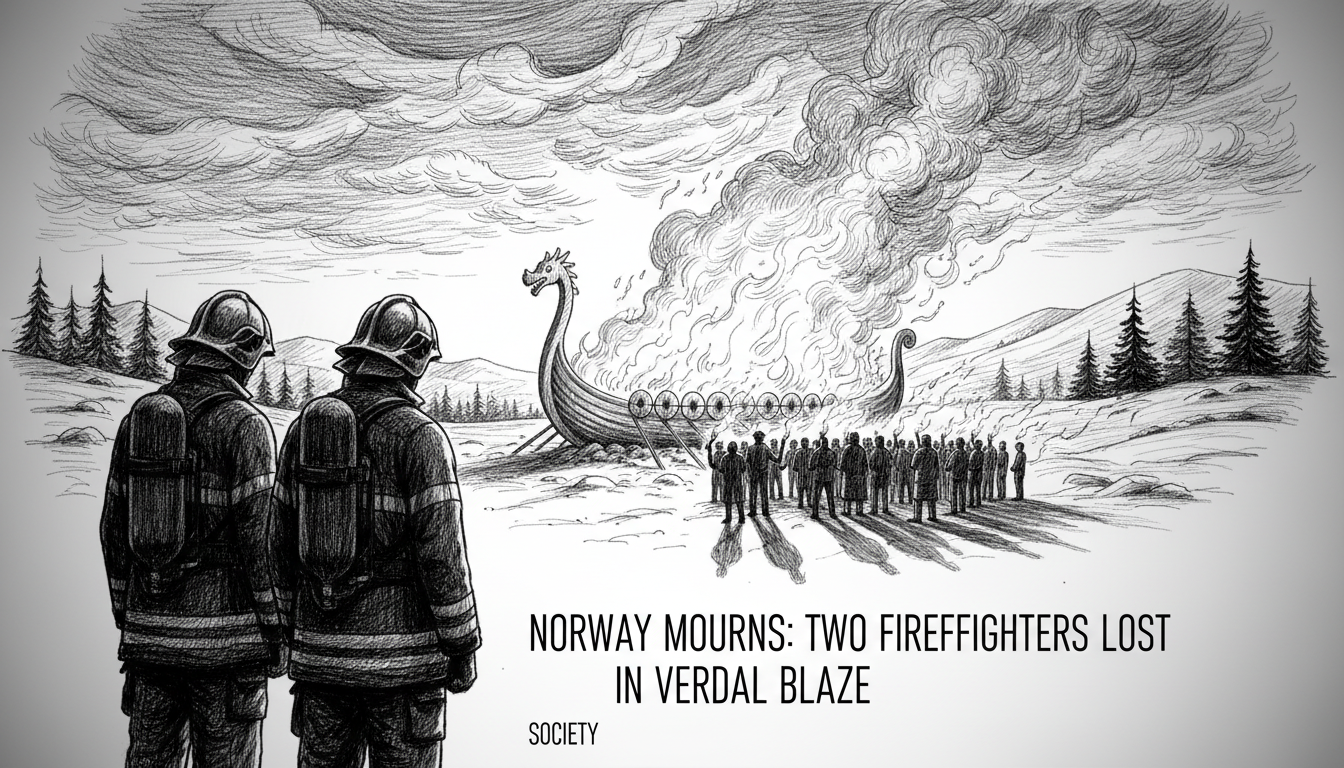
Norway's firefighting community is reeling after two smoke divers were lost in a deadly house fire in Verdal early Wednesday. The men are presumed dead after entering the burning detached home to search for potential victims. The rare tragedy has prompted a national outpouring of grief and questions about operational safety. Justice Minister Emilie Enger Mehl called the loss profoundly painful, stating that firefighters perform an invaluable service for society.
A Fatal Response in the Night
The fire brigade in Verdal, a municipality in Trøndelag county, responded to the blaze in a single-family home around 2 a.m. Two smoke divers, firefighters specially trained to enter smoke-filled structures, went inside the building. They did not re-emerge. Their colleagues launched an intense search effort under extremely difficult conditions. By morning, the missing firefighters were presumed to have perished in the line of duty. The cause of the fire is not yet known, and police have initiated an investigation. The names of the deceased have not been released pending notification of their families.
Minister Mehl expressed her deepest condolences. "It makes a strong impression to hear that two smoke divers from the fire service are presumed dead after the fire in Verdal last night," she said in a statement. "My deepest sympathy goes to their closest relatives, family, and colleagues." Her words underscore a collective national sorrow when those tasked with saving lives become victims themselves.
The Uncommon Tragedy in a Secure System
Firefighter fatalities in Norway are exceptionally rare events. The country's fire service, organized at the municipal level, maintains a strong safety record. Brigades are typically staffed by a mix of full-time professionals and dedicated volunteers, all operating under stringent national regulations. This incident represents one of the most significant losses of firefighter life in recent Norwegian history. It immediately raises questions about the specific risks encountered at the Verdal scene.
Experts point to the inherent dangers of smoke diving, even within a highly regulated system. "These firefighters are the absolute elite, trained for the most hostile environments imaginable," said Lars Holen, a former chief fire instructor and safety consultant. "An incident like this suggests a sudden, catastrophic change in conditions—a flashover, a structural collapse, or an unexpected explosion. The investigation will focus on what happened from the moment they entered until communication was lost."
Holen explained that Norwegian crews use advanced thermal imaging cameras and communication gear. They operate in teams with strict protocols for monitoring air supply and time inside a structure. The fact that both divers were lost indicates a rapidly evolving situation that may have overwhelmed even these precautions.
The Ripple Effect on a Tight-Knit Corps
The impact of such a loss extends far beyond the immediate community. Norway's fire service is a close-knit professional family, where many volunteers and career firefighters know each other through regional training and mutual aid responses. The psychological toll on the Verdal brigade and the responding crews from neighboring municipalities will be severe.
"The first thing that happens now is critical incident stress management," explained Dr. Kari Nilsen, a psychologist specializing in emergency responder trauma. "These are colleagues who fought the same fire, who tried to rescue their friends. They will be grappling with profound grief, guilt, and shock. Support must be immediate, sustained, and specialized. This isn't just about losing coworkers; it's about the specific trauma of a rescue mission that fails."
Local community leaders in Verdal have opened churches and community centers, offering support not just to families but to the entire emergency service network. The national firefighter's union has also mobilized its support resources, highlighting the shared grief across the country's emergency services.
Scrutiny and the Path Forward
Every line-of-duty death triggers a mandatory, thorough review. The Norwegian Directorate for Civil Protection (DSB) will likely examine the incident alongside local police. This review will dissect the response timeline, equipment used, decisions made by the incident commander, and the building's construction. The goal is not to assign blame but to identify any systemic lessons that could prevent a future tragedy.
Key areas of focus will include the building's materials and layout, the possibility of hazardous substances inside, and the communication logs from the scene. Investigators will also look at the firefighters' gear to see if it functioned as intended. The findings could influence national training protocols or equipment standards.
"We must have the courage to examine every detail," said Minister Mehl, implicitly acknowledging the coming review. "The work of the fire service is irreplaceable. We owe them not only our gratitude but our unwavering commitment to their safety." This sentiment is echoed by municipal leaders in Trøndelag, who have pledged full cooperation with investigating authorities.
A Nation's Gratitude and Grief
The last time Norway experienced a comparable loss of firefighters was in a 2014 blaze in Lærdal, though that incident did not claim firefighter lives. The Verdal tragedy starkly reminds the public of the risks taken by emergency personnel every day. Social media has been flooded with messages of support, using the Norwegian phrase "takket være"—meaning "thanks to"—to honor the profession.
As the investigation continues quietly, the public rituals of mourning are beginning. Flags across Verdal and at fire stations nationwide are flying at half-mast. A national memorial service is expected once the families have had time for private grief. The ultimate legacy of the two firefighters will be measured in the unity of their community and the relentless pursuit of greater safety for those who follow them into the smoke. Their sacrifice underscores a harsh truth: even in one of the world's safest countries, the act of running toward danger can have the most tragic cost.