
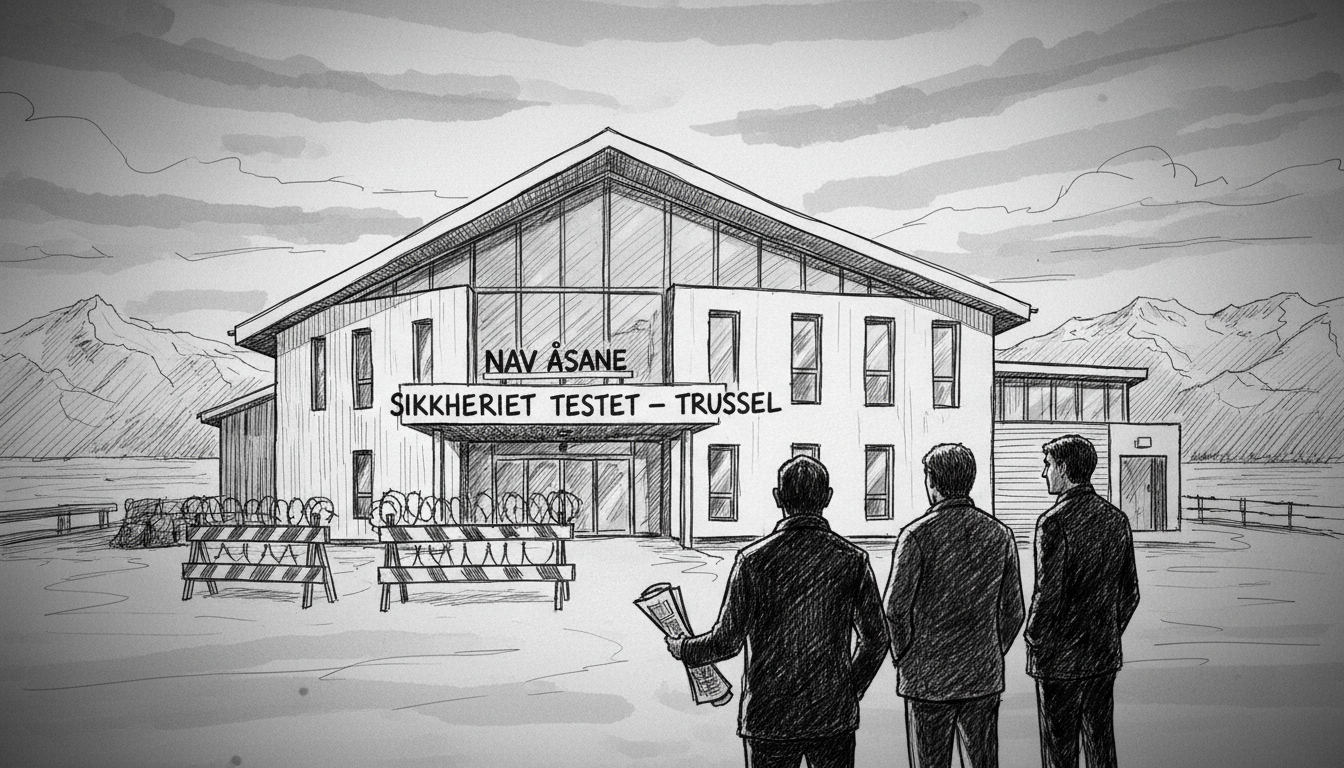
Norway's welfare system faced a security incident as police secured a threatening man at the NAV office in Åsane. Armed officers responded to reports of verbal threats at the local Labour and Welfare Administration branch on Monday. No one was injured, and the situation was resolved without escalation, but the event underscores persistent tensions within the nation's most far-reaching public institution.
“We responded after a report from employees about a user they experienced as threatening,” said operations leader Dan-Erik Johannessen of the West Police District. Police, equipped with shields, took control of the man. Johannessen cited the nature of the reported threats as the reason for the armed response but declined to elaborate on their specific content.
The Åsane episode is not an isolated case. It represents a recurring challenge for an agency that manages over 600 billion kroner annually—about one-third of the state budget—while serving millions of Norwegians. Every day, NAV employees interact with citizens at their most vulnerable, creating an environment where frustration can boil over.
The Frontline of Norway's Welfare State
NAV offices are the physical nerve centers of the Norwegian social contract. They process unemployment benefits, disability pensions, work assessment allowances, and social assistance. In 2023, the agency distributed over 600 billion NOK in benefits and pensions. Its local offices, like the one in Åsane, are where policy meets people, often during periods of personal crisis, financial distress, or illness.
This proximity to acute need is a fundamental part of NAV's design. The system aims to be accessible. Yet, it also places frontline staff in potentially volatile situations. “Our employees are trained to handle complex and sometimes difficult conversations,” a NAV spokesperson told Nordics Today. “Safety for both our employees and users is our absolute priority.”
Following the incident, police worked to establish a full overview of the event. The man involved was taken into police control without resistance. Investigations into such incidents typically assess whether charges for threats or disturbing the peace are warranted.
Systemic Pressures and Human Vulnerability
Experts point to the structural pressures within the welfare system as a contributing factor to sporadic conflicts. NAV caseworkers operate within strict regulatory frameworks. They must verify eligibility, enforce activity requirements for unemployment benefits, and make decisions that directly impact a person's livelihood. For applicants, delays, rejections, or complex bureaucratic processes can feel insurmountable.
“These offices are where citizens experience the state most directly, for better or worse,” said Dr. Lena Hansen, a sociologist at the University of Bergen who studies public administration. “When people feel their security is at risk—when benefits are delayed or denied—anxiety and desperation can manifest. This doesn’t excuse threats, but it helps explain the high-stakes environment.”
Mental health challenges and economic hardship amplify these tensions. NAV serves a significant number of people with psychological difficulties or those facing long-term unemployment. The agency has integrated mental health professionals into some offices, but resources are stretched. The Åsane incident, where the individual was described as a “user,” highlights interactions with a person known to the system.
Balancing Security with an Open Door
Norway prides itself on a low-threshold, accessible public service model. NAV offices are typically open-plan and located in shopping centers or downtown areas, like Åsane Senter. This contrasts with the fortified government buildings seen in other nations. The visible police response with shields in Åsane challenges this normative image of calm, administrative spaces.
Police stated the armed response was a direct result of the threat details received. This protocol highlights a prepared response system for public-facing agencies. NAV itself has security measures, including panic buttons, staff training in de-escalation, and collaboration protocols with local police.
“The goal is always to resolve situations calmly and prevent harm,” said Operations Leader Johannessen. “Our presence is calibrated to the information we have to ensure everyone's safety.”
The incident prompts a difficult question: how does a society built on trust and openness protect the civil servants who uphold its welfare principles? Increasing physical barriers or police patrols could undermine the accessibility that is a core tenet of the system.
A Broader Pattern of Strain
While violent incidents remain rare, reports of threatening behavior and verbal abuse at NAV offices surface periodically across Norway. Employee unions have consistently highlighted workplace safety as a key concern. They argue that adequate staffing, manageable caseloads, and clear support protocols are as crucial to security as physical measures.
Each incident triggers an internal review. NAV assesses whether procedures were followed and if additional safeguards are needed. The agency also examines the specific case circumstances, checking if the individual involved is receiving adequate support from other parts of the welfare network, such as mental health services.
The financial scale of NAV's operations—managing a third of the national budget—adds another layer of pressure. Audits, anti-fraud measures, and strict compliance requirements are necessary. This can create an adversarial dynamic in some client interactions, where citizens feel distrusted rather than supported.
The Path Forward: Support Over Stigma
Solutions proposed by analysts and unions focus on systemic support rather than mere security. This includes reducing caseworker loads to allow for more thorough, empathetic engagement. It involves better integration with health services so that individuals in crisis receive coordinated care. Some suggest redesigning office spaces to include more private meeting rooms for sensitive discussions, rather than relying solely on open service counters.
For citizens, clearer communication about application processes, decision timelines, and appeal rights could reduce frustration. Digital solutions have improved some access, but they also create barriers for those lacking digital literacy or stable internet access, making in-person office visits even more critical and potentially tense.
The man at the center of the Åsane incident is now within the legal system. His case will be processed according to the law. For NAV and Norwegian society, the larger task continues: maintaining a welfare state that is both compassionate and secure, capable of delivering on its promises without putting its servants or citizens at risk. The true test lies not in responding to a single threat, but in addressing the conditions that make such threats more likely to occur.
Can Norway's famed welfare model evolve to meet these modern challenges of security and human dignity? The answer will define the next chapter for this cornerstone of Norwegian society.