
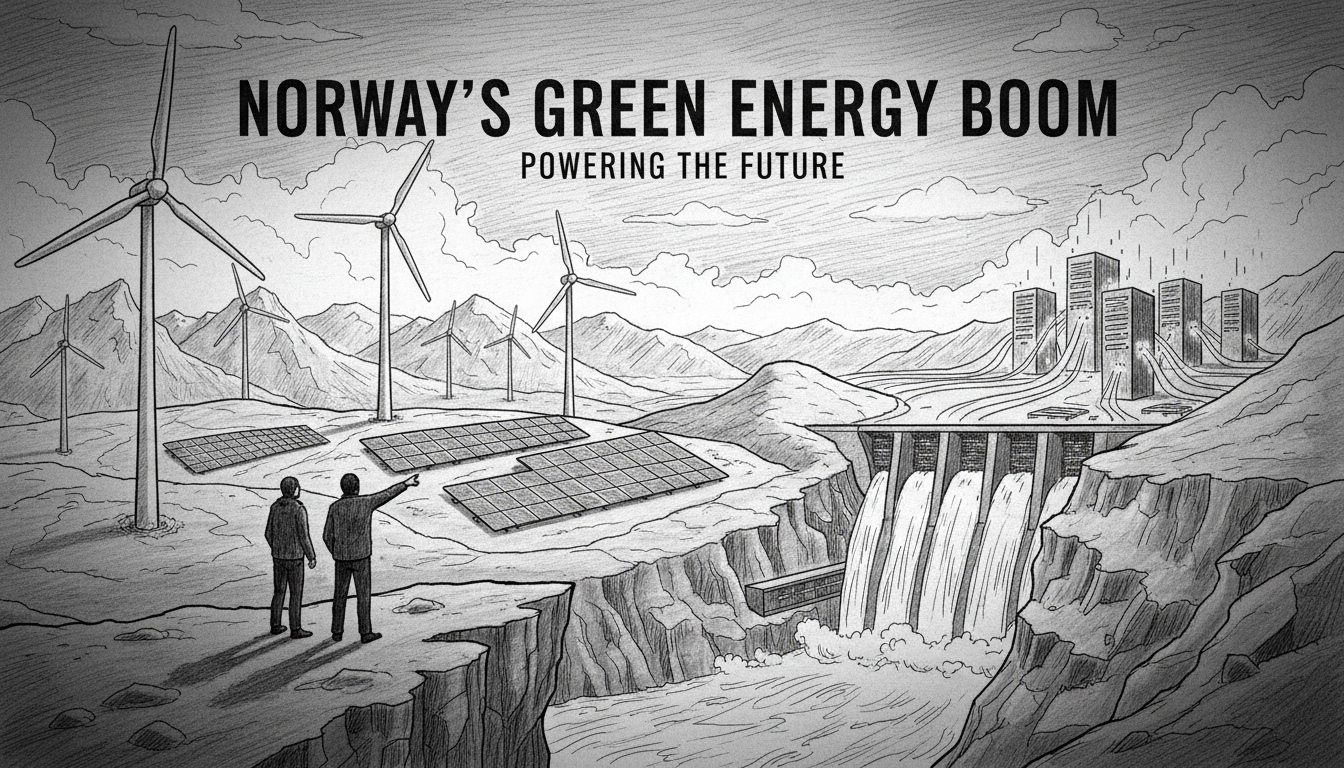
Norway is preparing for a major wave of new energy construction. The Norwegian Water Resources and Energy Directorate reports a sharp rise in applications to build power plants. The agency's director, Kjetil Lund, says this could increase Norway's total power capacity by 10 to 15 percent within a few years. This marks a dramatic shift after years of limited development.
Lund told reporters that the country is entering a new chapter in power expansion. Many large projects for wind, solar, and hydropower are now in the pipeline. The agency has received more major hydropower applications this year alone than in several previous decades combined. Applications for wind power have also resumed after a political pause. This surge points toward massive investments in the coming years.
This boom is driven by commercial developers who see profitable projects. For a long time, political uncertainty stalled wind power and created hesitation around hydropower. Now that has changed. Lund notes that while not all proposed projects will be built, the volume of plans is unprecedented. Some projects will fail to get permits due to major environmental impacts or lack of profitability. The process will include thorough reviews of nature conservation and reindeer herding concerns.
The demand for power is a key driver. Expert groups like the Energy Commission state that huge amounts of new power are needed to meet industrial and climate goals. Data centers are increasingly expressing interest in using large amounts of electricity. At the same time, the national grid operator previously warned of possible power shortages. Many green industry projects have been delayed, slowing demand growth forecasts.
A critical bottleneck has been the power grid. The national auditor previously criticized the slow pace of grid expansion. Lund says this is also changing. Many new grid applications have been submitted. Statnett, the state-owned grid company, plans major new investments. Lund estimates grid investments could reach 200 billion Norwegian kroner by 2030.
The processing speed at the energy directorate has increased. A backlog of about 100 grid cases is now gone. Lund credits internal digitalization and regulatory changes. Smaller solar power and grid projects no longer need a permit from the agency. Officials can also quickly reject obviously unrealistic applications. The agency prioritizes cases that are ready for connection to the grid.
This impending construction boom has significant implications for Norway's tech and startup ecosystem. A stable, abundant, and green power supply is a cornerstone for Oslo's ambition to be a leading Scandinavian tech hub. Data-intensive industries, from artificial intelligence labs to green hydrogen production, rely on predictable energy. The planned investments in grid and generation directly support Norway's digital transformation. They provide the infrastructure needed for next-generation industries to scale within the Nordic region.
Norwegian tech startups, particularly those in fintech, climate tech, and SaaS, often highlight the country's clean energy mix as a competitive advantage. This new wave of projects could solidify that claim. It also creates opportunities for startups working in energy management, smart grid technology, and sustainability software. The focus on balancing development with environmental oversight reflects a core Nordic technology trend: pursuing innovation while maintaining strong social and ecological standards. The success of this power boom will be a key test for Norway's model of green growth.