
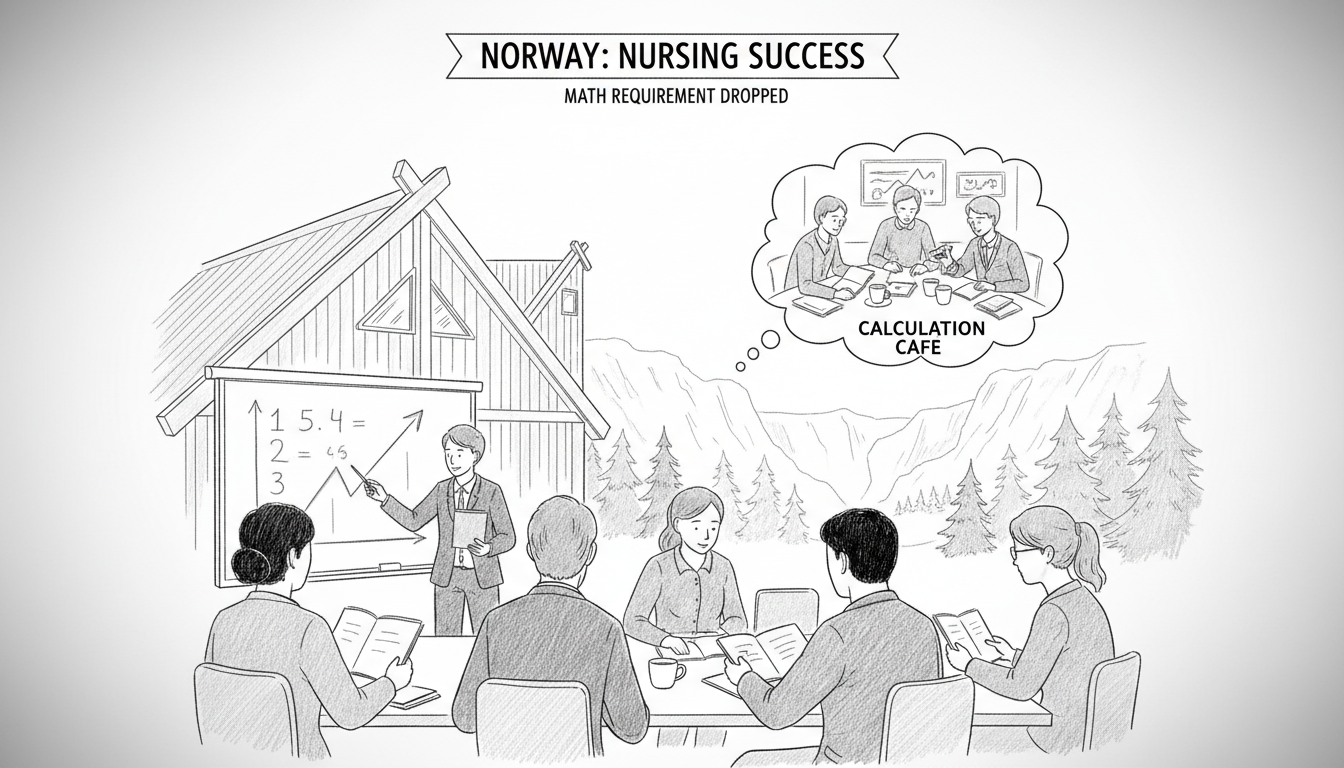
A bold educational experiment in Norway is yielding surprising results. Nursing programs that removed mandatory mathematics grade requirements for admission are now reporting lower failure rates in crucial medication calculation exams. This challenges traditional assumptions about academic prerequisites.
Nord University's campuses in Bodø, Mo i Rana, Levanger, and Namsos conducted a major study. Only 13 percent of first-year nursing students failed their autumn medication calculation exam. University officials called this result very surprising. The typical failure rate is usually more than double that figure.
First-year student Lotte Høvik Torgnes shared her experience. She never considered herself good at mathematics. The structured teaching program gave her the confidence to pass. She said the approach was much more organized than high school. The program involved intense work on problems for several weeks.
Professor Marianne Brattgjerd at Nord University explained the shift. She believes teaching quality matters more than prior math grades. The university developed a research-based pedagogical approach. It ties medication calculation directly to practical skills and clinical understanding.
A key innovation was the introduction of 'calculation cafes.' Students study material at home first. They then meet on campus in small groups the next day. These sessions feature an informal atmosphere with coffee and snacks. The format lowers the threshold for asking questions. It also strengthens the overall learning environment.
Student Ola Marius Marsfjell would not have qualified under the old rules. He praised the collaborative work among students and close teacher follow-up. He noted that in high school, students often worked alone without tight supervision. He believes this support system explains the low failure rate.
The change reflects a broader digital transformation in Nordic education. Institutions are moving from rigid entry filters to supportive, technology-enhanced learning models. This aligns with a regional trend of prioritizing skill development over traditional gatekeeping.
Enrollment data supports the policy shift. The number of people securing nursing study placements in Norway reached a record 9,634 this autumn. This represents a 45 percent increase in admissions to nursing education programs nationally. The higher education minister welcomed the news, citing a major need for nurses across Norway.
Other institutions are taking notice. Representatives from Lund University in Sweden plan to visit Namsos next year. They want to learn more about the successful medication calculation program. This indicates the potential for this Norwegian model to influence broader Scandinavian educational practices.
Results from other universities show a more mixed picture. The Arctic University of Norway in Tromsø reported stable exam results. Their pass rates remained between 72 and 79 percent across several years, regardless of entry requirements. A professor there cautioned that it is too early to draw firm conclusions. A thorough analysis must also consider applicant numbers at different study locations.
The Norwegian experiment makes a clear argument. Investing in quality teaching and a safe learning environment can achieve better outcomes than strict pre-screening. It is not necessarily about filtering students in advance. The focus is on delivering relevant, practice-oriented instruction. This approach could reshape professional education far beyond Norway's borders.