
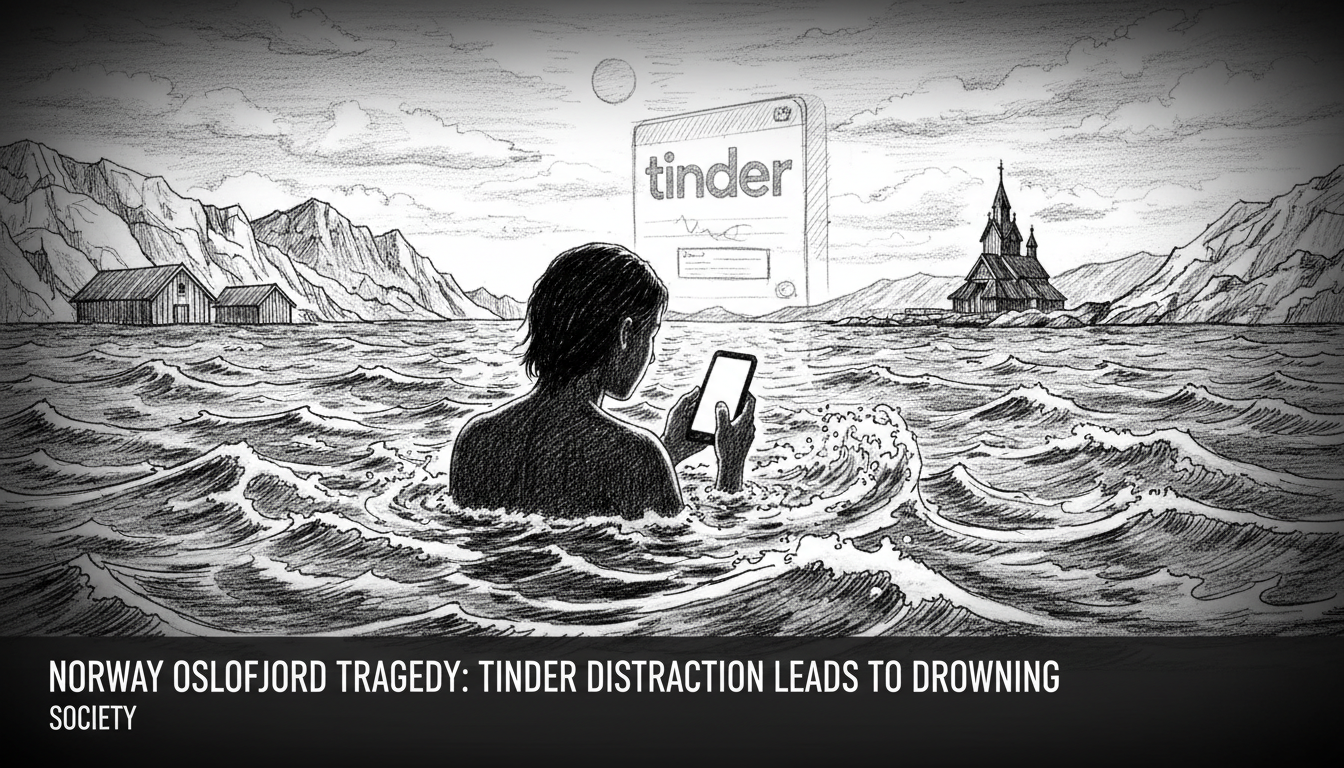
Norway's Oslofjord became the site of a deadly maritime tragedy last summer when a boater's distraction with a dating app led to a fatal collision. A court in Sør-Østre Romerike has sentenced a man in his fifties to six months of unconditional imprisonment for negligent manslaughter. He was operating a 43-foot cabin cruiser on June 23rd when his vessel struck a sailboat near Langøya, off Hurumlandet, killing the 75-year-old sailor from Gjøvik instantly from head injuries. The prosecution successfully argued the operator was not maintaining a proper lookout, having been actively using the Tinder app on his phone moments before the impact.
A Fatal Summer Day on the Fjord
The afternoon of June 23rd presented ideal conditions for boating in the Oslofjord. The 75-year-old victim, an experienced sailor, was enjoying a solitary trip on his sailboat in a well-trafficked area south of Oslo. Meanwhile, the operator of the larger, motorized cabin cruiser was navigating the same waters. According to court documents reviewed by Nordics Today, data extracted from the man's smartphone showed he was actively swiping and engaging with profiles on the Tinder application immediately prior to the collision. His vessel, traveling at a significant speed, struck the stern of the slower sailboat with tremendous force. The older man was thrown by the impact and suffered fatal injuries. Rescue services arrived swiftly, but the sailor was pronounced dead at the scene. The cabin cruiser operator was taken into custody for questioning by local police.
The Legal Reckoning for Negligence
The recent verdict underscores the severe legal consequences for negligence in Norwegian maritime law. The Sør-Østre Romerike District Court found the man guilty of uaktsomt drap—negligent manslaughter. This charge, under Section 239 of the Norwegian Penal Code, applies when a person causes another’s death through gross negligence. The six-month unconditional prison sentence is a significant punishment for a boating accident, reflecting the court's view of the severity of his inattention. "Operating a vessel of that size is an activity that requires your full and constant attention," said a legal expert familiar with the case. "The court has sent a clear message that using a smartphone for social purposes while piloting a boat is a serious criminal act when it leads to loss of life." The sentence also typically triggers a mandatory loss of one's boating license for a minimum period.
Norway's Maritime Safety Culture Under Scrutiny
This incident has sparked renewed discussion about maritime safety and modern distractions on Norway's crowded coastal waterways. The Norwegian Maritime Authority (Sjøfartsdirektoratet) has clear regulations: the operator is always responsible for maintaining a proper lookout and safe speed. The country has approximately 900,000 registered leisure boats, and while fatal accidents are relatively rare, each one prompts official review. "The basic rules of the sea are constant vigilance and adapting your speed to conditions," says maritime safety instructor, Kari Johansen. "A 43-foot cabin cruiser is a powerful vehicle. Looking down at a phone screen for even seconds means you are blind to hazards over a long distance. This tragedy was entirely preventable." There is no specific law against using a phone while boating, unlike the strict prohibitions for driving a car. However, the general duty of care is paramount, and violation of it through distraction forms the basis for criminal liability, as this case demonstrates.
The Broader Challenge of Technology and Attention
The case highlights a growing, global problem translating onto the water: the conflict between immersive digital technology and operational safety. While drunk boating remains a primary concern for authorities, distraction from smartphones is an increasing factor in incident reports. "The phone is in our pocket, and the buzz or the urge to check it is constant," notes Johansen. "On a calm fjord, people feel a false sense of security. They forget that the maritime environment is dynamic and that other users, like kayakers or sailors on silent vessels, can appear quickly." The Oslofjord, especially in summer, is a complex mix of ferry routes, container ships, leisure boats, and sailboats. Navigation requires interpreting buoys, understanding right-of-way rules, and anticipating the actions of others. This cognitive load is incompatible with the divided attention demanded by social media apps.
What the Sentence Means for Future Safety
The unambiguous prison sentence is likely to have a deterrent effect. Norwegian legal analysts believe it will be cited in future cases and in safety campaigns ahead of the busy summer season. "This isn't a slap on the wrist or a suspended sentence," the legal expert said. "It is a real, immediate term of incarceration. That will make people think twice before picking up their phone while at the helm." The victim's family, in a statement conveyed through their lawyer, expressed hope that the outcome would lead to greater awareness and prevent other families from enduring similar loss. They described the deceased as a passionate sailor who loved the freedom of the fjord, a freedom abruptly ended by another's inattention.
A Lasting Legacy of Loss and a Warning
The serene waters of the Oslofjord now hold a somber marker for this preventable death. The case sits at the intersection of ancient maritime tradition and modern digital addiction. It reinforces that the responsibility of command—whether on a massive freighter or a private leisure craft—is absolute. As Norwegians prepare to return to their cherished coastal traditions this coming summer, the memory of this tragedy serves as a stark warning. The court's decision establishes that in the eyes of Norwegian law, scrolling through a dating app is no excuse for failing to see another human being on the water ahead. The ultimate question remains: in an age of constant connection, can we afford to disconnect from our immediate surroundings while operating heavy machinery? For one Norwegian court, the answer is a resounding and legally enforced no.