
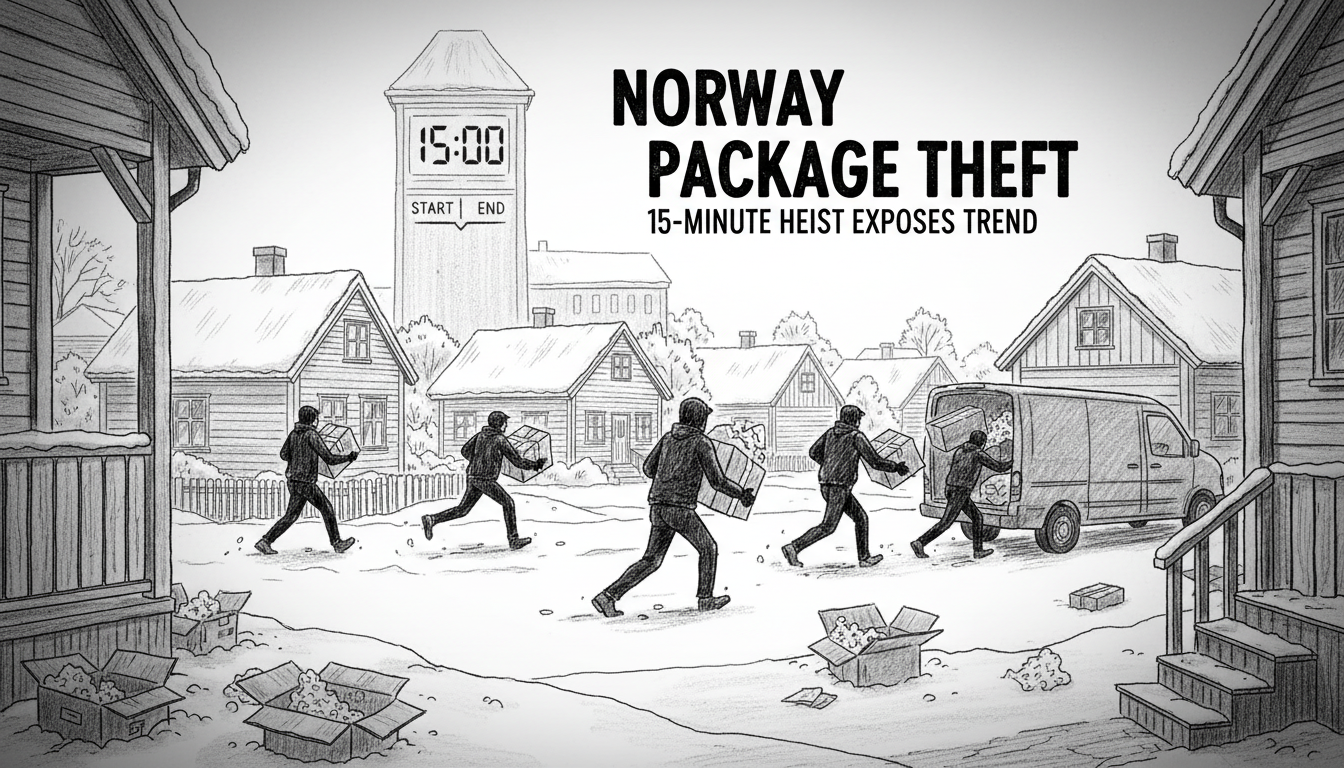
Norway package theft is evolving from daytime nuisance to nighttime crime, as demonstrated by a recent incident in Stavanger. Lillian Lunde Håra was asleep in her Hinna borough home when a delivery notification woke her at 2:40 AM. She waited briefly, fatigued, before a second alert signaled movement outside. Fifteen minutes after the delivery, the blue parcel was gone. This after-midnight theft has crystallized police fears about underreported crimes and underscores new vulnerabilities in the Nordic e-commerce boom. For Magnus Olsen, Norwegian Affairs Correspondent, this case is a microcosm of broader logistical and societal shifts straining traditional security in residential areas.
The Midnight Incident in Stavanger
Lillian Lunde Håra's experience is jarringly simple. A parcel delivery at an hour typically associated with silence was swiftly followed by its theft. Her home in Hinna, a suburban area of Stavanger, became the scene of a crime that lasted mere minutes. The sequence—delivery, notification, theft—highlights a window of opportunity thieves are increasingly exploiting. South-West Police District officials now openly worry about significant underreporting of such thefts. They urge all victims to file formal reports, a plea underscoring that isolated incidents like Håra's are likely just the visible tip of a larger problem. This shift to nocturnal theft suggests criminals are adapting to daytime security measures like doorbell cameras.
A Surge Fueled by E-commerce and Habit
Package theft is not novel, but its scale and boldness are changing. The dramatic rise in online shopping, accelerated by the COVID-19 pandemic, has fundamentally altered Norwegian consumption patterns. Home delivery volumes have surged, leaving a trail of parcels on doorsteps across cities like Oslo, Bergen, and Stavanger. Consumers now expect 24-hour delivery windows, pushing logistics companies to operate at all hours. This normalization of late-night deliveries, as seen in Håra's case, creates unexpected vulnerabilities. Security analysts point to a perfect storm: high-value goods moving through unsecured channels, increased opportunity, and often a perception among thieves of low risk and high reward. The very convenience driving Norway's digital economy is, inadvertently, fueling a petty crime wave.
Police Resources and the Reporting Gap
Law enforcement faces a dual challenge: investigating individual thefts and mapping the true scope of the problem. The South-West Police District's call for more reports is a tactical admission that official statistics may not reflect reality. Many citizens, considering a single stolen parcel too trivial or the recovery chance too slim, do not contact authorities. This creates a data void, hampering police efforts to allocate patrols or investigative resources effectively. In the context of broader policing priorities—from cybercrime to traditional offenses—package theft can struggle for attention. However, consistent reporting is crucial. It helps identify hotspots, modus operandi, and potential serial offenders, transforming random incidents into actionable intelligence for crime prevention units.
The Logistics Dilemma and Consumer Solutions
The incident raises tough questions for delivery companies and consumers alike. While couriers strive for efficiency and customer satisfaction through flexible delivery times, security often becomes a secondary concern. Experts in supply chain security suggest several preventative measures gaining traction in Norway. Secure delivery boxes, like the 'pakkeboks' networks operated by Posten and others, offer a controlled alternative to doorstep drops. Installation of private secure boxes at residences is also increasing. Another option is redirecting parcels to workplace addresses or locked pickup points, especially for high-value items. Technological solutions, such as real-time GPS tracking for parcels and one-time access codes for delivery personnel, are being discussed within the logistics industry. Consumer vigilance, including using delivery instructions and motion-sensor lights, remains a first line of defense.
Broader Implications for Norwegian Society
This trend touches on deeper issues of trust and urban living. The implicit social contract that leaves parcels safely on doorsteps is fraying. In a country known for high levels of social trust, such crimes feel particularly disruptive. They signal a move toward more defensive consumption habits. Economically, the costs are diffuse but real—replacements, insurance claims, and lost time collectively burden the system. The Storting has intermittently discussed consumer protection in digital markets, but specific legislation targeting delivery security remains nascent. Some politicians from the Labour Party and Conservative Party have called for clearer regulations on delivery companies' liability and standards for secure drop-off points. The debate pits consumer convenience against security, a balance Norway must navigate as e-commerce grows.
Looking Ahead: Technology and Policy Crossroads
The future of package security in Norway likely lies at the intersection of technology, policy, and community awareness. Smart city initiatives in places like Oslo and Trondheim could integrate better parcel management systems. Law enforcement may increase forensic focus on theft rings, using CCTV and digital footprints more aggressively. For ordinary Norwegians, the lesson from Hinna is clear: proactive steps are necessary. Reporting every theft, however small, is a civic act that strengthens community security. As delivery networks expand further into the Arctic regions and remote fjords, ensuring reliability and safety will become even more complex. The 15-minute heist in Stavanger is a wake-up call. It challenges the notion that Norway's low-crime environment is immune to the downsides of global retail trends. Adapting to this new reality requires vigilance from consumers, innovation from businesses, and responsive strategies from authorities.