
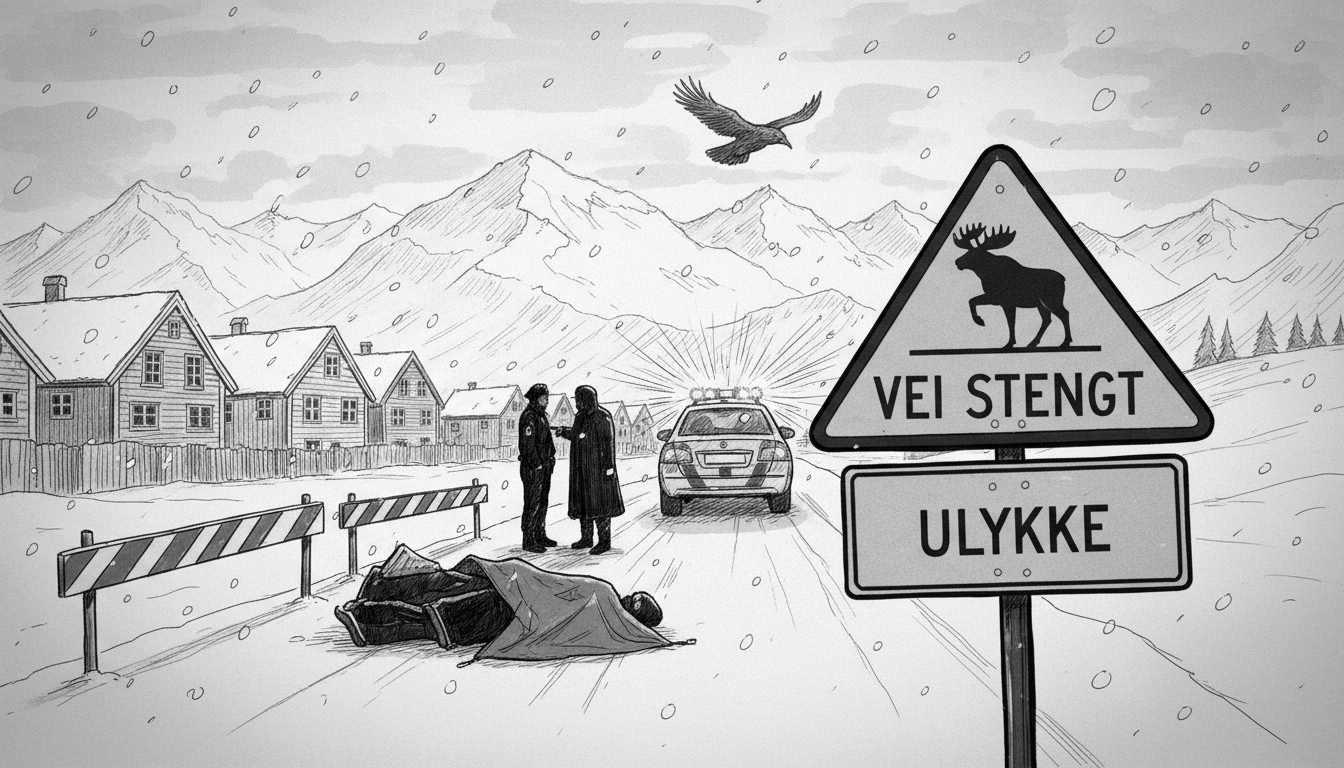
Norway's South-East Police District is investigating a serious traffic accident where a pedestrian was struck by a car. The incident occurred Sunday afternoon, prompting a large emergency response. The pedestrian sustained serious injuries and required transport by helicopter ambulance, according to police statements.
Emergency services rushed to the scene of what authorities described as an 'alvorlig ulykke'—a serious accident. Police confirmed the pedestrian was being examined in an ambulance before being transferred to a helicopter. The road remains closed as patrols conduct their on-site investigation. Authorities noted significant traffic challenges in the area following the collision.
Emergency Response and Investigation
Police reported the driver of the vehicle involved is in contact with investigators. The precise location of the accident within the South-East Police District jurisdiction has not been publicly disclosed. The immediate priority was securing medical evacuation for the critically injured individual. The use of Norway's air ambulance service, which operates a fleet of helicopters across the country, indicates the severity of the injuries.
Traffic management became a secondary concern as police worked to document the scene. "The road will be closed for some time ahead. Patrols are working with investigation on the spot," the police statement read. This closure will likely affect Sunday afternoon travel in the region, which includes areas around the capital, Oslo. The investigation will focus on determining the exact sequence of events leading to the collision.
Norway's Road Safety Context
This serious accident occurs against a backdrop of ongoing national efforts to improve road safety. In 2022, the latest full year with published statistics, 117 people died in road traffic accidents across Norway. That same year, 627 people were seriously injured. These figures represent a long-term decline in fatalities but underscore persistent risks, particularly for vulnerable road users like pedestrians.
Norwegian authorities have implemented Vision Zero, a strategy aiming for no deaths or serious injuries on the roads. This policy has driven changes in infrastructure, such as building more separated pedestrian and cycle paths, lowering speed limits in urban areas, and installing traffic calming measures. Each serious accident triggers a review process to identify potential systemic improvements.
The Human and Systemic Impact
Beyond the statistics, each accident represents a profound human tragedy. The individual's family now faces an uncertain wait as medical teams assess the extent of the injuries. The driver involved will also be subject to a traumatic experience and a thorough police inquiry. Such incidents ripple through local communities, often sparking renewed debates about specific road designs or traffic regulations in the area where they occur.
Traffic safety experts consistently highlight key factors in pedestrian safety. These include vehicle speed at the moment of impact, driver attentiveness, pedestrian visibility—especially during Norway's dark winter months—and the design of the crossing point. Modern vehicle safety technology, like automatic emergency braking with pedestrian detection, is becoming more common but is not yet universal in Norway's car fleet.
The Role of Police and Infrastructure
The South-East Police District, one of Norway's largest, handles law enforcement for a populous and busy region. Their traffic patrols are responsible for enforcement and immediate response to incidents like this one. The subsequent investigation will be meticulous, potentially involving accident reconstruction specialists. Findings could influence local traffic policy or lead to recommendations for the Norwegian Public Roads Administration (Statens vegvesen).
Norway invests heavily in its road network, with particular attention to safety. This includes maintaining clear signage, ensuring adequate street lighting, and constructing physical barriers where needed. However, older infrastructure or areas with high pedestrian and vehicle interaction remain challenging. The site of this accident will now be scrutinized through this lens.
A Look at Seasonal and Regional Factors
While the specific conditions of this accident are under investigation, time of year and daylight can play a role in road safety. As autumn progresses in Norway, daylight hours shorten rapidly, and weather conditions can deteriorate. Wet leaves, early frost, or rain can reduce tire traction and increase stopping distances for vehicles. Pedestrians wearing darker clothing may become less visible to drivers.
The South-East region contains a mix of dense urban environments, suburban areas, and smaller towns. Accident risks can vary significantly between a busy Oslo street and a rural road. Police have not specified whether this occurred in an urban crosswalk, a residential area, or a more open road. The deployment of the air ambulance suggests the location may have been some distance from a major trauma center.
The Path Forward from Tragedy
For now, the immediate concerns are medical and investigative. The injured person's condition will determine the next steps in their care. The police investigation will seek to establish fault and cause, a process that can take weeks or months. A formal report will be compiled, and depending on the findings, the driver could face legal consequences under Norway's Road Traffic Act.
In the longer term, data from this accident will feed into national statistics and safety analyses. Organizations like Trygg Trafikk (Safe Traffic), Norway's main road safety NGO, use such cases to advocate for continued investment and policy focus. They emphasize education for both drivers and pedestrians, alongside engineering and enforcement.
Norway has set ambitious targets for further reducing road deaths and serious injuries. Every incident is a sobering reminder of the work left to do. The country's extensive use of winter tires, strict laws on impaired driving, and generally high compliance with seatbelt use have contributed to its relatively strong safety record. Yet, as Sunday's accident shows, the risk is never eliminated.
The closure of the road will eventually lift, and traffic will resume its normal flow. For those involved directly, and for the community aware of the incident, the impact will last much longer. The hope of the Vision Zero policy is that each tragedy leads to changes that prevent the next one. The detailed work of the police investigators on that closed road is the first, critical step in that process.
How will this single, serious accident on a Sunday afternoon influence the specific safety measures on that stretch of road, and will its lessons be applied nationwide?