
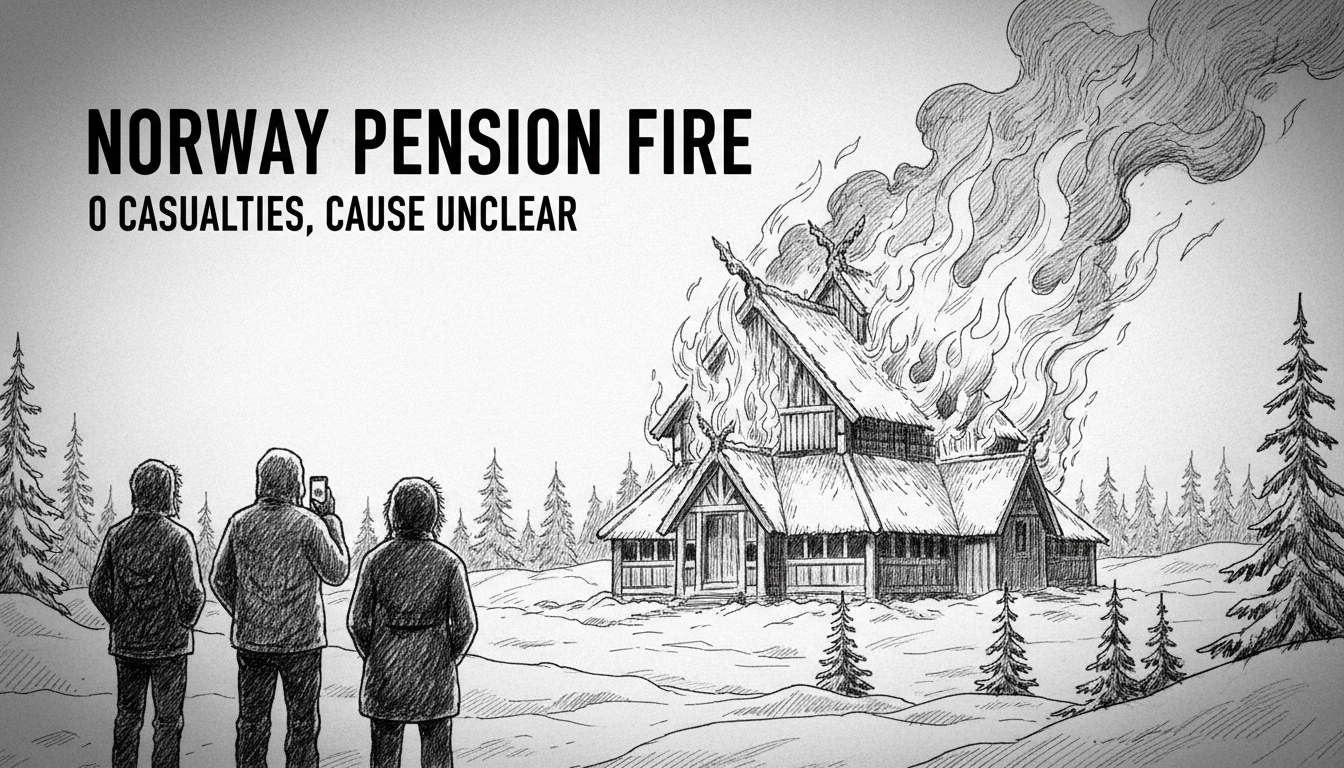
Norway's emergency services responded to a significant fire at a seasonal pension in Kragerø, Telemark, early this morning. Police received the alert at 04:35, reporting open flames on the first and second floors of the building. The property, located in a popular coastal tourist town, was closed for the winter season at the time. Authorities report no injuries or missing persons linked to the incident.
Firefighters from Kragerø and surrounding municipalities worked for hours to contain and extinguish the blaze. Their primary objective was to prevent the fire from spreading to adjacent structures in the densely built area. The operation involved multiple units and a substantial amount of water, with crews remaining on scene into the daylight hours for damping down and initial assessment.
An Unoccupied Building in a Sleeping Town
Operational leader Roger Aaser of the South-East Police District confirmed the pension was likely empty. "The pension is closed for the winter and it is probable no one is in the building," Aaser stated in a police log update. This fact, he noted, was the single most positive element of a dangerous situation. The off-season closure likely prevented a tragedy, as these types of buildings can house dozens of guests during the summer peak.
Kragerø, known for its idyllic archipelago and historic wooden architecture, is quiet in February. The town's population of roughly 10,000 swells significantly with summer visitors. This seasonal rhythm means many hotels, pensions, and summer cottages stand empty for months, presenting unique challenges for property maintenance and emergency response.
The Challenge of Off-Season Fires
Fire safety experts point to the heightened risk in seasonally vacant properties. "A building that is unoccupied for long periods does not have the same level of daily human oversight," explains a veteran fire prevention consultant familiar with Norwegian coastal towns. "Electrical systems, heating elements installed to prevent pipe freezing, or accumulated debris can become hazards without regular checks."
The absence of people also means fires can develop a significant hold before being discovered, often by a passerby or distant neighbor rather than an occupant. In this case, the time of the alarm—just after 4:30 AM—suggests the fire burned undiscovered for some time before the glow or smoke attracted attention.
The Investigation Begins
The cause of the fire is now the focus for police and fire investigation teams. Standard procedure will involve a meticulous examination of the scene once it is declared structurally safe. Investigators will look for the point of origin and seek to determine an initial cause, which could range from an electrical fault to accidental ignition or other factors.
"Every fire has a story, and our job is to read the evidence left in the debris," the expert said. The winter closure rules out certain causes related to guest activity but opens other lines of inquiry. The investigation will be methodical, and authorities have not speculated on possible causes publicly.
Economic and Cultural Impact on Kragerø
Beyond the immediate safety response, the fire touches on economic and cultural nerves in Kragerø. Tourism is a vital part of the local economy. Historic wooden buildings are central to the town's charm and identity, making their protection a community priority. A fire that destroys such a property represents a loss of both commercial capacity and cultural heritage.
Local business owners often express concern about the vulnerability of wooden structures, which are common in Norway's older coastal towns. While modern regulations require strict fire safety standards for new builds and renovations, older buildings operating under previous codes can be more vulnerable. This incident will likely renew local discussions about fire prevention investments and the protection of historic properties.
A Community's Resilience
The response to the fire demonstrates the interconnected nature of emergency services in Norway's regional towns. Fire crews from neighboring districts provided mutual aid, a standard practice ensuring sufficient resources for a major incident. The police managed scene security and the initial public communication, emphasizing there was no danger to the wider public.
For the residents of Kragerø, the sight of a burning building in their midst is a stark reminder of vulnerability, even in a tranquil setting. The fact that no one was hurt will be a source of profound relief. The coming days will shift focus to understanding how it happened and what can be learned.
Looking Ahead: Safety and Seasonality
This event raises broader questions for municipalities across Norway that manage seasonal tourist economies. How can communities best safeguard their vacant tourist infrastructure during the off-season? Practices vary, but they can include regular drive-by checks by municipal workers, partnerships with neighbors to keep watch, and incentives for property owners to install modern alarm systems that alert central monitoring stations directly.
The Kragerø pension fire, while fortunately not a human tragedy, will leave a mark on the community. It consumes not just wood and furnishings but also a piece of the town's service infrastructure for the upcoming season. The investigation's findings will be closely watched by property owners and officials in similar towns along Norway's southern coast. For now, the scent of smoke over Kragerø serves as a quiet warning amidst the winter calm.