
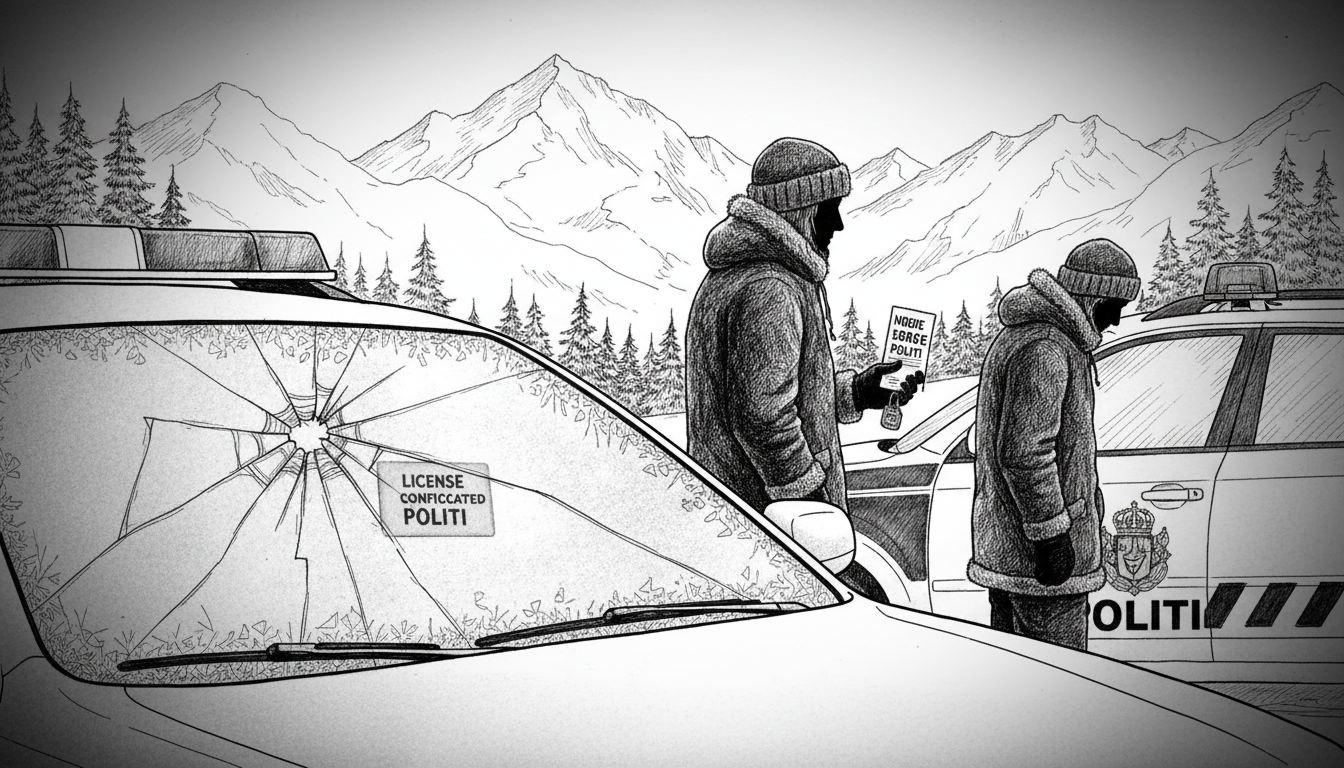
Norway driving laws winter are being strictly enforced after police in Akershus county confiscated a driver's license for operating a vehicle with an iced-over windshield. The incident occurred Saturday morning when a patrol noticed a car with minimal visibility. Only small patches of the front and side windows had been cleared. The driver, a woman in her 50s, was reported to the authorities and her license seized on the spot. This case highlights a recurring and dangerous problem on Norwegian winter roads.
Operational leader Atle Vesttorp of the Eastern Police District was blunt in his assessment. “You must be able to see around you when you drive a car. This cuts directly into traffic safety,” Vesttorp said. He confirmed police encounter similar situations periodically, often with drivers claiming they are in a hurry or waiting for the car's heater to clear the ice. His warning was clear: “Regardless of how little time you have, you should always take time to scrape the front and sides so you have sufficient visibility. If not, you risk losing your driver's license.”
A Clear and Present Danger on Winter Roads
Driving with ice Norway is not a minor infraction but a serious breach of traffic safety laws designed for a harsh climate. The country's winter conditions, combining snow, ice, fog, and limited daylight, demand optimal visibility. A partially cleared windshield creates blind spots that can hide pedestrians, cyclists, wildlife, and other vehicles, especially at intersections and roundabouts. The legal requirement is unambiguous: a driver must ensure a clear view of the road and traffic in all directions before setting off.
Traffic safety experts align closely with the police's zero-tolerance approach. “A vehicle with an iced windshield is a hazard to everyone around it,” explains a road safety advisor from the Norwegian Council for Road Safety (Trygg Trafikk). “The driver’s reaction time is severely compromised. They might see a major obstacle directly ahead, but they will miss the child stepping off the curb from the side, the cyclist approaching from the left, or the car stopping suddenly in the next lane. In winter conditions, where stopping distances are longer, full visibility is non-negotiable.”
The Legal Repercussions and Police Authority
The immediate confiscation of a driving license may seem drastic, but it falls within standard police procedure for actions posing an immediate threat to public safety. Norwegian law grants officers this authority when a driver's conduct demonstrates they are unfit to operate a vehicle. Driving with a dangerously obscured view meets this criterion. The process is administrative; the license is taken to prevent continued danger, and the case is then sent to the public prosecutor for formal legal processing.
Legal analysts note that the penalty can extend beyond the initial seizure. The driver typically faces a substantial fine. In persistent or severe cases, it could influence the right to hold a license longer-term. The message from the justice system is one of deterrence. The inconvenience of losing your license for the day—and the financial penalty—is intended to outweigh the perceived inconvenience of spending five extra minutes with an ice scraper.
Why Drivers Take the Risk
Despite the risks and penalties, cases like the one in Akershus happen regularly. Police and safety organizations point to several common factors. Simple morning rush and poor planning top the list. Many drivers underestimate how long proper de-icing takes and hope the car's defroster will finish the job while they drive. This is ineffective for side windows and mirrors and illegal, as the vehicle must be fully cleared before moving.
There is also a misconception about what constitutes “clear enough.” Some drivers scrape a small portal directly in front of the driver's seat, neglecting the passenger side, the entire windshield breadth for peripheral vision, and the critical side windows. Modern car designs, with steeply raked windshields and thick A-pillars, already create significant blind spots; adding a layer of ice turns these into complete visual blockades.
A Broader Look at Winter Traffic Safety
This specific incident is a symptom of the broader challenges of Norwegian winter mobility. The Norwegian Public Roads Administration (Statens vegvesen) consistently cites impaired visibility as a contributing factor in a significant portion of winter accidents. While national statistics isolating iced windshield incidents are not compiled, police districts confirm it is a seasonal, recurring issue.
The focus on visibility is part of a holistic winter driving culture promoted in Norway. This includes the mandatory use of winter tires (often studded), carrying emergency equipment, and adapting speed to conditions. Clearing your vehicle entirely of snow and ice is a fundamental part of this social contract. Driving a “snøfonn” – a car covered in a mound of snow – is also illegal and dangerous, as snow can slide onto the windshield or fly off and hit other vehicles.
Expert Advice for Safe Winter Driving
Safety organizations emphasize a routine. “Start your car, turn on the defroster to full heat, and then begin scraping,” advises a veteran driving instructor from the Norwegian Automobile Federation (NAF). “Start with the roof and hood so snow doesn't slide down onto cleared glass. Then do all windows completely, not just the windshield. Clean all mirrors and lights. Finally, brush all snow off the entire vehicle, including the taillights and license plate.”
They also recommend using a proper ice scraper and snow brush, not credit cards or gloves. For severe ice, a de-icing spray can help. Most importantly, factor this time into your journey. Leaving home ten minutes earlier is a simple, effective strategy that enhances safety for everyone on the road.
A Question of Responsibility and Culture
The police action in Akershus serves as a stark reminder. In a nation where personal freedom and responsibility are deeply valued, operating a vehicle comes with a heavy duty of care. The right to drive is contingent on doing so safely. During the long winter months, this responsibility manifests in the simple, physical act of clearing your windshield.
This case raises a broader question for Norwegian society: as winter weather becomes increasingly unpredictable with climate change, featuring more frequent shifts between freeze and thaw, will the vigilance of drivers keep pace? The police, by enforcing the law without exception, aim to ensure that it does. The alternative—prioritizing a few minutes of personal convenience over the safety of pedestrians, cyclists, and other motorists—is a risk the Norwegian justice system is clearly unwilling to tolerate. The message from the Eastern Police District is now etched as clearly as lines in frost: no view, no drive.