
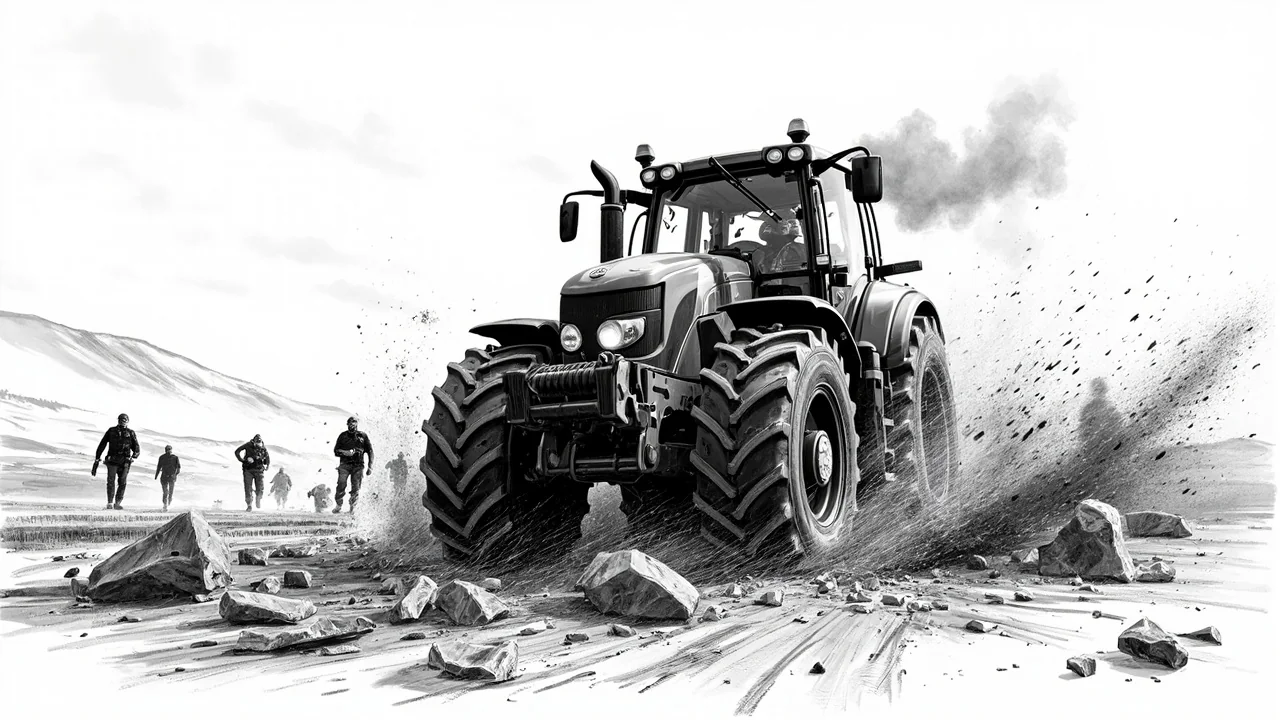
Norway police are investigating significant damage to a mountain road safety barrier after approximately 100 meters of the steel guardrail was torn from its posts. The incident occurred on County Road 27 over the Venabygdsfjellet mountain pass in the Innlandet region, reducing road safety and accessibility. Police were alerted at 11:05 AM Sunday and have dispatched a patrol to document the scene and secure evidence.
"Spor på stedet kan tyde på at en større traktor har forårsaket skaden," police stated, urging the driver of a large tractor to come forward. The force is asking the public for tips related to the case. An initial contractor sent to assess the damage confirmed the extensive destruction before police arrived.
This act of vandalism or negligence poses a direct threat to motorist safety on a vital regional artery. The Venabygdsvegen road is a key transport link through the mountainous terrain of Eastern Norway. Removing 100 meters of autovern, the crucial steel barrier designed to prevent vehicles from plunging off the road, creates an immediate and severe hazard, especially with potential winter conditions lingering at higher altitudes.
A Mountain Road Left Vulnerable
The damaged section is on Fylkesvei 27, a county-maintained road that traverses the Venabygdsfjellet plateau. These mountain passes are engineering feats, connecting remote communities and facilitating tourism and commerce. Their safety infrastructure is not decorative; it is a critical lifeline. The autovern, or vehicle restraint system, is typically a galvanized steel W-beam barrier anchored to strong posts driven into the ground.
Ripping up 100 meters of such a barrier requires substantial force. Police speculation that a "larger tractor" is involved points toward agricultural or forestry machinery. This suggests the damage may not have been a deliberate act of vandalism but could stem from an accident, poor maneuvering, or a piece of equipment catching the barrier. However, the failure to report damaging public infrastructure is a serious offense under Norwegian law.
"Entreprenør ble sendt til stedet, og kunne melde at ca. 100 meter autovern var røsket opp / beskadiget," said operations manager Kjetil Enger in the police report. The phrasing "røsket opp" implies a violent, wrenching action, not a gentle scrape. The force required suggests the vehicle was likely moving with significant power, potentially while towing heavy equipment that snagged the barrier.
The High Cost of Road Sabotage
Financially, the damage represents a costly burden for public coffers. Reinstalling 100 meters of certified safety barrier on a mountain road involves far more than just material costs. It requires specialized traffic management, certified installation crews, transportation of materials to a remote site, and potentially blasting or drilling for new post foundations in rocky terrain. The total bill could easily reach several hundred thousand Norwegian kroner.
Beyond the financial cost is the operational disruption. County Road 27's "redusert fremkommelighet"—reduced accessibility—forces detours for local residents, commercial transport, and emergency services. In a region where alternative routes can add hours to a journey, this degradation of infrastructure has a tangible impact on daily life and economic activity. It also diverts limited public works resources from planned maintenance to emergency repair.
Norway takes the integrity of its public infrastructure seriously. The Norwegian Road Administration (Statens vegvesen) and county road authorities maintain strict standards for these safety systems. They are tested to contain and redirect vehicles of specific weights and angles of impact. A compromised section creates a weak point, potentially rendering adjacent sections less effective in a real collision.
Legal Repercussions and Public Duty
The legal framework surrounding such damage is clear. Under Norwegian penal code § 292, it is punishable to "destroy or damage property belonging to another" with fines or imprisonment up to six years for gross negligence or intent. Failing to report an accident causing such damage can compound liability. The police appeal for public tips underscores their intent to identify the responsible party.
This incident touches on a broader social contract in Norway. The high-trust, high-tax model relies on collective responsibility for the public good. Deliberately or carelessly damaging safety infrastructure violates that trust. It endangers fellow citizens and misuses shared resources. The public response to the police call for tips will be a small test of that communal ethos.
From a technical perspective, the investigation will involve examining the tractor's likely path. Investigators will look for paint transfers on any remaining barrier fragments, tire tracks in soft ground, and the specific pattern of post damage. The direction of the bent posts and torn anchors can indicate the vehicle's direction and the point of initial impact. If a large tractor was involved, it is unlikely to be hidden easily, and local knowledge in rural communities often proves decisive.
Analysis: More Than Just a Damaged Barrier
While seemingly a local crime report, this story reveals the vulnerabilities of even robust infrastructure. Norway's extensive road network, particularly in challenging terrain, is a point of national pride and a necessity. Its maintenance is a constant, expensive battle against nature and wear. Adding human-caused damage, whether intentional or accidental, strains that system unnecessarily.
For international observers, it highlights a different aspect of Norwegian society. This is not a story about oil wealth or Arctic policy, but about the mundane yet essential glue that holds a dispersed population together: reliable infrastructure. The efficiency of the response—contractor assessment followed by police evidence collection—shows a functioning bureaucratic protocol. The public appeal for information demonstrates standard investigative procedure.
However, the incident raises practical questions. Was the vehicle stolen? Was the operator unaware of the damage caused? Is there a local dispute that manifested in this destructive act? The mountain road setting adds a layer of isolation where such actions might be thought to go unnoticed, though modern policing and community networks quickly close that gap.
Looking Ahead: Repair and Responsibility
The immediate priority is making the road safe again. Temporary measures, such as concrete barriers or prominent warning signs, will likely be deployed until a permanent repair can be scheduled and executed. The coming days will determine if the driver heeds the police call or is identified through public tips or forensic evidence.
The case will ultimately be settled through insurance claims, fines, and potentially a court order for restitution. The driver, if found, faces a substantial financial reckoning beyond any criminal penalty. More importantly, the community loses a measure of safety until the barrier is restored.
This event serves as a stark reminder that the complex systems safeguarding our daily commutes and supply chains are fragile. A single act, lasting perhaps only minutes, can compromise safety for thousands and cost society dearly. As Norway continues to invest in its world-class infrastructure, the challenge remains not just in building it, but in fostering the collective responsibility required to protect it. Will the driver on Venabygdsfjellet choose to be part of that solution, or remain a costly example of its breach?