
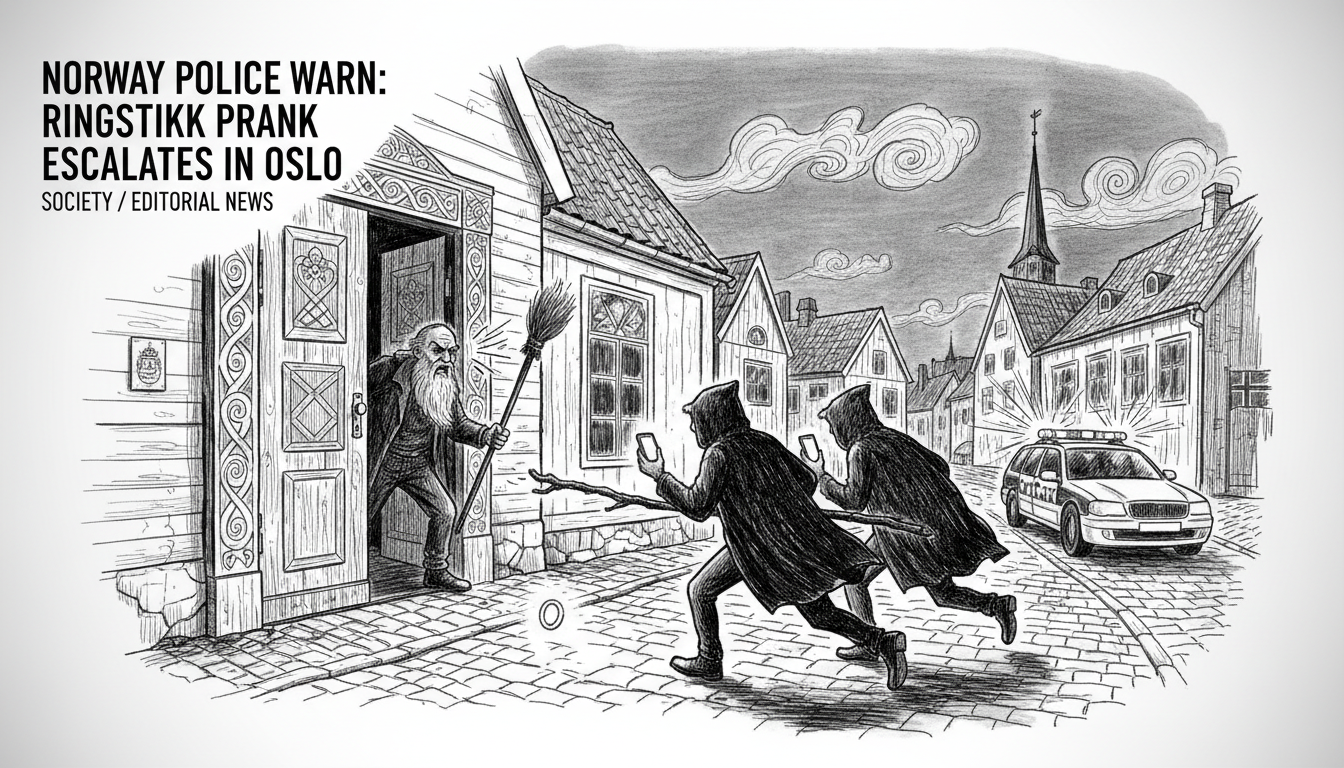
Norway police have issued a direct warning to young people in Oslo about the escalating dangers of the 'ringstikk' prank. The Oslo Police District, responding to multiple desperate complaints from residents in the Lambertseter borough, stated that what begins as a game is now causing fear and property damage. Officers described a pattern of behavior where doorbell ringing has progressed to kicked doors and vandalized mailboxes, creating a climate of anxiety in the residential area.
From Child's Play to Community Concern
The game, known internationally as 'ding dong ditch' or 'knock a door run,' involves ringing a doorbell and fleeing before the occupant answers. For generations, it has been dismissed as a minor, if irritating, childhood mischief. The recent police intervention in a quiet Oslo neighborhood signals a significant shift in how authorities perceive the act. Police emphasized they are receiving reports of near-daily occurrences, with some residents feeling systematically targeted. This transforms a sporadic nuisance into a persistent source of distress, undermining the sense of security within one's own home. The warning was issued specifically through a local Facebook group for Lambertseter, indicating a targeted community policing approach to address the localized surge in complaints.
The Unpredictable Psychology of a Prank
The core of the police warning hinges on a critical psychological insight: the prankster has no control over the reaction they provoke. "They do not know the state of mind or the reaction of the person who opens the door, and situations can also quickly escalate," the police statement read. This element of unpredictability is what elevates ringstikk from a foolish game to a potentially dangerous one. An elderly person living alone, a parent with a sleeping infant, or an individual with anxiety issues may experience the sudden, aggressive doorbell ring and subsequent silence as profoundly threatening. The act violates the expected social contract of the doorstep, a private space where visitors identify themselves. This violation can trigger disproportionate fear, because the unknown intent behind the ring is left to the resident's imagination, which often conjures worst-case scenarios.
Social psychologists note that such pranks, while intended as fun by the perpetrators, exploit a fundamental need for safety and predictability in one's personal environment. The repeated nature of the acts reported in Lambertseter compounds this effect, creating a pattern of harassment that can lead to chronic stress for victims. The police statement explicitly connected the dots from perceived "fun and innocent play" to outcomes that "create both fear and despair." This framing is crucial; it legitimizes the residents' complaints and reframes the issue from one of childish behavior to one of community well-being and the right to domestic peace.
Legal Grey Areas and Enforcement Challenges
Police intervention in what is essentially a prank presents notable operational challenges. Norwegian law does not have a specific statute against ringing a doorbell. Enforcement would typically rely on broader regulations concerning disturbance of the peace, harassment, or, in cases of escalation, vandalism or property damage. The police warning serves as a proactive measure, aiming to curb the behavior before it crosses a clearer legal threshold. By publicly outlining the consequences—the sparking of doors, the vandalism of mailboxes—the police are defining the likely trajectory of the activity, making a legal case for intervention before more serious damage occurs.
This preventative approach is a hallmark of Norwegian policing, which often emphasizes dialogue and early warnings. The decision to use the local Facebook channel is strategic, aiming to reach both concerned parents and the youths themselves in the digital spaces they inhabit. The message is clear: the community is watching, and the behavior is no longer being dismissed as harmless. It also places a degree of responsibility on parents and guardians to discuss the real-world impact of such actions with their children. The challenge for police is to maintain this advisory posture while also demonstrating a willingness to take concrete action if the warnings are ignored and the harassment continues.
A Mirror to Broader Social Dynamics in Oslo
The incident in Lambertseter, while localized, reflects broader conversations about urban living, youth activity, and social cohesion in Oslo's varied boroughs. Lambertseter, a post-war residential area south of the city center, is known for its family-friendly environment and high proportion of residential housing. Incidents that shatter the quiet of such areas are felt acutely. The police warning indirectly touches on questions of youth engagement and recreational spaces. Are such pranks, at their root, a symptom of boredom or a lack of constructive outlets? While not excusing the behavior, community leaders often look for underlying causes when antisocial patterns emerge among young people.
Furthermore, the episode highlights how digital and real-world communities intersect. The complaints flowed from real-world distress to digital police reports and were addressed via a digital community forum. The social media announcement itself becomes part of the story, a public performance of policing that reassures the community while admonishing the perpetrators. It showcases how Norwegian authorities adapt traditional public safety communication to modern, networked neighborhood life.
The Path Forward: Deterrence and Dialogue
The Oslo Police District's warning is the first step in a calibrated response. Its success will be measured by a reduction in complaints from Lambertseter residents. Should the behavior persist, officers may increase patrols in the affected areas, attempt to identify repeat offenders, and engage more directly with local schools and youth clubs. The potential legal ramifications for persistent offenders could shift from a warning to formal reporting, especially if property damage is involved. For minors, this would likely involve contact with parents and child welfare services, focusing on corrective guidance rather than punitive measures.
The ultimate goal is to re-establish the normative boundary that has been eroded. The police statement serves to collectively reaffirm that harassing one's neighbors is not a game, but an act with emotional and sometimes material consequences. It draws a line in the social sand, using the authority of the police to give weight to what residents already feel: their peace and security are valuable and will be protected. The effectiveness of this strategy relies on a shared social understanding and respect for that authority—a hallmark of the high-trust society Norway maintains.
As the dark winter months give way to spring in Oslo, with longer evenings that often see increased outdoor activity, this early-season warning is a test case. Can a clear, community-focused message from law enforcement deter a timeless, if troublesome, youthful pastime? The answer will depend on whether the young people involved recognize the human impact behind the doorbell they ring and choose to redirect their energy elsewhere. The police have framed the choice not as one between fun and no fun, but between thoughtless mischief and being a considerate member of the community. In a society built on mutual respect, that is a powerful distinction to make.