
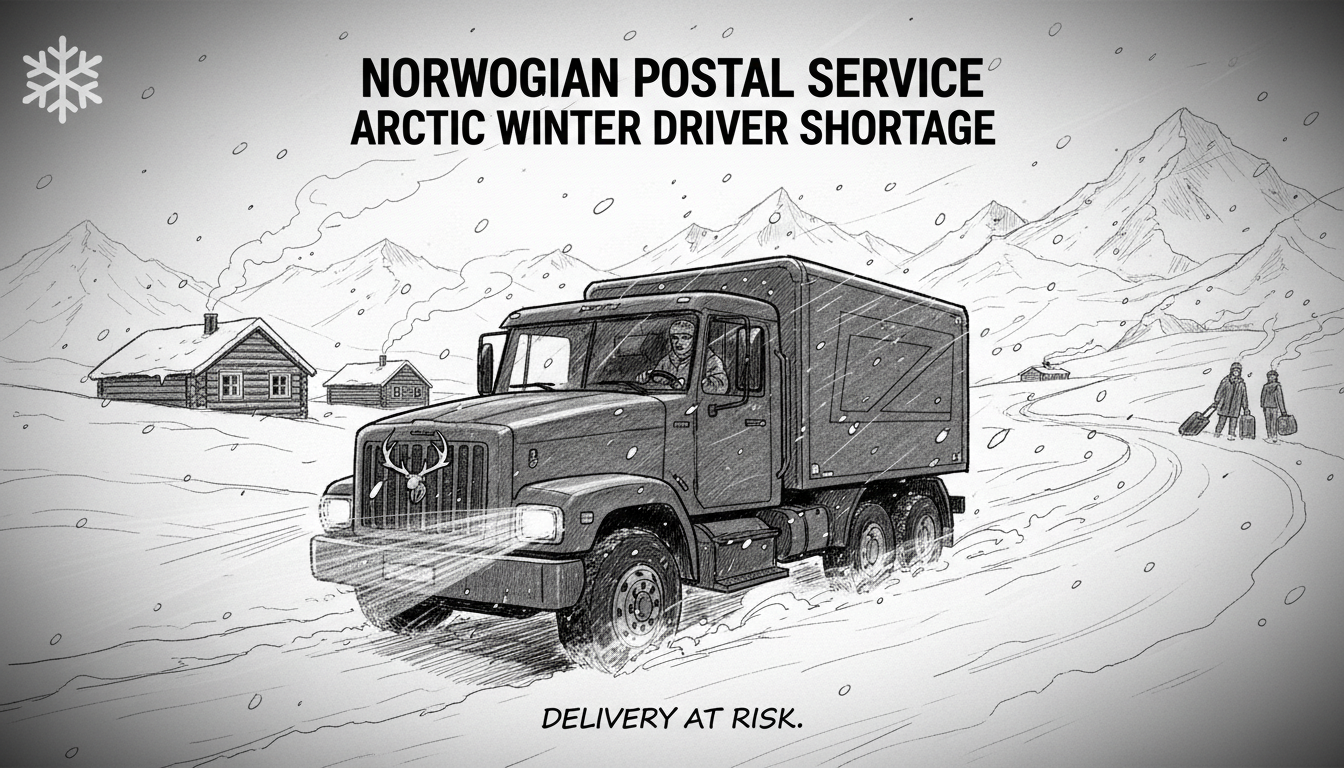
The Norwegian postal service faces a critical shortage of drivers capable of navigating northern Norway's treacherous winter roads. This shortage threatens mail and package delivery across the Arctic region during the harshest months.
Kjell Hansen, a veteran driver with eight years at Posten and 25 years in professional driving, describes the unique challenges of his route. He maneuvers his truck through icy curves near Bjerkvik while praising the freedom and scenery of his work. But he stands among a dwindling group of experienced winter drivers.
Over 20 percent of Norway's postal drivers now exceed 62 years old. Industry projections indicate the country will lack 2,500 to 3,000 professional drivers within six years if current trends continue. Hansen expresses disappointment that fewer young people choose driving careers today.
Regional manager Torstein Nygård Johansen reports six positions remained unfilled for over a year just at the Bjerkvik facility alone. He emphasizes the difficulty finding skilled drivers who can master northern Norwegian winter conditions. Approximately 90 percent of applicants lack experience with Arctic road conditions.
Posten traditionally recruited drivers from Eastern Europe, particularly Poland. That recruitment pipeline collapsed following Russia's invasion of Ukraine. Many Polish drivers who previously worked in Norway returned home, partly due to rising wages in Poland.
The postal service now relies heavily on temporary staffing agencies. Johansen acknowledges they currently manage their delivery commitments but worries about long-term sustainability. Route reductions or failed deliveries could become reality if the driver shortage persists.
Nationally, Posten must recruit 250-300 new drivers annually to offset retirements and meet growing demand. Communications director Kenneth Tjønndal Pettersen confirms the postal service employs multiple recruitment strategies. These include traditional hiring, apprenticeship programs, and partnerships with vocational schools.
The service also retrains existing delivery van drivers for larger trucks, covering their education costs. A recent cinema and social media campaign targets younger audiences to highlight career opportunities in professional driving.
Johansen believes changing perceptions represents the biggest challenge. Truck driving has suffered from negative stereotypes for too long, he suggests. Many potential drivers worry about balancing family life with driving careers, though modern scheduling makes this increasingly feasible.
Safety concerns also deter newcomers. Stories of truck accidents on icy roads frighten promising candidates. Johansen encourages skeptics to try the profession, emphasizing comprehensive training and modern equipment.
The stakes extend beyond postal delivery. When trucks stop moving, supermarkets run out of food and pharmacies lack medications. Professional drivers perform crucial societal functions that most people take for granted.
Posten maintains sufficient capacity for this year's Christmas deliveries despite the staffing challenges. The recruitment offensive primarily addresses future needs and anticipated market growth driven by increasing e-commerce and freight transport.
This driver shortage reflects broader Nordic logistics challenges. Remote communities across northern Scandinavia depend on reliable transportation networks. As veteran drivers retire, finding replacements willing to master Arctic driving conditions becomes increasingly difficult. The solution requires both better recruitment and changing public perceptions about transportation careers.