
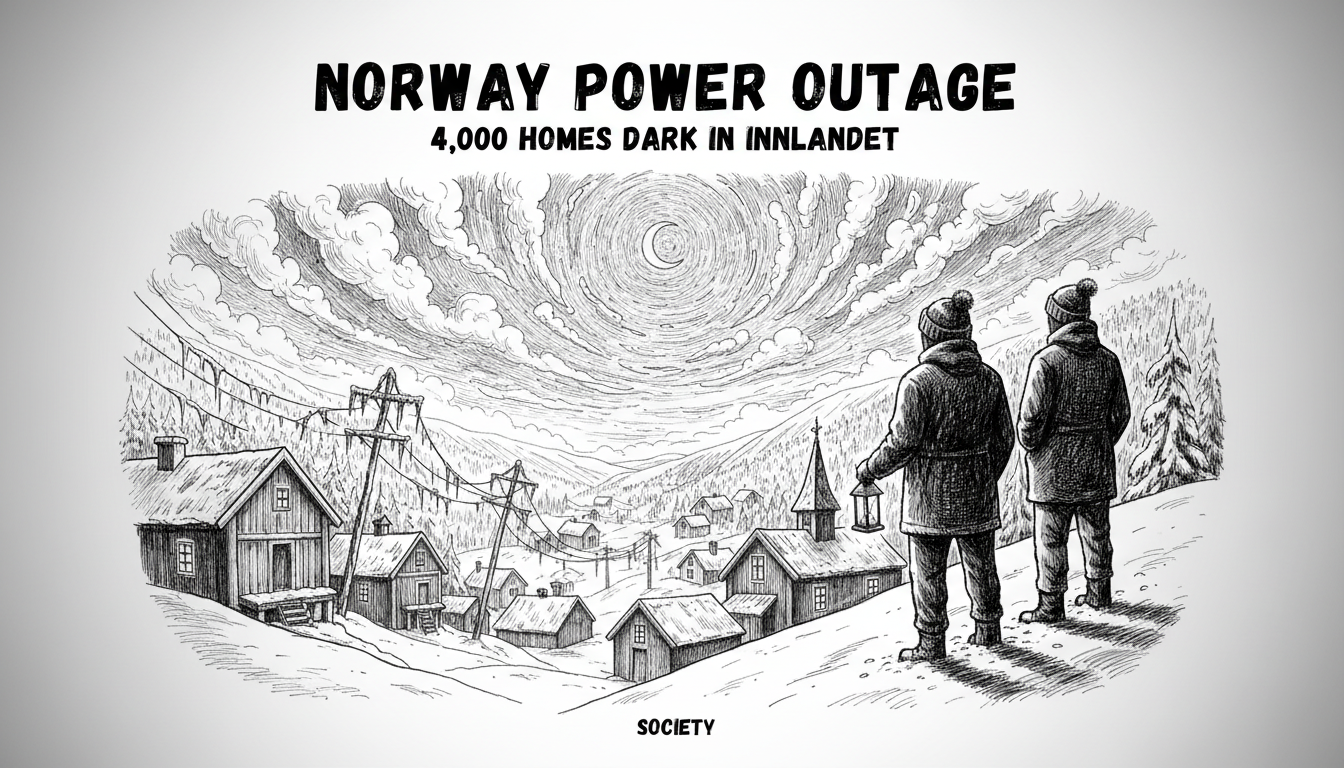
Norway's electricity grid faces a significant test as over 4,000 households remain without power in the mountainous Innlandet county. The number, reported by distribution companies Elvia, Vevig, Klive, and Fjellnett, represents a substantial improvement from earlier in the day when more than 9,000 homes were in the dark. This localized crisis highlights the persistent vulnerability of even the world's most advanced hydroelectric systems to the forces of nature.
Crews from multiple grid operators are working across the region to restore connections. The outages are concentrated in rural and hard-to-reach areas where heavy snowfall and strong winds have brought down power lines and damaged infrastructure. While Norway boasts one of the most reliable electricity grids globally, its geography presents unique challenges, particularly in inland counties like Innlandet.
The Battle Against Winter's Fury
Repair teams are confronting difficult conditions, including deep snow and blocked access roads, as they work to locate and fix faults. The situation is dynamic, with power being restored to some communities while new outages are reported in others as the weather system moves. A spokesperson for one of the operating companies said in a statement that safety is the top priority, and crews will work around the clock where conditions allow.
"Our first teams were dispatched before dawn," the statement read. "We have additional personnel on standby, but the weather itself is slowing progress. We ask for patience from affected customers." The companies provide updated outage maps on their websites, showing clusters of disruptions primarily in the county's central and northern municipalities. Residents are advised to prepare for the possibility of extended outages, particularly in isolated areas.
Hydro Power's Achilles' Heel
This incident underscores a fundamental tension in Norway's energy landscape. The country generates over 90% of its electricity from hydropower, a system celebrated for its low emissions and reliability. However, this infrastructure is deeply intertwined with the environment it harnesses. Power lines must traverse vast forests and rugged mountain passes to connect remote generation sites with population centers, creating exposure points.
Extreme weather is the primary antagonist. Heavy, wet snow can accumulate on lines, causing them to snap. High winds can fell trees onto distribution networks. While the grid is built to withstand harsh conditions, the increasing frequency and intensity of winter storms, a trend linked by scientists to climate change, are testing its limits. This creates a paradox: the very energy system that helps Norway avoid fossil fuels is becoming more vulnerable to the climate effects those fuels cause.
A National Priority of Security and Investment
The Norwegian government, through the Ministry of Petroleum and Energy and the Norwegian Water Resources and Energy Directorate (NVE), maintains a strong focus on energy security. Grid companies are mandated to meet strict reliability standards and are investing billions of kroner in modernization. This includes burying cables in critical areas, implementing more robust monitoring technology, and reinforcing towers and lines.
"Grid resilience is non-negotiable," said a representative from the NVE. "We analyze every major outage to identify systemic weaknesses. The goal is not just to repair, but to build back stronger. Investments are targeted at the areas most prone to disruption." These upgrades are partly funded through regulated network tariffs, meaning consumers ultimately bear the cost of a more resilient system. The political consensus in Oslo, from the Storting to the government, supports this long-term investment, viewing a reliable electricity supply as a cornerstone of modern society and economic stability.
The Human Dimension of a Blackout
For the households affected, the outage is more than a statistic. It is a practical crisis that halts daily life. In a Norwegian winter, electricity powers not just lights and appliances, but often the primary heating system. A prolonged loss of power can quickly lead to dangerously cold homes. It disrupts telecommunication, access to information, and the operation of water pumps in areas without municipal supply.
Local municipalities activate their emergency plans in such situations, often opening designated warming centers in schools or community halls for residents who need shelter. The public is consistently advised to keep an emergency kit at home, including alternative light sources, a battery-powered radio, warm clothing, and non-perishable food. This self-reliance is a key part of Norway's civil preparedness philosophy, acknowledging that professional help may be delayed in severe weather.
Looking Ahead: A Grid for a New Climate
The Innlandet outage serves as a real-time case study. Energy experts point to such events as evidence that grid planning must now account for a new normal. "The historical weather data we used to design our infrastructure is no longer a sufficient guide," said an energy analyst familiar with the Nordic market. "We need to stress-test the system against scenarios that were considered extreme a generation ago but are now becoming commonplace."
This involves not just physical hardening but also smarter management. The integration of more distributed energy resources, like local solar and wind, could provide pockets of resilience if paired with battery storage. Advanced monitoring can help operators anticipate faults and reroute power dynamically. The conversation is also turning to the demand side, encouraging consumers to reduce load during peak strain to help balance the grid.
Norway's situation is unique but instructive. As nations worldwide transition to renewable energy, they will face their own versions of this reliability challenge. How Norway manages the intersection of its pristine, powerful environment and the need for constant, clean electricity is a story being written one repair at a time. The lights will come back on in Innlandet, but the larger task of future-proofing the veins of the nation's power system continues, against a backdrop of an increasingly unpredictable climate.