
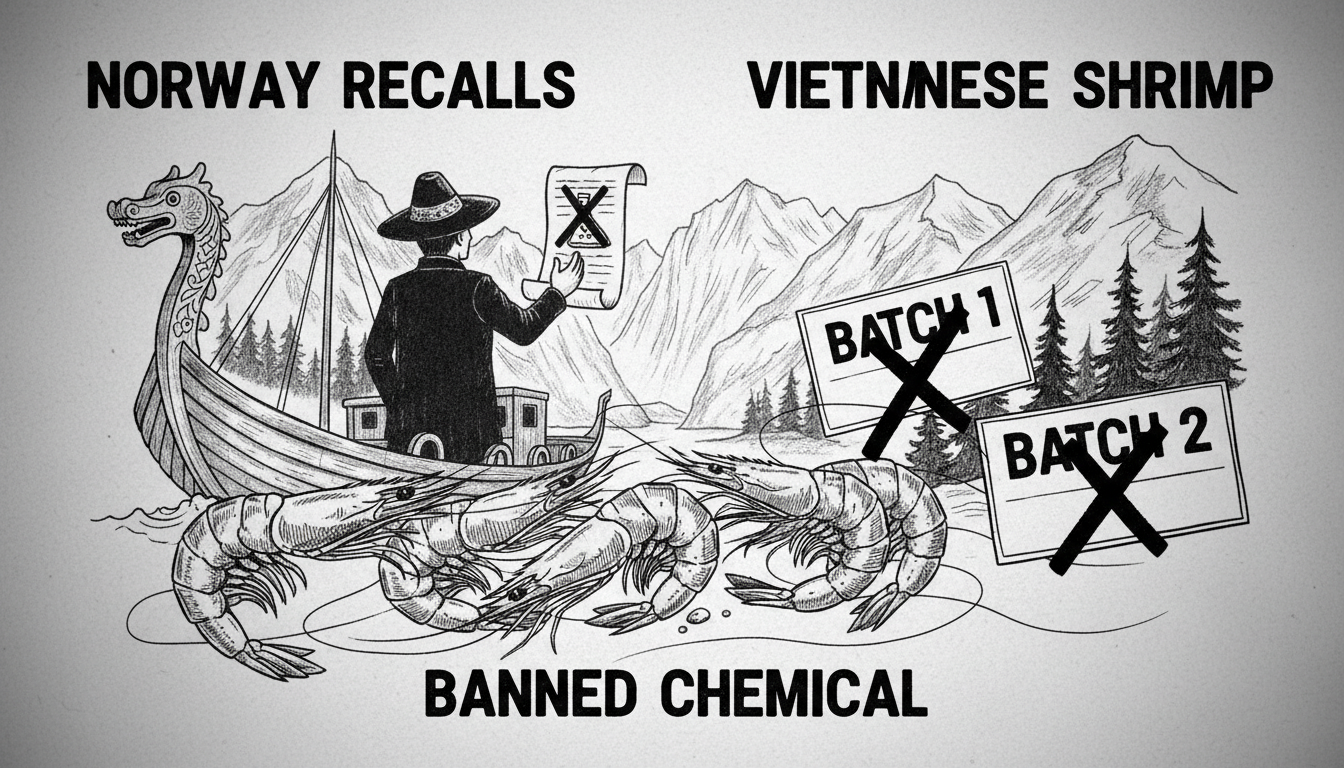
Norway's food safety authority has ordered a nationwide recall of Vietnamese shrimp after detecting a banned chemical linked to cancer risks. The Norwegian Food Safety Authority (Mattilsynet) announced the recall of 'East Coast Whiteleg Shrimps' imported by Freshline AS, with best-before dates of October 15 and 16, 2026. The product was sold in independent grocery stores across southern and central Norway, posing a direct health threat to consumers who may have purchased the contaminated seafood.
Mattilsynet identified leukomalachite green during routine monitoring of seafood imports. This substance can form when malachite green, a veterinary chemical banned in the European Union since 2004, is used in aquaculture. The chemical was historically employed to treat fungal infections and parasites in fish farms but is now prohibited due to its carcinogenic properties. Norwegian authorities confirmed the shrimp originated from Vietnam, where regulations differ from EU standards that Norway follows.
The Silent Contaminant in Imported Seafood
Leukomalachite green represents a persistent problem in global seafood trade. It is a metabolite of malachite green, meaning it forms as the original chemical breaks down in animal tissue. This makes detection challenging and creates long-term contamination risks. The substance can enter the food chain when aquaculture equipment is disinfected with malachite green or when fish are directly treated with the chemical.
'Malachite green is not approved for use in food-producing animals in the EU, but it is used in some other countries,' Mattilsynet stated clearly. 'Studies show the substance may pose health hazards to humans.' The agency's monitoring program specifically tests for such unauthorized substances, reflecting Norway's stringent food safety standards that often exceed international requirements. This detection system operates continuously at border controls and within the domestic market.
Norway's Rigorous Food Safety Net
The recall operation demonstrates Norway's multi-layered approach to food safety. Freshline AS, the importer based in Norway, initiated the withdrawal upon notification from authorities. The company has alerted its retail customers and established return procedures for consumers. This public-private coordination is standard protocol in Norway's food safety system, where importers bear significant responsibility for product compliance.
Consumers who purchased the affected shrimp are instructed to return them to the store or dispose of them immediately. The product is packaged with shells and without heads, sold in various shrimp sizes. Mattilsynet's public warning includes specific identification details to help consumers recognize the contaminated batches. This transparency is characteristic of Norwegian food safety communications, which prioritize clear public guidance over industry protection.
Global Supply Chains and Regulatory Gaps
This incident highlights persistent challenges in monitoring global seafood imports. Vietnam has developed a substantial aquaculture industry that exports worldwide, but regulatory practices vary between producing and importing nations. The EU's ban on malachite green has been in place for two decades, yet contamination continues to appear in imported products. This suggests either ongoing illegal use or environmental persistence of the chemical in some production regions.
Norway's seafood import controls are among the world's most rigorous, yet this detection occurred months after the May 2024 import date. The delayed discovery reveals limitations in testing frequency and the sophisticated nature of chemical contamination. Food safety experts note that metabolites like leukomalachite green can escape detection in standard screening unless specifically targeted. Norway's monitoring program includes such specialized testing, but it cannot examine every shipment comprehensively.
Economic and Trust Implications for Importers
For Freshline AS and other Norwegian importers, such recalls carry significant financial and reputational consequences. The company must manage the logistics of retrieving products from scattered independent stores across southern and central Norway. They face potential liability claims and certainly will incur substantial losses on the imported product. More damaging is the erosion of consumer trust in their brand and in imported seafood generally.
Norwegian consumers pay premium prices for seafood they believe is safe and sustainably sourced. Incidents like this undermine confidence in the import system and may shift purchasing toward domestic Norwegian shrimp. Norway produces high-quality cold-water shrimp in the Arctic and North Atlantic, though at higher price points than Asian imports. This recall could accelerate existing trends toward local sourcing and transparency in seafood supply chains.
Comparative Approaches to Seafood Safety
Norway's response contrasts with practices in some other importing nations. The immediate public notification, detailed product identification, and clear consumer instructions reflect a precautionary approach. Some countries might have conducted quieter negotiations with the importer or issued vaguer warnings. Mattilsynet's straightforward communication aligns with Norway's cultural preference for transparency in public health matters.
The incident also reveals differences between EU and Norwegian enforcement capabilities. While Norway follows EU food safety regulations as part of the European Economic Area agreement, it maintains its own inspection and monitoring systems. These systems are particularly vigilant regarding seafood, given Norway's deep cultural and economic ties to fishing and aquaculture. The detection of leukomalachite green demonstrates the effectiveness of Norway's targeted monitoring programs for known risk substances.
The Science Behind the Ban
Malachite green's prohibition stems from substantial toxicological evidence. Studies have demonstrated carcinogenic effects in laboratory animals, with particular concerns about liver tumors and genetic damage. The chemical is readily absorbed through the gastrointestinal tract and can accumulate in fatty tissues. While the exact risk from low-level exposure in humans is debated, regulatory agencies worldwide have adopted precautionary bans.
The conversion to leukomalachite green complicates risk assessment. This metabolite retains concerning biological activity and persists longer in tissue than the parent compound. Its detection indicates prior use of malachite green in the production chain, even if the original chemical is no longer present. This persistence creates regulatory challenges, as contamination may reflect historical rather than current practices.
Consumer Response and Market Impact
Initial reactions from Norwegian consumers suggest heightened awareness but not panic. Social media discussions indicate many people are checking their freezers for the specific product dates. Some express frustration with imported seafood risks, while others commend Mattilsynet for effective monitoring. This balanced response reflects Norway's generally high trust in food safety authorities.
The market impact may extend beyond this single product. Independent grocery stores in southern and central Norway now face customer service challenges handling returns. Competing shrimp products, particularly Norwegian-caught varieties, may see increased demand despite higher prices. Importers of Asian seafood generally may face more scrutiny from both retailers and consumers in coming months.
Regulatory Future and International Cooperation
This recall will likely influence ongoing discussions about import controls and international standards. Norwegian authorities may increase testing frequency for Vietnamese seafood or require additional documentation from exporters. The incident provides concrete evidence for EU discussions about strengthening third-country controls. It also highlights the need for better traceability systems in complex global supply chains.
International cooperation remains essential for addressing these challenges. Norway participates in global food safety networks through the World Health Organization and Codex Alimentarius Commission. Sharing detection data about leukomalachite green helps other countries strengthen their monitoring. Ultimately, reducing such incidents requires improving aquaculture practices at source, not just detecting problems at borders.
A System Working as Designed
Despite the concerning nature of this contamination, the recall demonstrates Norway's food safety system functioning effectively. Routine monitoring detected a banned chemical, authorities moved swiftly to inform the public, and the importer implemented withdrawal procedures. This sequence reflects a mature regulatory environment where prevention, detection, and response mechanisms align.
The incident serves as a reminder that food safety requires constant vigilance, especially for imported products. As one Norwegian food safety expert noted privately, 'No system catches everything immediately, but a good system catches things before widespread harm occurs.' The limited distribution to independent stores rather than large chains likely reduced potential exposure, though authorities have not released exact sales volumes.
Norwegian consumers will continue facing choices between lower-cost imported seafood and premium domestic products. This recall provides concrete data for those decisions, highlighting the hidden costs that can accompany cheaper imports. It also reinforces the value of Norway's substantial investment in food safety monitoring—a system that ultimately protects both public health and the reputation of Norway's own substantial seafood exports.
The discovery raises uncomfortable questions about global food production standards. How many other banned substances slip through less rigorous monitoring systems? What responsibility do importing nations bear for ensuring foreign producers meet their safety standards? For Norway, with its export-oriented seafood industry, maintaining impeccable domestic safety records is both a public health priority and an economic necessity in competitive international markets.