
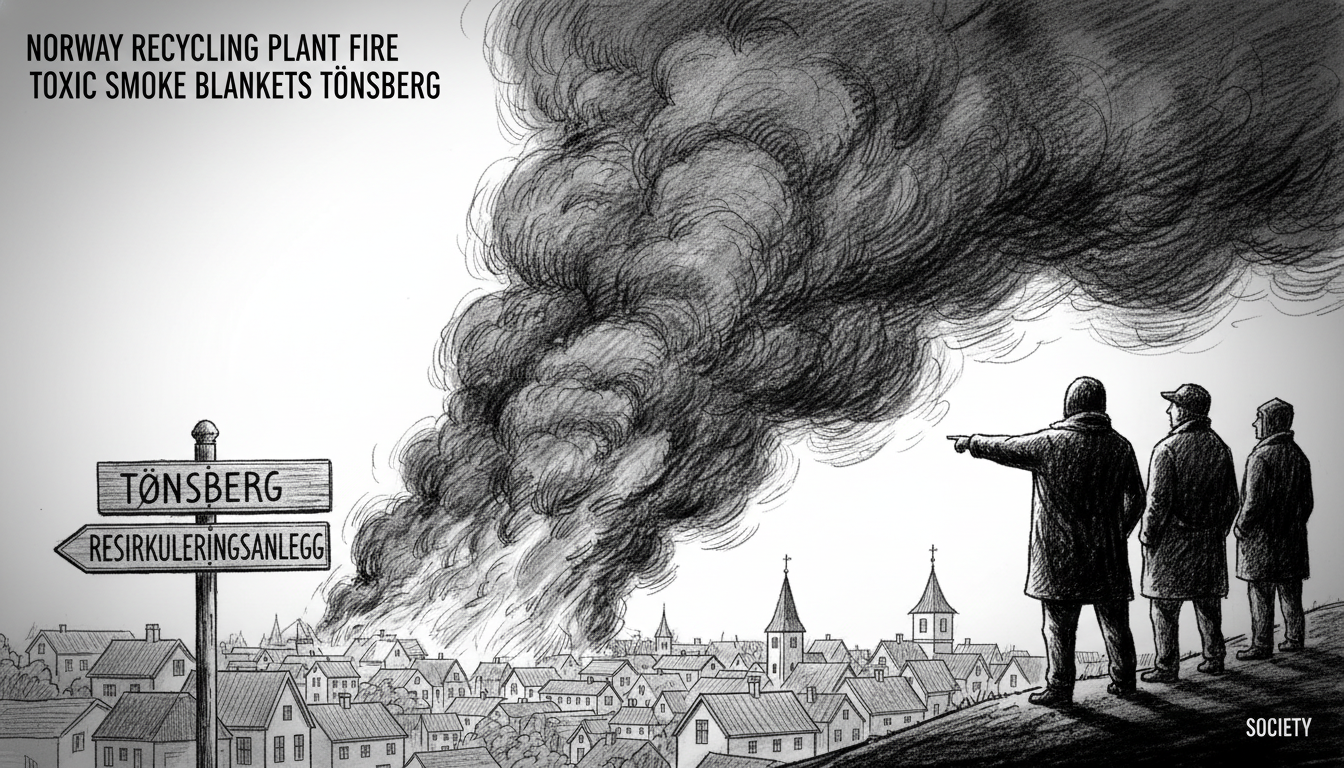
Norway's emergency services battled a major fire at one of the country's largest electronic waste recycling plants overnight, sending plumes of potentially toxic smoke over residential areas in Tønsberg. The blaze at the Revac facility on Revetal began around 8:30 PM, triggering a large-scale response from police and fire crews who worked through the night to contain it.
Thick, acrid smoke billowed from a storage building housing discarded electronics, reducing visibility on local roads and prompting urgent health warnings. Police immediately advised residents in the Linnestad area, and between the plant, Bispeveien and Bjuneveien, to close windows and shut down ventilation systems. "The recommendation from the fire service is to stay indoors, close windows and shut down ventilation systems," said operations manager Birger Andersen of the South-West Police District.
No injuries were reported among employees or emergency personnel. Workers used wheel loaders to remove material from the building as smoke divers and water pumps were deployed. By 12:20 AM, police assessed there was no need to evacuate local residents, but Andersen cautioned the situation could change. "This could be a prolonged fire," he stated, noting the fire service had the blaze under control but would continue extinguishing operations overnight.
A Hazardous Mix of Materials
Fires at electronic waste facilities present unique and severe dangers, far beyond those of a typical warehouse blaze. The Revac plant in Tønsberg specializes in processing discarded electronics, meaning the burning building contained a complex cocktail of plastics, metals, and chemical components. When these materials combust, they can release a range of toxic substances into the atmosphere, including dioxins, furans, and heavy metal particles.
"This is precisely the type of incident that environmental and health authorities fear most," said Dr. Ingrid Larsen, a professor of environmental toxicology at the University of Oslo. "Electronic waste is not just inert material. It contains flame retardants, PVC insulation, lead, mercury, and cadmium. The smoke from such a fire is a hazardous chemical plume, not just particulate matter." The immediate health advice to seal homes was, according to experts, a critical and necessary first response to mitigate public exposure.
The Challenge of Controlling the Blaze
Extinguishing a fire fueled by electronic waste is notoriously difficult. Water alone can be ineffective or even dangerous, as it may spread contaminated runoff. The materials often burn intensely and can reignite. Firefighters at the Revac site faced the dual challenge of suppressing the flames while managing the environmental fallout.
Operations manager Andersen confirmed the fire likely started within the electronic waste handling section of the facility. The significant smoke development, particularly in the initial stages, complicated efforts to gain a clear overview of the situation. The use of smoke divers indicates firefighters were navigating a low-visibility, hazardous environment to locate and attack the seat of the fire.
This incident is not isolated in a global context. Similar fires have occurred at e-waste sites across Europe and North America, often burning for days and requiring specialized foam and suppression tactics. The Norwegian Fire Protection Association has previously highlighted the specific risks associated with storage and processing facilities for combustible recyclables.
Regulatory Scrutiny and Industry Responsibility
The fire at Revac will inevitably lead to questions about safety protocols and regulatory oversight at Norway's recycling plants. As a nation that prides itself on environmental stewardship and a circular economy, the safe handling of waste streams is a cornerstone of public policy. The government, through the Norwegian Environment Agency and the Directorate for Civil Protection, sets strict guidelines for the storage and processing of hazardous waste.
"This event will trigger a serious review," said Lars Moe, a member of the Storting's Standing Committee on Energy and the Environment. "We have robust regulations, but an incident of this scale forces us to ask: were they followed? Are they sufficient? The health of our citizens and the protection of our environment cannot be compromised." He expects the committee will request a full report from the relevant agencies in the coming weeks.
The recycling industry itself operates under significant pressure. Demand for responsible e-waste processing is high, but margins can be tight, and facilities often handle vast volumes of material. Companies like Revac play an essential role in Norway's waste management ecosystem, ensuring valuable metals are recovered and toxic components are kept out of landfills. This fire, however, exposes the inherent risks of that operation.
Community Impact and Environmental Aftermath
For residents of Linnestad and the surrounding areas, the night was one of anxiety and disruption. The sight of a massive smoke column from a known industrial plant, coupled with official warnings to seal their homes, created a palpable sense of alarm. While the immediate threat of evacuation was lifted, the long-term concerns linger.
Environmental scientists will now monitor air quality data and potential fallout in the vicinity. The direction of the smoke, moving west towards Linnestad, will guide where soil and surface water samples are taken to check for contamination from airborne particulates. The fire service will also need to contain and manage any contaminated water used to fight the blaze, preventing it from entering the local drainage system or groundwater.
"The aftermath management is as important as putting the fire out," Dr. Larsen emphasized. "A coordinated effort between the fire department, environmental authorities, and the company will be required to assess and remediate any impact. This includes checking the health of emergency responders who were exposed to the smoke."
A Wake-Up Call for the Circular Economy
Norway is a global leader in recycling rates and environmental innovation. This fire serves as a stark reminder that the transition to a circular economy, while vital, carries its own set of operational risks. The safe logistics and storage of collected waste are critical links in the chain that consumers rarely see. When one of those links fails, the consequences can be dramatic and dangerous.
The incident at the Revac plant will likely accelerate discussions about technological solutions, such as improved fire detection and suppression systems specifically designed for recycling facilities. It may also prompt a review of insurance requirements and the geographical placement of such plants relative to residential zones.
As dawn broke over Tønsberg, the immediate crisis was contained. But the questions it ignited about balancing environmental progress with public safety will burn for much longer. The true cost of the fire will be tallied not just in kroner for damaged property, but in the level of trust placed in the systems designed to handle the detritus of our digital age. Can Norway's celebrated green ambitions withstand the heat of reality?