
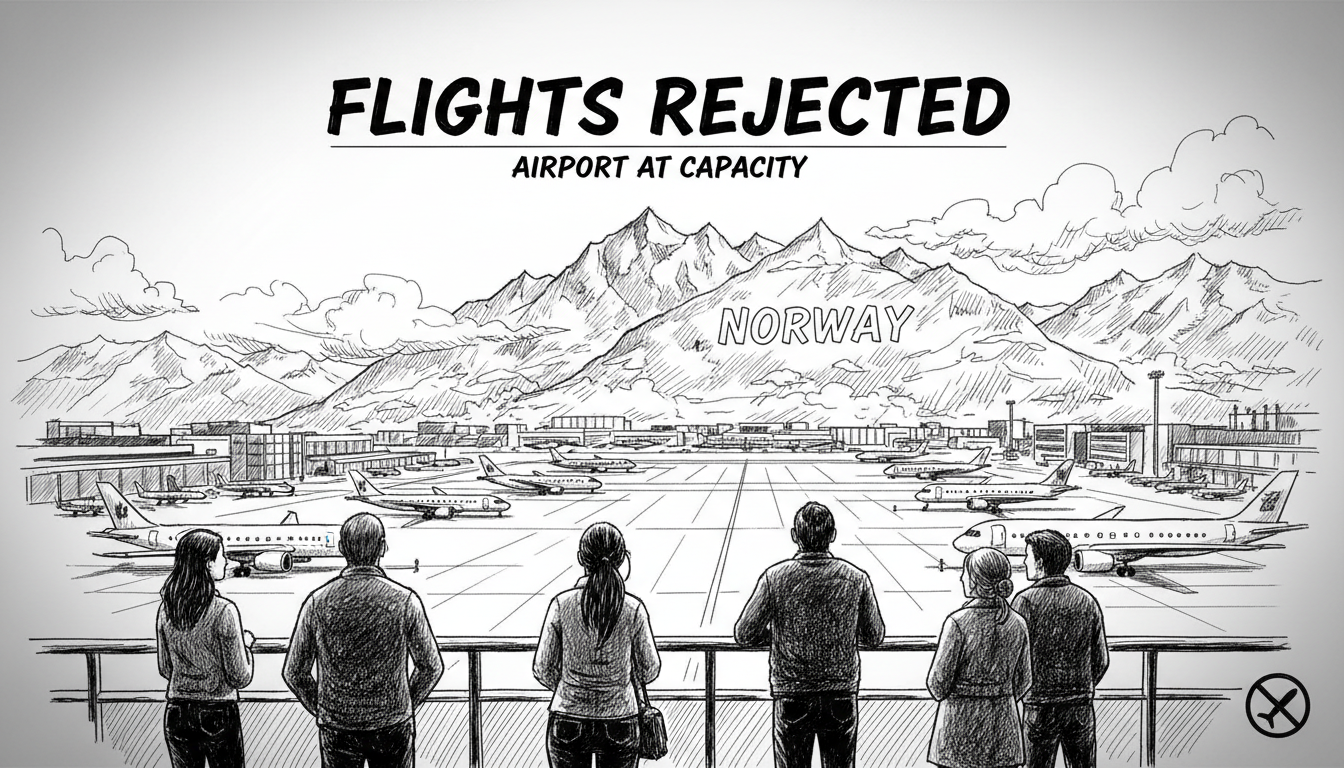
Norway’s Tromsø Airport is actively turning away airline services for the first time this year due to overwhelming passenger traffic. Airport chief Ivar Helsing Schrøen confirmed he has rejected new inquiries from carriers seeking specific landing slots. The reason is a stark reality: the airport’s capacity, including a new international terminal opened in 2024, is already saturated. Schrøen had predicted this crunch, warning the terminal would soon be too small even before its debut. This operational ceiling poses a direct challenge to Northern Norway’s booming Arctic tourism industry and forces a difficult conversation about growth and infrastructure in a region of strategic importance.
The Northern Lights Boom Creates a Grounding Problem
Tourists from across the globe are flocking to Tromsø, the unofficial capital of the Arctic, chasing the aurora borealis, dog-sledding adventures, and fjord cruises. This surge has transformed the local economy but has pushed key infrastructure to its breaking point. Tromsø Airport Langnes (TOS) is the primary gateway for this international influx. In 2023, it processed 2,274,515 passengers, solidifying its status as Norway's fifth-busiest airport. The pressure is most acute in the peak winter season. In January 2023, the airport handled 74 international flights per week, a number industry analysts believe has climbed significantly since. The newly built international terminal, intended to be a long-term solution, was deemed inadequate almost upon arrival. 'When the new international terminal opened in 2024, Schrøen quickly said it would become too small,' a statement from the airport noted, highlighting the speed of the demand surge.
'We Cannot Handle More Traffic Than This'
Airport management now faces the unenviable task of rationing access. 'This is the first time this year we have said no to airlines that want specific times to come in,' Schrøen said. He framed the decision as a matter of operational necessity and passenger experience, stating plainly, 'We likely cannot handle more traffic than this.' The airport must balance aircraft movements, gate availability, baggage handling, and security throughput. Exceeding these physical and logistical limits risks severe delays, safety concerns, and a degraded experience for every traveler. The decision to reject airlines is a clear signal that those limits have been reached. It represents a significant shift from the traditional model of airports actively courting new routes to boost regional connectivity and economic activity.
A Systemic Challenge for Arctic Ambitions
The capacity crisis at Tromsø Airport is not an isolated issue but a symptom of broader systemic pressures. Experts point to a lack of coordinated planning between tourism promotion, aviation policy, and municipal infrastructure development. 'This is a classic case of demand outstripping supply because the growth in tourism marketing was not matched by parallel investments in critical infrastructure,' said a transportation analyst familiar with Nordic aviation, who requested anonymity to speak candidly. The analyst suggested that better management of flight schedules to avoid peak-time congestion could offer short-term relief. However, they emphasized that long-term solutions are complex. Expanding the airport footprint in its current location on the island of Langnes is geographically challenging and environmentally sensitive. Alternatives, such as improving rail links or promoting regional feeder airports like Bardufoss, are often discussed but require substantial investment and political consensus.
The Ripple Effects on Tourism and Trade
Turning away flights has immediate economic consequences. It caps the number of tourists who can physically reach Tromsø, potentially stifling growth for hotels, tour operators, and restaurants that have expanded based on continued demand. It also makes airfare more expensive due to constrained supply, which could price out some travelers. Beyond tourism, the capacity constraints hinder other vital Arctic industries. Tromsø is a major hub for fisheries, maritime research, and energy sector services. Limited flight availability complicates business travel and the transport of high-value goods, affecting the region's broader economic competitiveness. The Storting, Norway’s parliament, has long championed a 'High North' strategy emphasizing development and activity in the Arctic. A choked aviation artery in its largest city undermines those strategic goals, creating a tension between environmental sustainability, economic ambition, and practical logistics.
Navigating the Flight Path Forward
The situation forces a difficult policy debate. One path involves pursuing a significant, and undoubtedly controversial, expansion of Tromsø Airport. Another explores demand management, potentially through slot coordination or incentivizing travel during off-peak seasons. A third, more radical, approach considers the role of other transportation modes, though geography makes this exceedingly difficult. The government’s Ministry of Transport and the state-owned airport operator, Avinor, now face a pressing decision. Do they prioritize the lucrative tourism economy and regional development by investing in major airport infrastructure? Or do they accept capacity limits as a necessary check on unsustainable growth, focusing instead on dispersing tourists to other Arctic destinations? The answer will shape the future of Norway's Arctic region. For now, the 'No Vacancy' sign at Tromsø Airport Langnes is lit, signaling that the era of unchecked growth in the chase for the Northern Lights may have reached its first hard limit.