
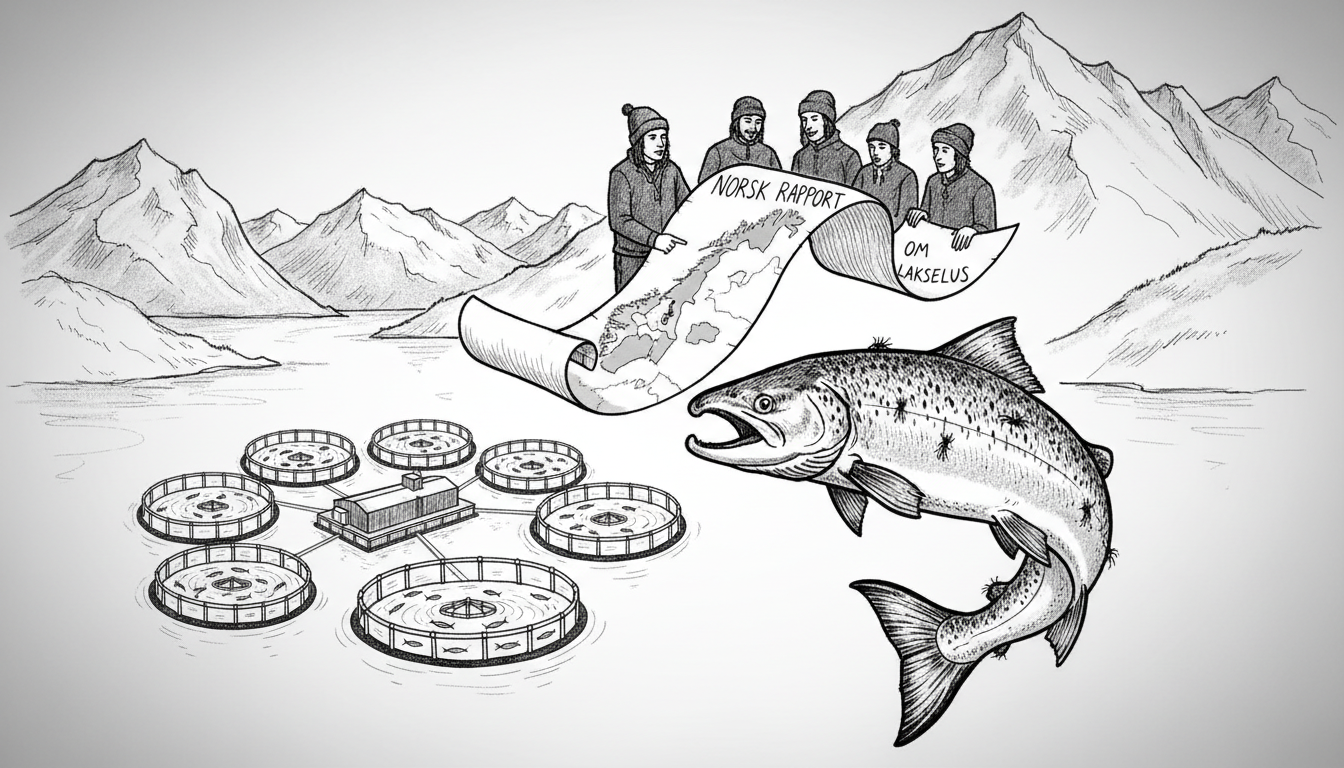
The Norwegian government has received new reports on sea lice impacts on wild salmon populations. The findings were published today by the Steering Group for Aquaculture Management. The reports assess the risk levels across Norway's salmon farming production areas. This data will inform upcoming decisions about where new salmon farms can be established.
Fisheries and Oceans Minister Marianne Næss addressed the release. She said the publication allows the industry to provide input on the scientific basis before production areas are classified. The actual classification decisions will be made in the first quarter of next year. The process aims to balance aquaculture growth with wild salmon conservation.
Researchers evaluated the risk of sea lice impact for the current year. They found high risk in one production area. Nine areas showed moderate risk. Three areas were assessed as having low risk. These risk levels remain consistent with assessments from the previous year. The stability suggests ongoing challenges in certain regions despite management efforts.
Sea lice from aquaculture facilities pose a major threat to migrating wild Atlantic salmon. The parasites attach to fish, causing stress, open wounds, and increased mortality. Norway's wild salmon stocks have declined significantly in recent decades. This has created tension between the lucrative aquaculture industry and conservation groups. The government walks a tightrope between economic interests and environmental protection.
The Norwegian aquaculture sector is the world's largest producer of farmed Atlantic salmon. It generates substantial export revenue and employs thousands in coastal communities. However, its expansion faces increasing scrutiny over environmental impacts. The sea lice issue represents the industry's most persistent ecological challenge. Effective management is crucial for both wild fish survival and the sector's social license to operate.
The classification system determines where new salmon farming licenses can be granted. Areas with high sea lice risk may face restrictions or require enhanced mitigation measures. This affects investment plans for aquaculture companies seeking to expand operations. The upcoming decisions will shape the industry's geographic footprint for years to come.
International observers closely watch Norway's approach. Other salmon farming nations like Scotland, Canada, and Chile face similar sea lice problems. Norway's regulatory decisions often set precedents for global aquaculture governance. The country's attempts to reconcile industrial scale with environmental sustainability serve as a case study worldwide.
For Norway's coastal communities, the outcome has direct economic consequences. Many towns depend on aquaculture for jobs and local investment. Simultaneously, wild salmon support recreational fishing and tourism. The government's balancing act affects real livelihoods across the country. The coming months will reveal how Norway navigates this complex intersection of economy and ecology.