
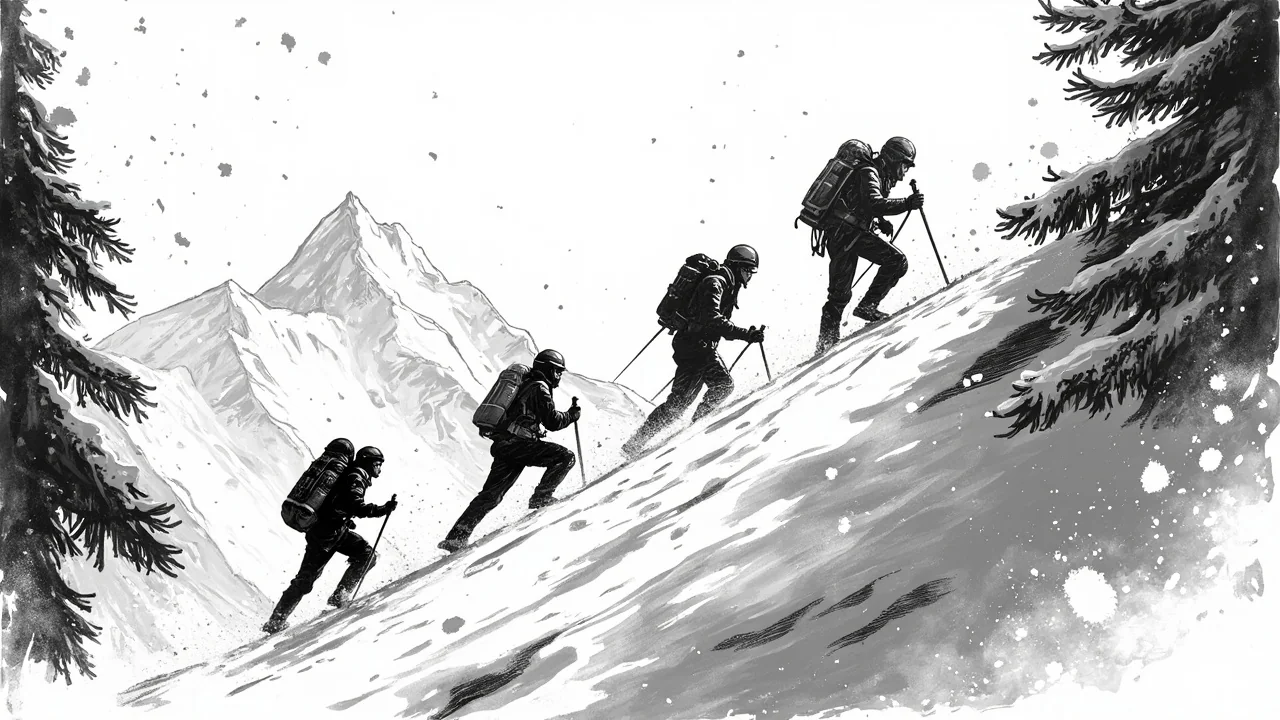
Norway rescue teams located five teenage boys lost in minus 25-degree Celsius conditions on the summit of Gaustatoppen Monday night. A police helicopter pinpointed the hikers just after 8 PM, initiating a complex winching operation to extract them from the treacherous terrain. The group had contacted emergency services themselves after becoming disoriented and dangerously underdressed for the extreme weather. The incident highlights the lethal risks posed by Norway's fast-changing mountain climate, even to those attempting popular winter routes.
A Frigid Descent from the Summit
Operational police leader Sigurd Edvardsen confirmed the severe conditions during the rescue. 'It is minus 25 degrees on Gaustatoppen now,' Edvardsen stated as teams mobilized. Meteorologists noted that while instruments measured -13.6°C, the combination of wind and humidity created a perceived temperature, or wind chill, closer to minus 23. This level of cold presents an immediate threat of frostbite and hypothermia, particularly for individuals without proper thermal gear. The rescue helicopter arrived on scene quickly but faced the challenge of safely extracting five people from an exposed, snowy mountainside in near-total darkness.
The Race Against Hypothermia
Speed was critical. In such temperatures, the body's core temperature can begin to drop dangerously within minutes if not properly insulated. The fact the boys were 'not dressed for the weather,' as authorities noted, significantly escalated the medical risk. While the helicopter crew worked from above, volunteer ground teams were also dispatched. These volunteers traveled up the seasonal Gaustabanen railway tunnel to provide support from the mountain's interior. This two-pronged approach, using both aerial and ground assets, is standard for major Norwegian rescue operations in complex terrain. The successful location of the group less than an hour after their distress call demonstrates the efficiency of Norway's coordinated emergency response network.
Anatomy of a Norwegian Mountain Rescue
This operation on Gaustatoppen, a 1,883-meter peak in Telemark county, involved multiple agencies. The Norwegian Joint Rescue Coordination Centre (Hovedredningssentralen) typically coordinates such efforts, tasking police helicopters, volunteer Red Cross teams, and local alpine experts. The costs for these large-scale rescues are generally covered by the state, though debates occasionally surface about charging fees for reckless expeditions. The primary goal is always preservation of life. Rescue leaders must constantly weigh the risk to their own personnel against the deteriorating condition of those lost. In this case, the clear and immediate danger of extreme cold justified the urgent aerial deployment.
A Stark Reminder of Mountain Dangers
Gaustatoppen is a renowned tourist destination, offering panoramic views across one-sixth of Norway from its summit. A funicular railway carries visitors partway up in summer, and a well-trodden path leads to the top. However, winter conditions transform the mountain. Snow obscures trails, daylight hours are short, and weather can deteriorate with little warning. 'This event is a textbook example of how quickly a situation can become critical,' says Lars Flem, a veteran mountain guide and safety instructor based in Oslo. 'Many people underestimate the Norwegian mountains. They are accessible, but they are not benign. Proper clothing, navigation tools, and a conservative turn-back time are not optional—they are essential.'
The Broader Context of Norwegian Friluftsliv
The incident touches on a core aspect of Norwegian culture: 'friluftsliv,' or open-air life. The right to roam freely in nature is cherished and legally protected. With this freedom comes a deep cultural emphasis on personal responsibility and preparedness. Public health authorities and hiking organizations run constant campaigns promoting the 'Vær klar' (Be Ready) motto, which stresses carrying essential survival gear. The teenagers' lack of appropriate clothing suggests a breakdown in this safety ethos, whether through poor planning, overconfidence, or a simple misjudgment of the forecast. It serves as a seasonal reminder, as winter persists, that Norway's beautiful landscapes demand respect.
What Happens After the Rescue?
The physical rescue is only the first chapter. The five boys were likely transported to a hospital in Rjukan or another nearby town for evaluation for hypothermia and frostbite. Medically, rewarming must be handled carefully to avoid complications. Beyond the physical, there can be psychological impacts from such a traumatic brush with danger. The police may also conduct a follow-up interview to understand the sequence of events leading to them becoming lost. This information is valuable for improving future safety advisories. Notably, Norwegian authorities generally avoid punitive measures in such cases, focusing instead on education to prevent recurrence.
A System Tested and Proven
Monday night's successful outcome on Gaustatoppen showcases the strength of Norway's integrated rescue system. It blends advanced state assets like police helicopters with the irreplaceable local knowledge of volunteer organizations. This model is studied worldwide for its effectiveness in dealing with a dispersed population across challenging geography. The speed of the response undoubtedly prevented a tragedy. Yet, each rescue consumes significant resources and puts rescue personnel at risk. The ultimate goal of the system is to become unnecessary—for every hiker, skier, and teenager to return home safely under their own power. Until that day, the helicopters remain on standby, ready to ascend into the freezing dark at a moment's notice.