
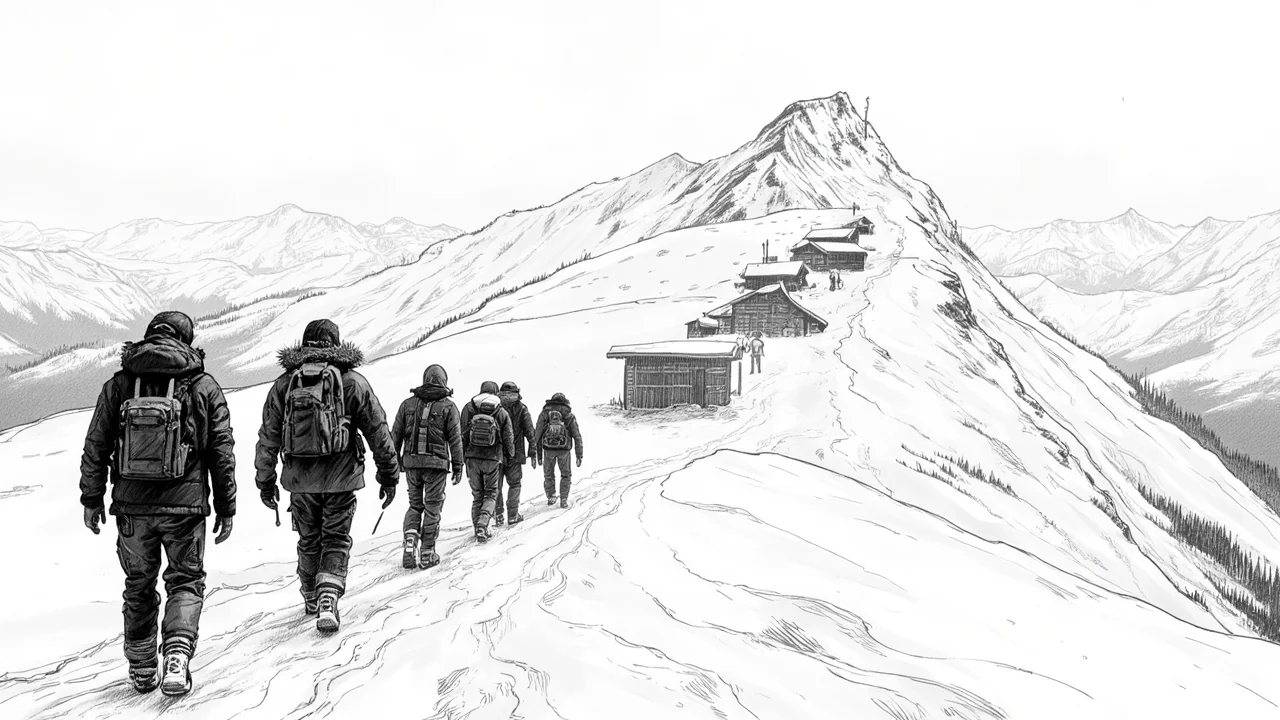
Norway's emergency services conducted a dramatic mountain rescue on Tuesday night, saving five teenage boys stranded near the summit of Gausatoppen in Telemark. The boys, described as lightly dressed and lost in severe winter conditions, were airlifted to safety after temperatures on the peak plunged towards minus 25 degrees Celsius.
A Frigid Night on the Mountain
Police operations leader Sigurd Edvardsen confirmed the extreme danger. "It is minus 25 degrees on Gausatoppen now," Edvardsen said during the operation. Meteorological data indicated an ambient temperature of minus 13.6 degrees, but with wind chill, it felt closer to minus 23. The boys had contacted emergency services themselves after becoming lost, a critical decision that likely prevented a tragedy. They were not equipped for the harsh winter weather, raising immediate questions about their preparedness for the hike.
The rescue operation mobilized significant resources. A rescue helicopter arrived on scene shortly after 8:00 PM and hovered over the area to locate the group. Volunteer crews were also dispatched up the Gausabanen railway, a historic funicular that runs inside the mountain, to assist. The coordinated effort between police, helicopter crews, and volunteer organizations highlights Norway's integrated rescue response system for mountain emergencies.
The Anatomy of a Norwegian Mountain Rescue
This incident on Gausatoppen, a 1,883-meter peak famous for its panoramic views, is a stark reminder of the risks inherent in Norway's outdoor culture. The country's friluftsliv, or "open-air life," is a cherished national tradition, but it carries responsibilities. Rescue services here are frequently tested, especially during winter when conditions can change with lethal speed.
"The margin for error on our mountains in winter is vanishingly small," says Lars Fjelldal, a veteran mountain guide and safety instructor based in Oslo. "A simple wrong turn, a delay, or inadequate clothing can escalate into a life-threatening situation within minutes. The positive here is that the group had means to call for help and did so promptly. That is the single most important rule."
Norwegian rescue operations follow a well-rehearsed protocol. Once a distress call is registered with the 112 emergency number, police assume operational command. They coordinate with the Norwegian Society for Mountain Rescue (Redningsselskapet) and the 330 Squadron of the Royal Norwegian Air Force, which operates the Sea King and SAR Queen search and rescue helicopters. Local volunteer groups, intimately familiar with the terrain, are often the first boots on the ground.
The Aftermath and a National Conversation
The five teenagers were successfully extracted from the terrain by 9:02 PM. Police reported they were transported to receive medical attention from health personnel. While "quite cold," officials stated there were no major injuries. The physical rescue may have concluded successfully, but the incident ignites an ongoing national debate about preparedness, responsibility, and the use of rescue resources.
Each major rescue operation involves substantial cost and risk to the responders. The dispatch of a rescue helicopter, for instance, carries an operational cost of tens of thousands of Norwegian kroner per hour. More importantly, it places highly trained personnel in hazardous conditions. This leads to a delicate balance between encouraging outdoor activity and ensuring citizens undertake it responsibly.
In recent years, there has been a push for stronger educational campaigns, particularly targeting young people. Organizations like the Norwegian Trekking Association (DNT) tirelessly promote the "mountain code"—a set of commonsense rules including planning your trip, adapting it to ability and conditions, paying attention to weather forecasts, being prepared for bad weather and frost, and turning back in time. The code also emphasizes using good equipment and bringing a means of communication, which proved decisive in this case.
Technology and Tradition in the Norwegian Outback
The Gausatoppen rescue underscores how technology is changing mountain safety. The fact the teens could call for help suggests they had a mobile phone with coverage, which is not guaranteed in all Norwegian mountain areas. The national emergency network, Nødnett, has improved coverage, but dead zones remain. This has spurred interest in personal locator beacons (PLBs) and satellite communication devices as essential gear, even for day hikes.
However, experts warn against over-reliance on technology. "A phone is a lifeline, not a plan," Fjelldal notes. "Batteries die in the cold. Screens become unreadable. The foundation must always be traditional skills: reading a map and compass, understanding weather patterns, and making sound judgments. Technology is a superb backup, but it cannot replace knowledge."
The incident also brings focus to the role of volunteers, the backbone of Norwegian search and rescue. The volunteers who ascended via the Gausabanen represent a community ethos where skilled individuals dedicate their time and assume personal risk to aid others. This system depends on public trust and a shared understanding of the outdoor risks.
Looking Ahead: Lessons from a Cold Night
As the five teenagers recover, the broader discussion continues. Norwegian authorities rarely penalize individuals for needing rescue, focusing instead on education. The goal is to foster a culture where seeking help early is encouraged, but where the need for that help is minimized through careful preparation.
This event on Gausatoppen serves as a potent case study. It demonstrates the effectiveness of Norway's rescue infrastructure when everything works as intended: a clear distress call, a swift multi-agency response, and a successful outcome without serious injury. Yet, it also illuminates the ever-present vulnerabilities—the allure of a summit, the underestimation of winter, and the thin line between an adventure and an emergency.
The mountains of Telemark, like all of Norway's wilderness, offer profound beauty and challenge. They demand respect that is earned through preparation and humility. As the winter deepens, rescue services across the country will be watching the weather forecasts closely, knowing that the next call could come at any moment from another peak, another fjord, or another forest, testing once again the delicate balance between Norway's adventurous spirit and its unforgiving nature.