
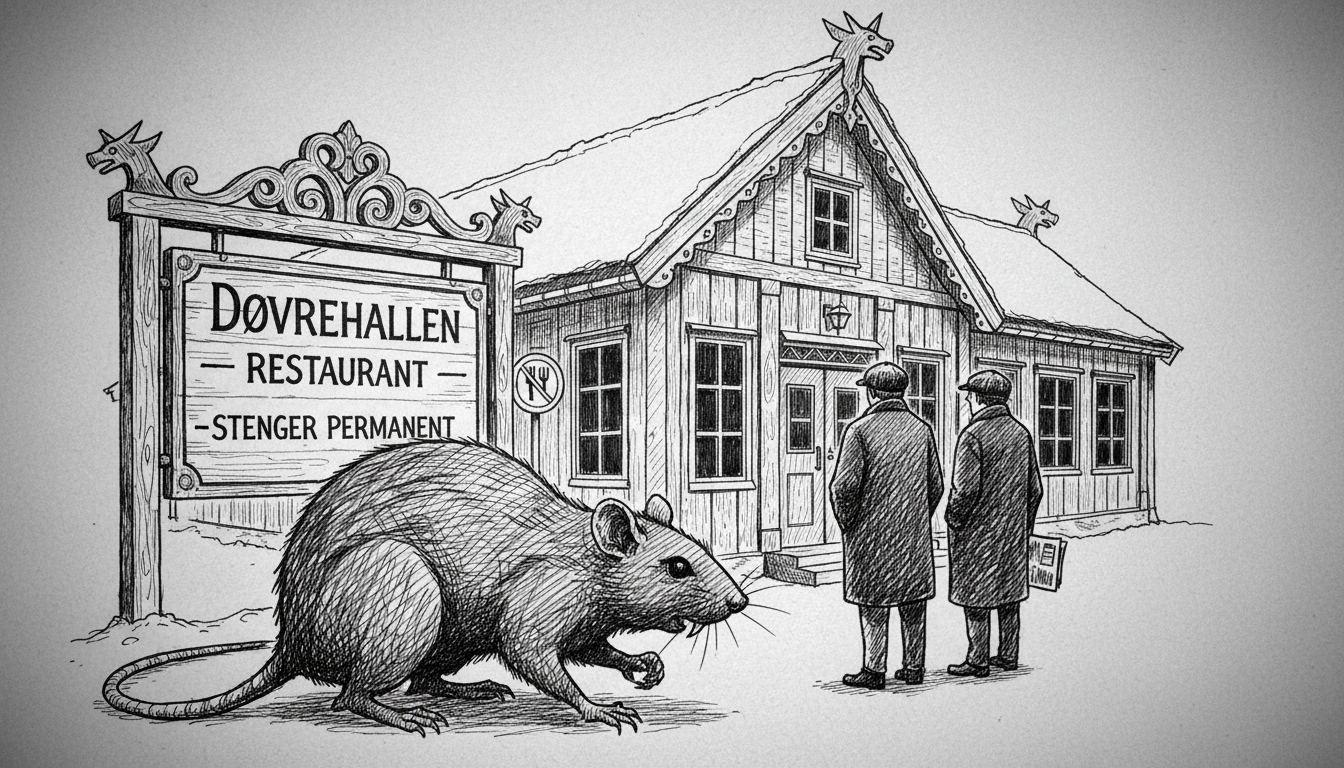
Norway restaurant hygiene standards forced the abrupt closure of a historic Oslo establishment Thursday evening. An email from owner Terje Tuft, sent to customers with reservations, delivered the blunt news: "We regret to inform you that we have discovered a rodent in the building." The Olympen restaurant, a 132-year-old Oslo institution, cancelled all bookings and shut its doors just as the lucrative Christmas party season was in full swing. The discovery of a single rat in the basement triggered an immediate shutdown, highlighting the stringent, non-negotiable nature of Norway's food safety regulations. For a storied venue known affectionately as 'Lompa,' the incident represents both a significant financial blow and a stark operational challenge.
A Costly Discovery in the Cellar
The timing could hardly have been worse. The closure came during one of the busiest nights of the year for Norwegian restaurants. Terje Tuft estimated the direct financial loss at 400,000 Norwegian kroner (approximately $37,000). "This is terribly sour, and terribly painful," Tuft said, describing the mood as "pretty far down." He stressed the rodent was found in the building's cellar, far from food preparation areas, and attributed its possible entry to daily goods deliveries. "Kitchen and bar hygiene is as always one hundred percent maintained," he asserted. Despite the financial temptation, the restaurant chose not to serve guests from an external kitchen, opting for a full closure to investigate. This decision underscores the severe reputational and legal risks Norwegian businesses face if they compromise on hygiene protocols.
Christmas Party Plans Scrambled
Among those affected was the sports desk of a major Norwegian newspaper, which had its annual Christmas party reservation cancelled at short notice. "We are a team of 20 who were told just before we were to sit down to eat. The panic spread a little, but we got a room at the Dovrehallen hostel," said department head Matias Ytterstad. He displayed a characteristically Norwegian resilience in the face of disruption. "The very best evenings often arise when something unplanned happens," Ytterstad remarked. His team's quick pivot to an alternative venue illustrates the domino effect such a closure has on Oslo's hospitality ecosystem, potentially benefiting competitors while crippling the affected business.
A String of Recent Setbacks
The rodent problem is not an isolated incident for Olympen. Just weeks earlier, on December 6, the Oslo Fire and Rescue Service conducted an unannounced night inspection. They identified six violations requiring "immediate action." The inspection report listed 87 disconnections in the fire alarm system, covered smoke detectors, and obstructed escape routes. The fire authorities have warned of fines up to 270,000 kroner if the deficiencies are not corrected by May 2026. Owner Terje Tuft insists the two issues are separate, stating the fire inspection "has nothing to do with the restaurant closing today." However, analysts note that multiple regulatory headaches in quick succession can strain a business's resources and management focus, potentially making it harder to address core operational issues like pest control.
The Weight of Norwegian Food Safety Law
Norway's food safety framework, enforced by the Norwegian Food Safety Authority (Mattilsynet), is notoriously rigorous. A confirmed pest infestation in a food service business typically mandates immediate closure until the problem is eradicated and preventive measures are verified. The law prioritizes public health over commercial concerns, leaving no room for negotiation. "An operator has a duty to ensure that food is not contaminated," states the official regulation. For a restaurant, even a single rat in a basement storage area constitutes a critical violation, as rodents can carry pathogens and cause widespread contamination. The system relies on self-reporting and swift action by business owners, as demonstrated by Olympen's proactive closure.
Expert Analysis: More Than Bad Luck
Food safety experts point out that while a rodent can occasionally find its way inside, its presence often indicates a broader vulnerability. "It's rarely just one rat, and it's rarely just bad luck," explained a consultant who works with Oslo restaurants, speaking on background. "It points to potential entry points, attractants like waste, or gaps in monitoring. In an old building like Olympen, which has seen countless renovations and is surrounded by urban infrastructure, maintaining a perfect seal is a constant battle." The expert emphasized that Norway's cold climate often drives pests to seek shelter indoors as winter sets in, making late autumn a high-risk period. Proactive, professional pest control contracts are considered a standard and essential cost of doing business.
The Financial Anatomy of a Night's Closure
Losing 400,000 kroner in one night reveals the high stakes of the Christmas season for Norwegian restaurants. This period, known as 'julebordsesongen,' often generates a disproportionate share of annual revenue. A typical Christmas party menu with drinks can easily exceed 1,500 kroner per person. With Olympen's large capacity, a fully booked evening represents a massive income stream that cannot be recouped. Furthermore, the indirect costs are substantial: staff wages may still be due, fixed costs like rent continue, and the expense of a deep clean and pest extermination adds up. The reputational damage, while hard to quantify, may deter future bookings from corporate clients who cannot afford the risk of a last-minute cancellation.
Historical Context of an Oslo Icon
Olympen, founded in 1892 on the Grønland square, is woven into Oslo's social fabric. For decades, it was known as a 'brun bue' or 'brown pub'—a traditional, no-frills drinking establishment. It has survived wars, economic shifts, and changing neighborhood demographics. Its resilience is part of its legend. This history makes the current troubles particularly poignant. Regulars and patrons have a deep affection for the place, but modern regulatory standards are unforgiving. The restaurant's management must now balance preserving its historic character with meeting 21st-century compliance demands for fire safety and hygiene, a challenge facing many of Europe's classic eateries.
The Path to Reopening
Tuft expressed hope that Olympen would reopen by Friday. The process to achieve this is strict. The restaurant must engage a licensed pest control firm to eliminate the infestation and provide proof of treatment. A thorough cleaning and disinfection of affected areas is required. Management must also demonstrate to their own satisfaction—and potentially to authorities—that the root cause has been addressed to prevent recurrence. Only then can service resume. This swift turnaround expectation shows the pressure businesses are under to minimize downtime, but also the efficiency of established pest control services in a major city like Oslo.
A Broader Lesson for the Hospitality Sector
This incident serves as a case study for the entire Norwegian restaurant industry. It underscores the necessity of investing in integrated pest management as a core operational line item, not an optional extra. It also highlights the compounding risk when multiple regulatory areas—food safety and fire prevention—show weaknesses simultaneously. For customers, the event reinforces confidence in Norway's protective systems, even as it disrupts plans. The system worked as designed: a hazard was identified, and the business closed itself down to protect public health. The financial pain is borne entirely by the business owner, creating a powerful incentive for vigilance.
Olympen's story is a stark reminder that in Norway's regulated society, a single rodent is not merely a nuisance—it is an event that can shutter a landmark overnight. The restaurant's future now depends on its ability to not only evict one unwanted guest but to fortify its historic walls against all the invisible threats that modern regulations are designed to control. As Oslo's dining scene evolves, the survival of its oldest venues hinges on this precise, unglamorous work.