
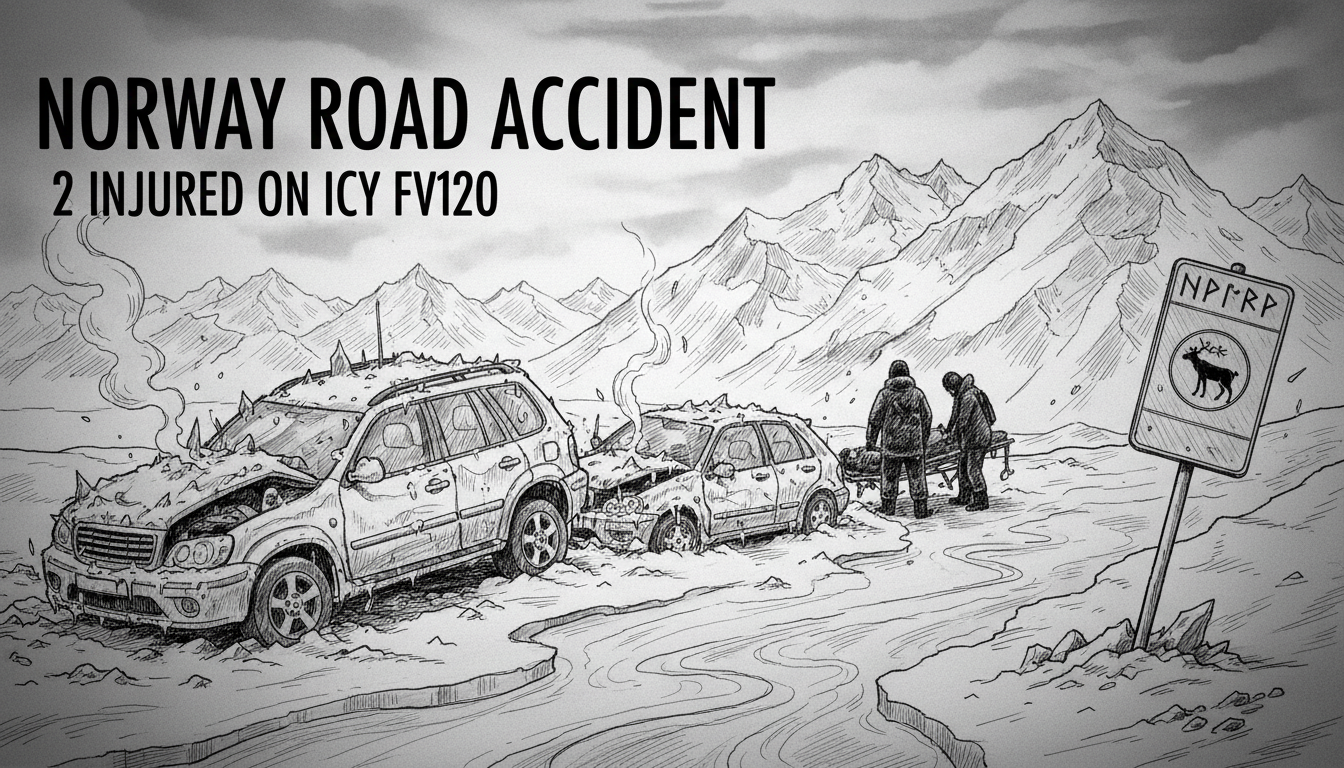
Norway's emergency services responded to a serious traffic accident on the FV120 road in Indre Østfold Monday afternoon, involving two vehicles and two people. Initial reports from police operations leader Fredrik Solbakken described the incident as severe, but later updates confirmed both individuals were conscious and being assessed by medical personnel. The road was closed in both directions as authorities managed the scene and investigated the crash, which occurred on a stretch reported to have patchy ice.
A Tense Afternoon on a Regional Road
Police logs from the Øst police district captured the evolving situation. At 4:45 PM, Operations Leader Fredrik Solbakken's initial entry set a grave tone. "The extent of injuries is unclear, but based on descriptions from the site it appears serious," he wrote. This triggered a full emergency response, with police, ambulance, and potentially fire services deploying to the location. For residents and travelers in the area, the closure of FV120 in both directions caused significant disruption. This road is a vital artery connecting communities in Indre Østfold, an inland region southeast of Oslo known for its forests and agricultural land.
By 5:00 PM, the picture had changed. A police update stated that neither of the two involved individuals "appears seriously injured at this time." The relief in that statement was palpable. Authorities confirmed both people were awake and in the care of the health service, though their exact condition remained unknown. The focus shifted from urgent lifesaving to securing the scene, assisting those involved, and beginning the work of understanding what happened. The presence of "stedvis glatte veier" or patchily icy roads, was noted as a key environmental factor.
Winter's Relentless Challenge to Norwegian Drivers
This accident on FV120 is a stark reminder of the persistent danger winter roads pose in Norway. While the country boasts impressive engineering feats and generally high driving standards, the combination of darkness, cold, and precipitation creates a hazardous environment for months each year. Regional roads like FV120, maintained by the county municipality, can present particular challenges. They may see less frequent salting and ploughing than national highways (Riksveier) and often wind through terrain prone to shading and moisture, leading to unpredictable ice patches.
Road safety experts consistently emphasize a trio of countermeasures for winter driving: proper winter tires with adequate tread depth, significantly reduced speed, and increased following distance. "The difference between summer and winter driving in Norway is not just about tires; it's a complete mental adjustment," says a veteran driving instructor from the Norwegian Automobile Federation (NAF). "You must plan for longer stopping distances, anticipate black ice on bridges and in shaded areas, and never assume the road ahead has the same friction as the road you're on now." The police investigation into the Indre Østfold accident will scrutinize all these factors, alongside potential driver error or technical vehicle failure.
The Human and Systemic Cost of Road Accidents
While this incident appears to have avoided the worst outcome, it feeds into sobering national statistics. In 2022, 117 people lost their lives on Norwegian roads. Each fatality represents a profound personal tragedy and a societal cost running into the millions of kroner for emergency response, healthcare, lost productivity, and human suffering. The major contributing factors remain consistent: speeding, impaired driving from alcohol or drugs, distraction (often from mobile phones), and failure to adapt to road conditions.
The Norwegian Public Roads Administration (Statens vegvesen) and the police run continuous safety campaigns targeting these behaviors. Their goal is part of Norway's ambitious "Vision Zero" policy, which aims to eliminate all traffic fatalities and serious injuries. This strategy involves improving road infrastructure, enforcing traffic laws, and promoting safer vehicle technology. However, as Monday's crash demonstrates, the unpredictable element of weather ensures zero risk is an elusive target. Every winter, a patch of invisible ice can reset the calculus for even the most cautious driver.
Beyond the Crash Barrier: What Happens Next?
For the two individuals involved, the immediate next steps involve medical assessment and treatment at a local hospital, likely in Askim or Sarpsborg. They will also provide statements to police as part of the mandatory investigation. The officers on scene will document vehicle positions, skid marks, and road conditions. They will examine the vehicles for technical defects and may order blood tests to rule out impairment. This forensic work is crucial for determining liability and for compiling data used to improve road safety nationally.
For the community, the incident is a talking point and a warning. Local news will report the basic facts, and neighbors will discuss the notorious slippery corners on FV120. The county's road maintenance department will review whether their salting and sanding routines for that stretch are adequate. Often, a single accident is not enough to trigger major infrastructure changes, but a pattern of incidents can lead to calls for improved signage, better drainage, or even road realignment.
A Narrow Escape and a Persistent Warning
The outcome on FV120 could have been far worse. The transition in police communication from a potentially "serious" crash to one where victims were conscious and talking is the best possible news. It underscores the critical importance of rapid emergency response in rural areas. However, the incident's proximity to tragedy should not dilute its message. Norway's beautiful, harsh landscape demands constant respect from those who traverse it, especially from behind the wheel.
As the vehicles are towed away and the road reopens, the patchy ice will remain until the next thaw or treatment. Other drivers will pass the spot, perhaps slowing down momentarily. The fundamental question posed by this accident is one every Norwegian motorist must answer each winter day: are your driving habits adapted to the reality outside your window, or to the clear-road conditions you wish were there? The difference between the two answers is measured in lives.