
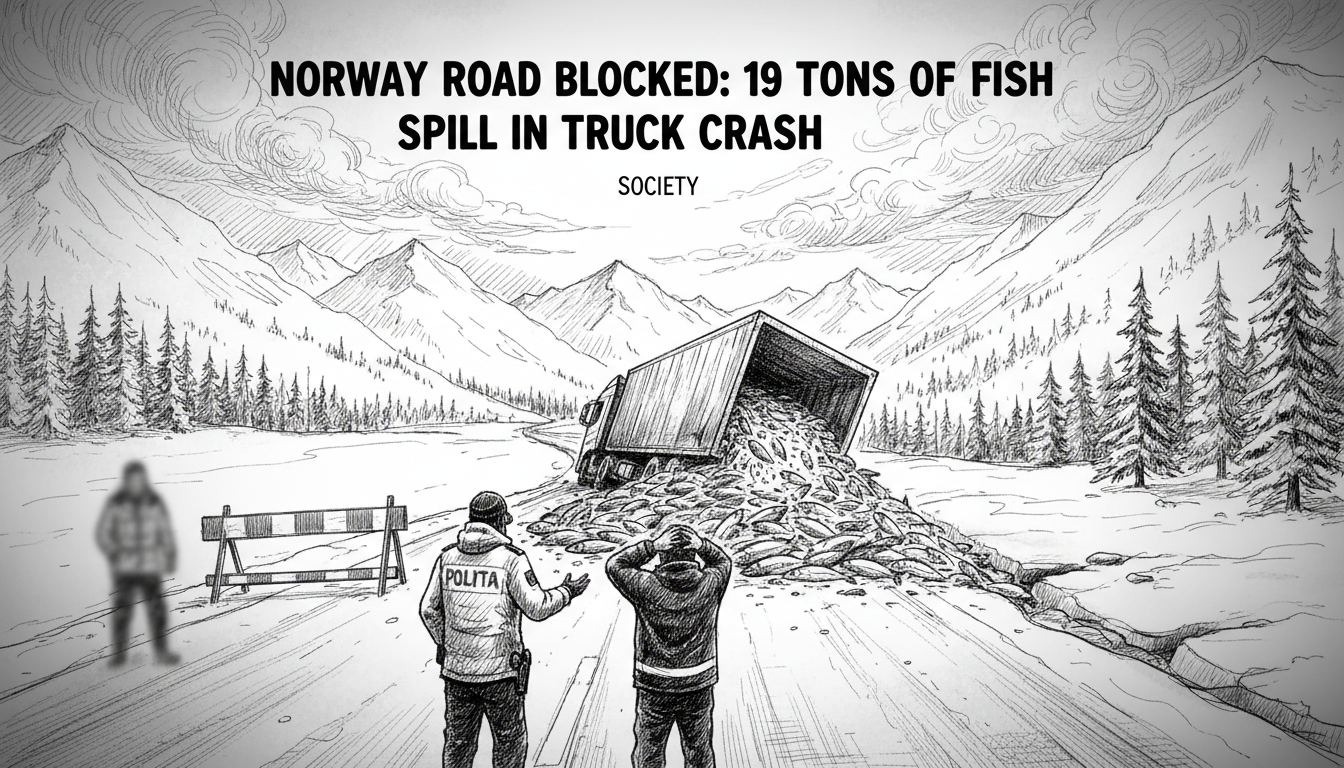
Norway's Fylkesvei 17 is closed and covered with 19 tons of fish after a transport truck overturned in Høylandet, Trøndelag. The accident occurred Monday evening, blocking the vital coastal route between Foldereid and Kongsmoen. Police confirmed the driver was unharmed, but the massive spill of seafood has created significant traffic chaos and logistical headaches for the region's key industry.
Emergency services, including police, fire crews, and contractors, rushed to the scene. Operations leader Trond Hangaas described the situation in a police log, noting "large quantities of the cargo are scattered across the roadway." Cleanup crews face the enormous task of removing both the wrecked vehicle and the tonnes of fish now coating the asphalt.
A Major Artery Severed
Fylkesvei 17 is not just any road. It is a critical lifeline for coastal communities and industries in central Norway. The route facilitates the movement of people, goods, and raw materials along the coast. Its closure creates immediate ripple effects, isolating communities and disrupting supply chains. The timing is particularly problematic for the fishing and aquaculture sectors, which rely on just-in-time logistics to move fresh product.
"An accident like this on Fv17 is a major event for the region," said Lars Mjøen, a transport analyst familiar with Norwegian infrastructure. "This road is a backbone for the coastal economy. Every hour it's closed, businesses incur costs from delays, rerouting, and potential spoilage of perishable goods. When the cargo itself is the problem, it compounds the disruption."
The Scale of the Spill
Nineteen tons represents a staggering amount of fish. To visualize, it is equivalent to the weight of approximately three adult African elephants or over 150,000 individual 250-gram salmon fillets. The spill likely originated from a specialized refrigerated truck, a common sight on Norwegian roads, transporting catch from processing plants or harbors to distribution centers or ports for export.
Cleanup is a multi-step process. First, the truck must be safely righted and removed. Then, crews must shovel, scoop, and wash away the biological material from the road surface. This is not merely a matter of sweeping up debris. Fish oils and residues can create extremely hazardous, slippery conditions, requiring thorough cleaning to make the road safe for traffic again. Environmental authorities may also be involved to ensure runoff does not contaminate nearby waterways.
Economic Ripples in a Key Region
Trøndelag is at the heart of Norway's seafood empire. The region boasts a robust combination of traditional wild fisheries and modern aquaculture. Namsos, a town near the accident site, is a known hub for fish processing and transport. A prolonged road closure directly impacts the economic heartbeat of these communities.
"Efficiency in logistics is everything for fresh seafood," explained Kari Nilsen, a researcher at the Norwegian Institute of Marine Research. "The value is in freshness and quality. Delays at any point in the chain, especially an unplanned event like this, can have direct financial consequences for producers and exporters. It also puts pressure on alternative routes, which may be longer and less efficient."
While the driver escaped injury, the financial cost of the accident is substantial. It includes the value of the lost cargo, damage to the vehicle and trailer, costs for emergency services and cleanup contractors, and the broader economic impact of the road closure on all other businesses and travelers. Insurance claims will likely run into the millions of Norwegian kroner.
Infrastructure and Safety Under Scrutiny
This incident will inevitably lead to questions about road safety and transport logistics on Norway's coastal highways. Fylkesvei 17, while essential, features sections that are narrow and winding, presenting challenges for large commercial vehicles. The Norwegian Public Roads Administration (Vegvesenet) constantly balances the need for maintenance and safety upgrades with budgetary constraints and environmental considerations.
Accidents involving food product spills, while dramatic, are not unheard of in Norway. They highlight the physical realities of moving massive quantities of goods from remote production areas to market. Each incident prompts reviews of procedures, from vehicle safety standards to driver training and route planning. The industry has made significant advances in securing cargo, but the physics of a high-speed overturn are difficult to completely mitigate.
The Long Road to Normalcy
As of Tuesday morning, the focus remains on clearing the scene. The Vegvesenet is providing updates on alternative routes, though these inevitably involve longer travel times for freight and commuters. The cleanup operation is weather-dependent; rain could complicate efforts, while dry conditions might aid in the removal but worsen odor issues.
The incident serves as a stark reminder of the interconnectedness of Norway's geography, industry, and infrastructure. A single vehicle accident on a coastal road can disrupt a supply chain that stretches from the cold Norwegian Sea to dinner plates across Europe and the world. It underscores the vulnerability of just-in-time systems to physical disruptions.
For the residents of Høylandet and regular users of Fylkesvei 17, the immediate concern is the inconvenience and the unusual sight. For the region's business owners, the clock is ticking until the road reopens. The cleanup crews on the ground have a messy, smelly, and critical job to do. Their work will determine how quickly this piscine roadblock becomes a bizarre footnote in the region's history, rather than a prolonged economic headache. The question now is not just how the fish ended up on the road, but how long their presence will continue to affect the flow of daily life and commerce in Trøndelag.