
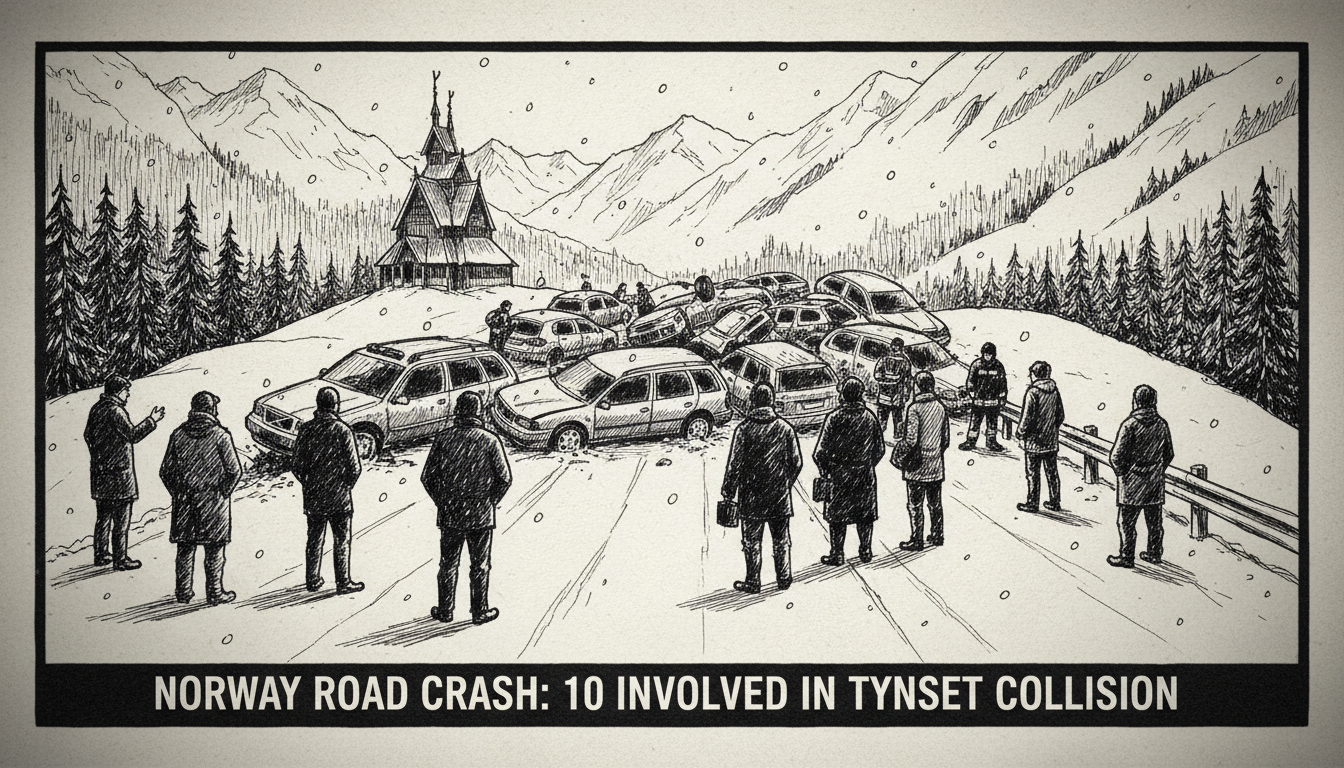
Norway's Riksveg 3 highway was the scene of a serious multi-vehicle collision near Tynset on Friday afternoon. Emergency services rushed to Kvikneskogen after a head-on crash and vehicle roll-off was reported at 4:54 PM. Police confirmed three cars and an estimated ten people were involved in the incident. Initial reports from the scene indicated no immediate personal injuries, though the full extent of the situation remained under assessment. One lane of the critical north-south artery was closed, causing significant traffic disruption through the mountainous Innlandet region.
Emergency Response on a Key Corridor
Police, fire, and ambulance crews converged on the remote stretch of road following the alert. The accident's location in Kvikneskogen, a vast forested area, presented logistical challenges for first responders. The Norwegian Public Roads Administration (Vegvesenet) moved quickly to manage traffic flow, implementing a single-lane closure to allow emergency operations. The priority for authorities was securing the scene, assisting those involved, and initiating a clear-up operation to reopen the road fully. Such incidents on Riksveg 3 have a ripple effect, as the highway serves as a primary transport link between southern and northern Norway.
The Vital Artery of Riksveg 3
This collision highlights the vulnerabilities of Norway's essential road network. Riksveg 3 runs over 400 kilometers from the Swedish border near Kongsvinger to Jonsvatnet just outside Trondheim. It traverses some of Norway's most rugged and sparsely populated terrain, including the region around Tynset. The municipality, with a population just over 5,000, is known for its outdoor activities but also for demanding winter driving conditions. The highway is a lifeline for local communities, freight transport, and long-distance travel, making any closure economically and socially disruptive. Accidents here test the coordination between local police districts, the national roads administration, and health services.
Analyzing Road Safety in Remote Norway
While this crash appears to have resulted in no serious injuries, it serves as a stark reminder of road safety challenges outside urban centers. "Every incident on a road like Riksveg 3 is a complex event," says Lars Holm, a senior advisor with the Norwegian Council for Road Safety (Trygg Trafikk). "Factors can include variable weather, animal crossings, driver fatigue on long stretches, and the simple physics of higher speeds on open roads. The absence of serious injury in this case may be due to sheer luck, modern vehicle safety standards, or a combination of both." Holm emphasizes that consistent adherence to speed limits and heightened awareness on forested, winding sections are non-negotiable for driver safety.
The Ripple Effect of a Highway Closure
The economic impact of a lane or road closure on this scale is immediate. Freight companies face delays, increasing costs for perishable goods and just-in-time deliveries. Local businesses reliant on passing traffic see a drop in customers. For residents, detours can add hours to essential journeys for work, healthcare, or education. The Norwegian Public Roads Administration has sophisticated models to calculate these costs, which often run into millions of kroner for major incidents. Their response protocol prioritizes rapid clearance, but investigations into the cause must also be thorough, which can extend disruption. This balance between safety, investigation, and traffic flow is a constant operational challenge.
Winter's Lingering Threat to Drivers
Although occurring in spring, this accident underscores that hazardous conditions can persist on Norwegian roads well beyond the official winter season. Shaded areas in forests like Kvikneskogen can harbor ice patches long after the lowlands have thawed. Sudden snow showers are not uncommon in the mountains of Innlandet county even in April. Road safety experts consistently advise motorists traveling in these regions to be prepared for rapid weather changes. This means ensuring tires have adequate tread depth, keeping a full tank of fuel, and carrying emergency supplies like blankets, food, and a warning triangle. The condition known as 'føre' – a comprehensive Norwegian term for road surface quality – remains a critical daily check for all drivers.
A Community's Reliance on Emergency Services
Incidents like the Tynset collision demonstrate the immense value of Norway's decentralized emergency response system. In remote municipalities, police and ambulance resources are often stationed significant distances apart. Volunteer fire departments frequently form the first line of response. The coordination required between Tynset's local services and county-level resources is a testament to extensive training and joint exercises. The initial report of no injuries, while hopeful, does not diminish the scale of the response. Every such event is treated as a potential major accident until proven otherwise, mobilizing resources that must cover vast geographical areas with limited personnel.
Looking Ahead: Prevention and Infrastructure
The investigation by police will seek to determine the exact sequence of events. Whether factors like weather, road surface, vehicle malfunction, or driver error played a role will inform future safety campaigns. Infrastructure improvements on Riksveg 3 are ongoing but costly, with projects focusing on widening lanes, improving sightlines, and adding safer passing zones. However, the challenging geography makes blanket upgrades impossible. This reality places a continued emphasis on driver responsibility and vehicle readiness. As traffic volumes gradually increase on Norway's regional highways, the integration of newer technology like more dynamic warning signs and better mobile coverage for emergency calls becomes increasingly important.
The Human Story Behind the Headlines
Behind the facts of three cars and ten people lies a series of personal stories abruptly interrupted. They could have been families returning from a skiing holiday, local residents commuting home, or transport professionals on a long haul. The shock and disruption, even without physical injury, are significant. Such events resonate deeply in close-knit rural communities where everyone is connected. They prompt conversations around kitchen tables about road safety and gratitude for the professionals who respond. The final word on this incident will come from the police report, but the broader conversation about safeguarding travel on Norway's majestic yet demanding roads continues unabated. As the light fades over Kvikneskogen, the question remains: are we doing enough to protect people on the journeys that connect this sprawling nation?