
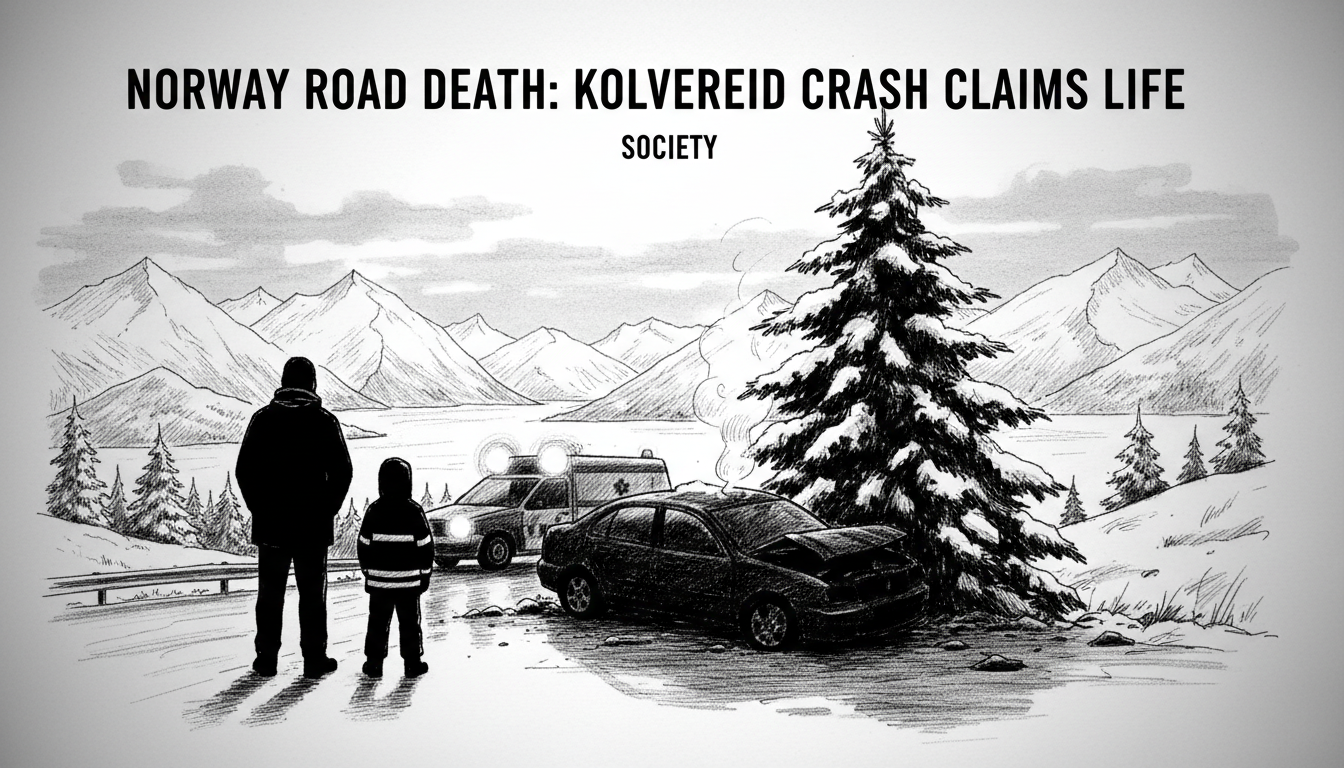
Norway's preliminary 2023 road fatality count of 117 has been underscored by a tragic addition after a driver died on Kolvereid Tuesday morning. Emergency services were dispatched to the scene in Nærøysund municipality just before 11:00 after reports of a vehicle leaving the road. A doctor declared the driver dead at the scene, and next of kin have been notified.
This single incident highlights the persistent risk on Norway's roads, even in a nation with a strong safety record. The accident occurred in a coastal region known for its dispersed settlements and challenging geography.
The Scene on Kolvereid
Police and emergency responders converged on the site following the urgent call. The precise circumstances leading to the vehicle leaving the roadway remain under investigation. Local authorities have secured the area for a technical examination.
Initial reports do not indicate other vehicles were involved. The focus is now on understanding the sequence of events that led to the fatal outcome. Such investigations typically reconstruct the vehicle's path and speed.
They also assess potential contributing factors. These include driver condition, mechanical failure, and the state of the road surface. Kolvereid is part of the regional road network in Trøndelag county.
Understanding Nærøysund's Roads
Nærøysund municipality was formed in 2020 through the merger of Vikna and Nærøy. It is characterized by a long, indented coastline and numerous islands. This geography results in a road system that connects remote communities.
Roads in such areas can present unique challenges. They may feature sharp curves, variable weather conditions, and long stretches between population centers. Drivers can face sudden changes in visibility or surface grip.
While Norway invests heavily in maintenance, rural routes may not see the same immediate attention as major highways. This accident prompts a closer look at infrastructure in the country's more isolated regions.
Norway's Road Safety in Context
Norway consistently ranks among the safest countries for road travel globally. The 117 fatalities recorded in 2023 represent a low rate per capita compared to international averages. The Norwegian Public Roads Administration attributes this to strict enforcement and vehicle safety standards.
Speed limits, drunk driving laws, and widespread use of winter tires are key pillars. The widespread adoption of electronic stability control and autonomous emergency braking in new cars has also contributed. Yet, as this crash shows, zero risk remains an elusive goal.
Every fatality is a statistical point and a profound personal loss. The national trend shows a general decline in deaths over decades. However, recent years have seen numbers plateau, causing concern among safety advocates.
Expert Perspective on Accident Causes
Road safety experts emphasize that accidents rarely have a single cause. They are typically the result of a chain of events. Fatigue is a critical factor often examined in rural crashes, especially on monotonous routes.
"Long drives on familiar roads can lead to a lapse in concentration," explains a transport researcher familiar with Norwegian data. "The mind can wander, and reaction times slow. In an instant, a slight misjudgment can have irreversible consequences."
Other common factors include distraction from mobile devices, excessive speed for conditions, and undetected medical episodes. Investigators will also scrutinize the vehicle's maintenance history and any available data from its systems.
Weather, though not specified in this case, is always a consideration in coastal Norway. Early morning frost or wet leaves can dramatically reduce tire adhesion.
The Human Toll and Community Response
The notification of next of kin is the first, most difficult step following a fatal crash. It initiates a wave of grief that extends through families, friends, and small communities. In close-knit areas like Nærøysund, such news resonates deeply.
Local support services, including the church and municipal health teams, often mobilize to provide counseling. The ripple effect of a sudden death impacts schools, workplaces, and social circles. There is a collective pause as the community absorbs the loss.
This tragedy serves as a somber reminder for all drivers. It underscores the need for constant vigilance behind the wheel, regardless of the road's familiarity or perceived safety.
Investigations and Preventative Measures
The official police investigation will aim to establish a definitive cause. This process can take weeks or months as specialists analyze evidence. Findings may lead to recommendations for specific road improvements.
These could include enhanced signage, barrier installation, or road realignment. The Norwegian Public Roads Administration has a system for implementing safety upgrades based on accident data. High-risk locations are prioritized for intervention.
Broader policy discussions continue in the Storting regarding further safety measures. Topics include lowering speed limits on rural roads and incentivizing newer, safer vehicles. Some politicians advocate for more investment in public transport to reduce car dependency in remote areas.
A Look at the National Picture
Analyzing fatality data reveals patterns. A significant proportion of serious accidents occur on rural roads outside of major cities. Single-vehicle incidents, like the one on Kolvereid, are a notable category.
These often involve running off the road on curves or straight sections. Understanding why drivers lose control is central to prevention strategies. Campaigns focus on seatbelt use, rest breaks, and adapting speed to conditions.
Technology offers new tools. Advanced driver assistance systems are becoming more common. However, their effectiveness depends on proper use and cannot compensate for all human error.
The Path Forward from Tragedy
The death on Kolvereid is a stark data point in Norway's road safety journey. It reinforces that statistical progress does not eliminate individual risk. Each accident prompts a renewed evaluation of practices and infrastructure.
For now, the community mourns while authorities work to piece together the final moments of a drive that ended too soon. The ultimate goal remains unchanged: to ensure every journey ends safely. This incident will undoubtedly inform future safety dialogues in municipal meetings and national policy forums.
How many more tragedies will it take before human error on the roads is entirely mitigated? That question lingers after every fatal report, challenging Norway's renowned commitment to safety.