
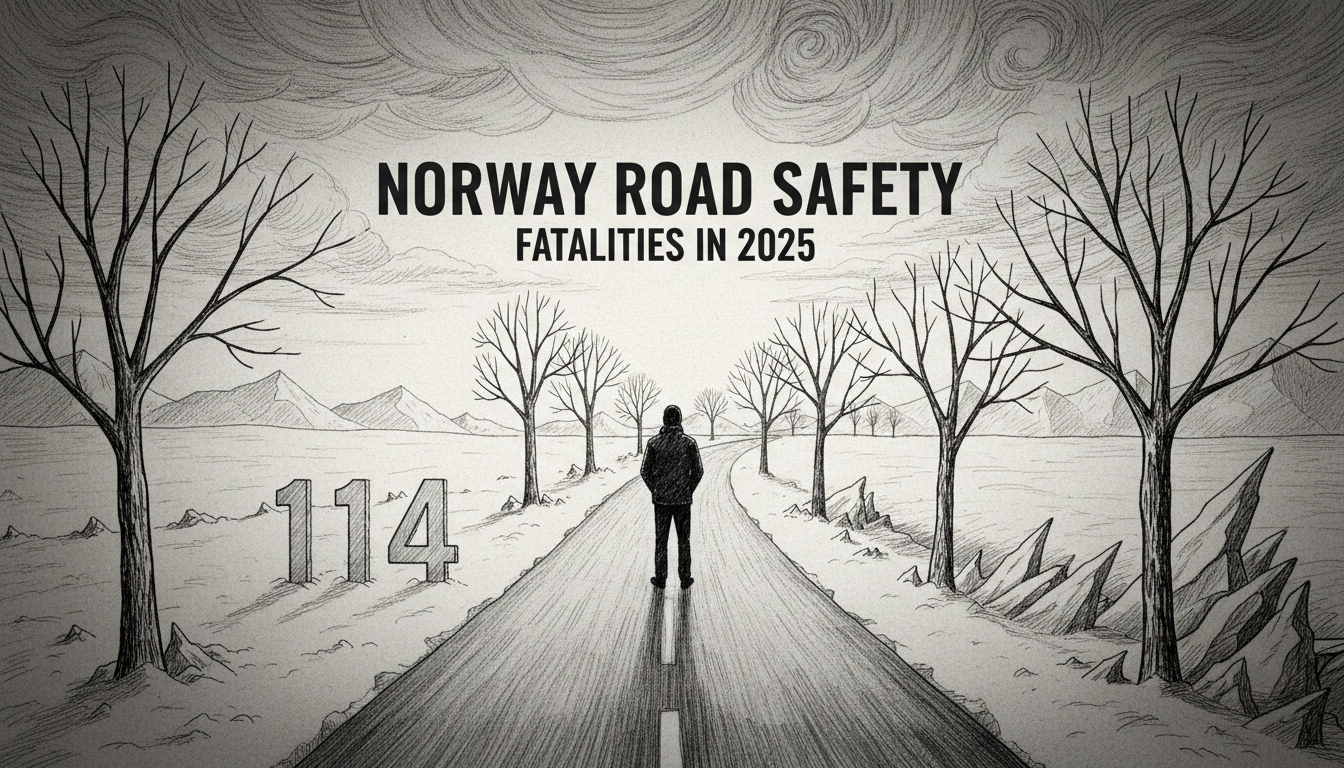
Norway's annual memorial for traffic victims, 'Lys til ettertanke', cast a sobering light on the nation's roads as Transport Minister Jon-Ivar Nygård voiced acute concern over rising risks among young drivers. The event, held along the E18 highway near Skjee in Vestfold, brought together grieving families, road authorities, and emergency personnel. Against a backdrop of flickering candles and silent reflection, the minister's warning underscored a persistent challenge within one of Europe's safest road networks.
A Solemn Vigil on a Major Artery
The gathering on the E18—a critical European route connecting Oslo to the south—served as a physical reminder of the human cost behind statistics. Participants placed lights along the roadway, a tradition known as 'Light for Reflection' that has marked Norway's commitment to road safety for years. Minister Nygård met privately with relatives of those lost, emphasizing the government's personal stake in preventing further tragedies. This highway, like many across Norway's rugged terrain, witnesses a mix of commuter traffic, heavy transport, and tourist vehicles, making safety a complex engineering and behavioral puzzle.
The Minister's Specific Alarm
'We cannot ignore the development we are seeing among young drivers,' Jon-Ivar Nygård stated during the event. His concern focuses on drivers aged 18-24, a group that statistics show is disproportionately involved in serious accidents. While Norway's overall fatality rate remains low by global standards, internal data points to worrying trends in this demographic. The minister did not elaborate on specific causes during the memorial, but his comments align with ongoing policy reviews targeting novice driver education, enforcement of speeding laws, and the impact of technology like smartphones. The Norwegian Public Roads Administration (Statens Vegvesen) has been tasked with analyzing these trends ahead of new legislative proposals.
By the Numbers: A Decade of Progress and Plateaus
Norway's road safety record is a story of steady improvement punctuated by recent plateaus. In 2023, preliminary figures showed 118 traffic fatalities. The latest data, current as of early 2026, confirms 114 deaths in 2025. This represents a slight decrease but remains above the government's ambitious vision-zero targets. Over the past two decades, fatalities have fallen dramatically from over 300 annually in the 1990s, thanks to stricter alcohol limits, widespread use of winter tires, and infrastructural investments like median barriers on highways like the E6. However, the last five years have seen numbers fluctuate between 100 and 120, indicating that new strategies are needed. Vulnerable road users—cyclists, pedestrians, and motorcyclists—still account for a significant portion of serious injuries, particularly in urban areas like Oslo and Bergen.
Unpacking the Risk for Young Norwegian Drivers
Expert analysis points to a confluence of factors endangering young drivers. Inexperience combined with overconfidence is a classic culprit, often exacerbated on Norway's varied roads, from narrow fjord-side passes to long, dark winter highways. 'The first years of independent driving are the most critical,' explains a senior traffic psychologist from the Institute of Transport Economics. 'We see issues with risk assessment, especially in group settings where peer pressure can lead to speeding or distraction.' Modern vehicles' insulation from road conditions may also foster a false sense of security. Furthermore, the rise of infotainment systems and social media use poses a universal distraction challenge, but one that hits novice drivers hardest. Regional data suggests accident rates are higher in counties with extensive rural road networks, where long distances and limited public transport increase young people's reliance on cars.
The Norwegian Policy Response: Beyond Engineering
Norway's approach has long been holistic, combining physical infrastructure with behavioral campaigns. The government is now evaluating several measures specifically aimed at young drivers. These include potential changes to the graduated driver licensing system, which could extend probationary periods or impose stricter night-driving restrictions. Investment in simulation-based training is also under discussion, allowing new drivers to experience hazardous conditions—like black ice on a mountain pass or sudden moose crossings—in a controlled environment. Enforcement remains key; automatic speed cameras are prevalent on roads like the E18, and police conduct regular checks for impairment. However, experts argue that education must start earlier, integrating road safety into school curricula to shape attitudes before the driving age.
Global Lessons for a Local Challenge
While Norway's fatality rate is among the world's lowest, its officials often look to neighbors like Sweden for innovative ideas. Sweden's vision-zero policy, which aims to eliminate all traffic deaths, has influenced Norwegian thinking, particularly regarding pedestrian zones and lower speed limits in residential areas. However, Norway's unique geography—with its isolated communities and harsh climate—requires tailored solutions. For instance, the focus on young drivers in rural areas might involve subsidized advanced driving courses for winter conditions. The government also monitors technology trends, such as the role of advanced driver-assistance systems in new cars, which could mitigate human error but may require updated regulations.
The Road Ahead: Grief into Action
The 'Lys til ettertanke' event is more than a memorial; it is a catalyst for policy. Minister Nygård's presence signals that the state shares the burden of loss and responsibility for prevention. As Norway moves forward, the challenge will be balancing freedom of mobility with the imperative of safety, especially for its youth. The coming parliamentary session in the Storting is expected to debate increased funding for road safety initiatives, with cross-party support likely given the issue's human resonance. For the families standing on the E18, the measure of success will be fewer candles needed in the years to come. Can Norway leverage its culture of compliance and innovation to protect its newest drivers, or will progress stall on the icy curves of complacency?