
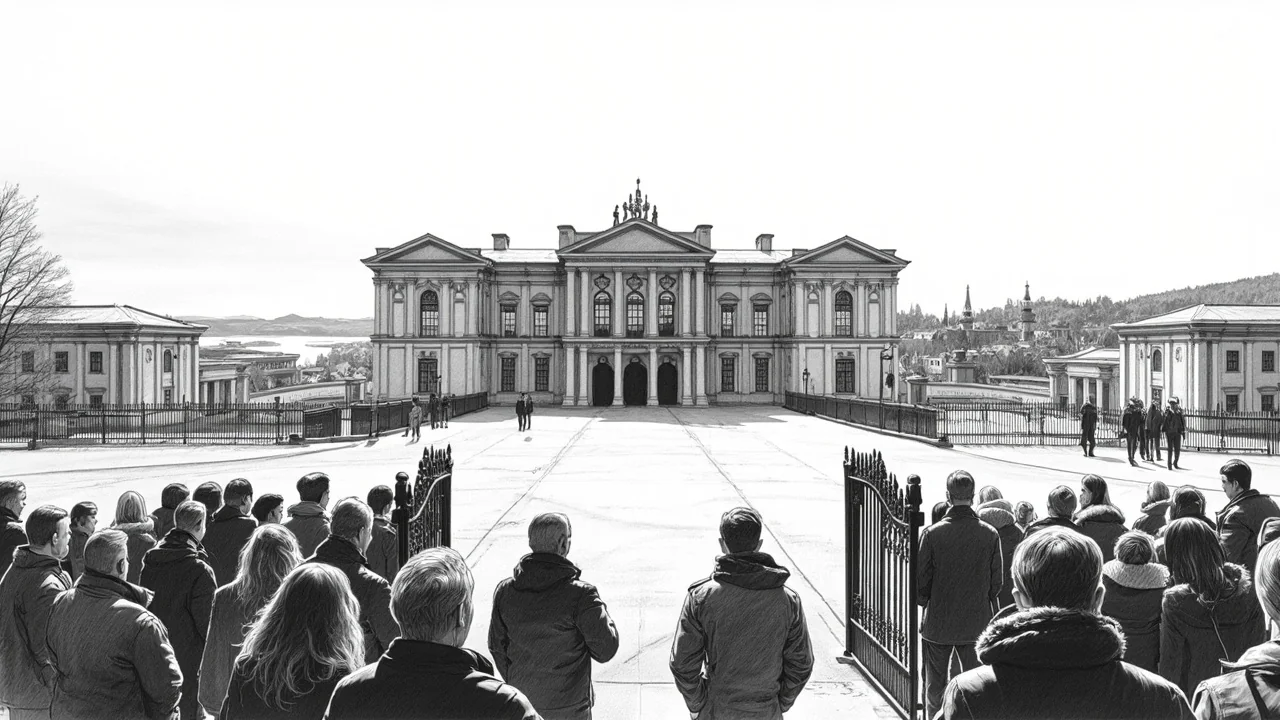
Norway's Royal Palace opened for public tours on 26 April 2026 after King Harald V gave the go-ahead. Tickets went on sale through Ticketmaster, and the Royal Court projects revenue in the millions of kroner. The announcement triggered over 2,000 online searches in a single day, making the summer opening one of Norway's most discussed society events.
This is not just a royal photo opportunity. It reveals how Norwegians interact with their constitutional monarchy. The palace in central Oslo is both a working residence and a tourist attraction. Every summer, tens of thousands queue for a glimpse of the state rooms, the throne, and the art collection. That the King himself authorised the ticket sale reinforces the modest, accessible image the monarchy cultivates.
A palace open to all
The season's ticket sales began in early March, according to the Royal Court's website. Tickets cost several hundred kroner each, and the total reaches millions. As of 2026, the previous season (2025) attracted around 250,000 visitors. This year's figure is expected to be higher because international tourism has rebounded. For comparison, Sweden's Royal Palace in Stockholm sees roughly 700,000 visitors annually, but Norway's smaller monarchy punches above its weight in public engagement.
Norway does not have a lavish coronation or a grand wedding that captures global headlines. Instead, the monarchy relies on quiet access events. The palace opening is one of the few times the public can walk through rooms that normally host state visits and official banquets. It is a deliberate choice to share the building's heritage while keeping the institution relevant.
What the numbers tell us
The projected millions from ticket sales do not simply line the royal household's budget. They help maintain a building that dates to 1849. The Royal Court reports that ticket revenue covers a portion of the palace's operating costs, inclUDIng security, cleaning, and guided tour staff. This makes the monarchy partially self-funding for its public outreach activities.
The strong search interest also reveals a Norwegian society that remains curious about its crown. In a country where the royal family's popularity consistently polls above 80 percent, the palace opening functions as a civic ritual. It is not about celebrity spectacle. It is about shared space. The palace sits at the top of Karl Johans gate, the main boulevard. For two months each summer, any Norwegian or tourist can walk through its halls.
Expect this year's ticket inventory to sell out weeks before the summer ends. The Royal Court will likely release extra tour slots. The bigger question is whether the monarchy's financial reliance on public attendance will push it toward even more commercial strategies, such as evening events or private hire. That would be a shift in how Norwegians perceive their king.
Read more: Norway Opens World's Largest Floating Wind Farm at 1.5 GW.
Read more: Norway Opens New Arctic Drilling Round in Barents Sea.