
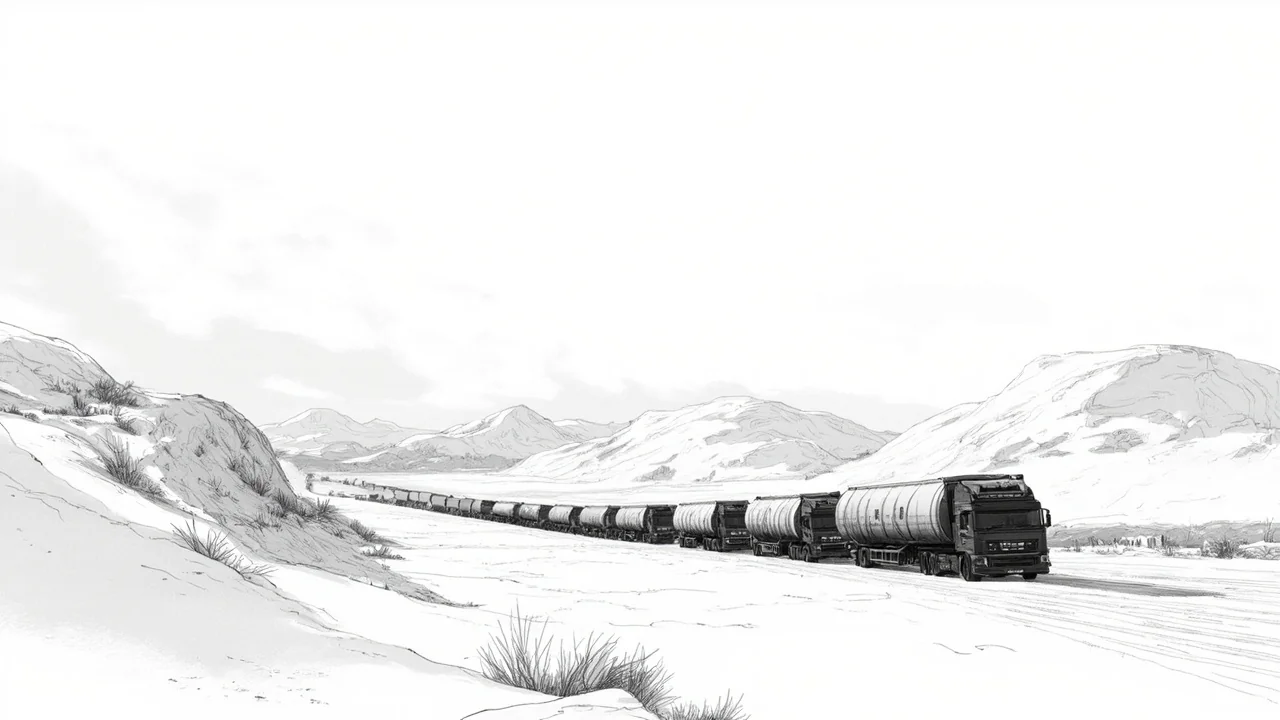
Norwegian salmon exports worth millions face a major fraud investigation after health certificates appear to show fish from a closed slaughterhouse. The company North Tandem allegedly used labels from the reputable Nordlaks and Alsvåg Lakseslakteri to send 35 truckloads of salmon to Kazakhstan over seven months. A review of official documents reveals production dates that do not match the facilities' operational records, pointing to potential document forgery and trademark misuse.
A Paper Trail of Discrepancies
Health certificates, the official documents guaranteeing the origin and safety of food exports, are at the center of the case. These certificates must accompany Norwegian salmon leaving the country. A detailed examination of all certificates issued to North Tandem between September 2023 and May 2024 shows a critical flaw: the unique seal numbers, which track each individual truck shipment, remain visible. By tracing these numbers, investigators could map the volume and destination of the allegedly mislabeled fish.
The documents indicate North Tandem exported 35 truckloads of frozen salmon to Kazakhstan, claiming the fish originated from Alsvåg Lakseslakteri. However, the production dates on these certificates tell a different story. Stian Rydningen, managing director of Alsvåg Lakseslakteri, states the company had only one production of frozen salmon in the first quarter of 2024. "Based on this, we can rule out that several of these certificates concern fish from our production," Rydningen said. This direct contradiction between paper records and operational reality forms the core of the alleged fraud.
The Slaughterhouse That Wasn't Operating
The scandal deepens with the involvement of Nordlaks, another major producer. Earlier revelations this winter suggested North Tandem had forged labels belonging to both Nordlaks and Alsvåg Lakseslakteri. Both companies have since filed formal complaints with authorities for possible document forgery and trademark abuse. The new document analysis provides tangible evidence supporting their claims. It creates a paradox where large quantities of salmon were officially documented as coming from specific Norwegian facilities that, according to their own records, could not have supplied it.
Alsvåg Lakseslakteri primarily processes and freezes salmon on behalf of other companies. Rydningen confirmed that on two occasions in autumn 2023, a customer requested North Tandem be listed on the label because the fish had already been resold to them. This legitimate practice, however, cannot account for the scale and frequency indicated by the 35 certificates. "We are shocked by the size of this," Rydningen added, emphasizing the company cannot rule out that other customers also resold fish to North Tandem without their full knowledge.
Systemic Weaknesses in Export Controls
This case exposes potential vulnerabilities in Norway's prized seafood export control system. Health certificates, issued by the Norwegian Food Safety Authority (Mattilsynet), are the cornerstone of international trust in Norwegian salmon. The system relies on accurate documentation to ensure traceability from fjord to fork. The alleged ability of a company to repeatedly obtain or generate certificates with false origin information points to a significant breakdown. If certificates can be forged or manipulated, the entire chain of custody guaranteeing food safety and quality is compromised.
Industry experts point to the immense value of the Norwegian salmon brand as a motive for such fraud. Salmon labeled with the origins of well-known, high-quality producers like Nordlaks can command a premium price, particularly in distant markets like Kazakhstan. The potential profits from mislabeling cheaper or lower-grade fish are substantial. This incident will likely trigger a thorough review of how health certificates are issued, verified, and tracked, especially for exports to markets outside the European Union where controls may differ.
International Repercussions and Market Trust
The destination of the suspect shipments—Kazakhstan—highlights the global reach of Norway's seafood industry and the international fallout of such scandals. Norway exports salmon to over 100 countries, and maintaining an impeccable reputation for safety and authenticity is crucial. A loss of confidence in certification documents could lead to increased border inspections, delays, and even rejections of Norwegian seafood imports by foreign authorities. This not only damages the companies directly involved but also risks casting a shadow over the entire Norwegian export apparatus.
The Norwegian Food Safety Authority, which provided partial access to the documents, has redacted information on weight, number of boxes, and batch numbers. Their involvement now shifts from administrative oversight to a criminal investigation. The authority must determine how the fraudulent labeling occurred and whether there are systemic flaws that need addressing. The case also raises questions about the due diligence conducted by importers and buyers in receiving countries, who are responsible for verifying the authenticity of the documentation accompanying their goods.
A Blow to Norway's "Blue Green" Reputation
For Norway, aquaculture is a cornerstone of its "blue-green" economy, a strategic industry where technological innovation and environmental sustainability are sold globally. Scandals involving food safety or fraud strike at the heart of this carefully cultivated image. They provide ammunition to critics of industrial aquaculture and can influence consumer perception in key markets. The government and industry bodies like the Norwegian Seafood Council invest heavily in marketing Norway as a source of pure, well-regulated seafood. Incidents like this undermine that narrative and can have long-term commercial consequences.
The companies whose brands were misused, Nordlaks and Alsvåg Lakseslakteri, are now in a difficult position. They are victims of trademark abuse, yet their names are publicly associated with a fraud investigation. They must actively work to distance their legitimate operations from North Tandem's alleged actions, reassuring their own customers that their supply chains are secure. The legal process will be lengthy, but the reputational damage requires immediate and transparent crisis management.
North Tandem has declined to comment on the specific findings from the document review. Their silence adds to the gravity of the allegations. Without their explanation, the paper trail stands as a stark, numerical accusation: 35 trucks, 7 months, one distant market, and labels from slaughterhouses that could not have supplied the cargo.
As authorities piece together the full scope of the operation, one central question remains unanswered. If 35 truckloads of salmon labeled as premium Norwegian product did not come from the declared sources, where did the thousands of kilograms of fish actually originate? The answer will determine whether this is a case of simple document forgery or a more complex breach of food safety involving unknown origins and potentially unregulated production. The integrity of Norway's most famous export now hinges on that investigation.