
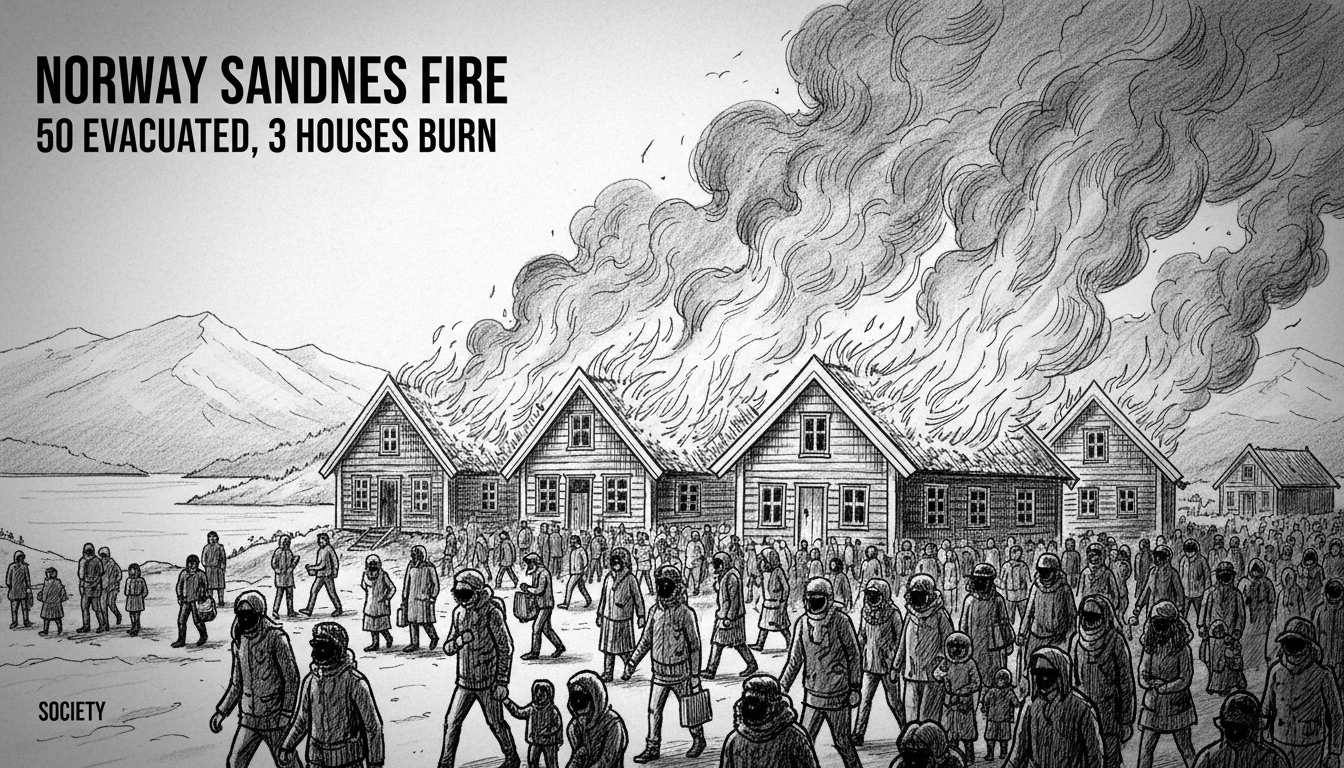
Norway's third-largest metropolitan area faced a significant residential fire emergency Friday evening as flames engulfed multiple homes in Sandnes, Rogaland. Firefighters battled intense blazes in at least three houses, leading to the evacuation of approximately 50 residents from 18 housing units. Police confirmed no injuries, but the incident highlights persistent fire safety challenges in Norway's densely built urban neighborhoods.
A dramatic emergency response unfolded in a Sandnes residential district after reports of a building fire. The blaze, which started in one house, rapidly spread to two neighboring properties. Svein Nesse, an operations manager at the regional emergency coordination center, described a chaotic scene. "We are working frantically on site," Nesse said. "There is a full-scale fire in two homes, and danger of it spreading to a third. Several cars are also on fire."
A Race Against Flames in Dense Housing
The fire's rapid spread between detached or semi-detached homes is a classic scenario in older Norwegian suburbs. Sandnes, part of the Stavanger/Sandnes metropolitan area, features many neighborhoods built during periods of rapid post-war expansion. These areas often have smaller plots with homes constructed close together, frequently using wooden materials in exterior cladding or structural elements. This combination can create a perfect storm for fire propagation, especially in dry or windy conditions.
Fire crews from multiple stations responded to contain the incident. Their primary objectives were to prevent further spread, protect exposed neighboring structures, and ensure all residents were safely accounted for. The evacuation of 50 people indicates the fire's proximity to several multi-unit buildings or a cluster of smaller homes. The successful evacuation with no injuries points to effective early warning systems and a coordinated police and fire service response.
The Persistent Challenge of Urban Fire Spread
This fire in Sandnes is not an isolated event. Similar incidents occur periodically across Norwegian cities, reigniting debates about building codes and urban planning. Fire safety experts consistently point to the critical importance of fire-resistant materials and adequate spatial separation between structures as the first line of defense. "When buildings are close together, fire doesn't need an invitation," said Lars Holm, a retired fire chief and safety consultant based in Oslo. "Embers can travel dozens of meters. Modern regulations address this, but a large portion of our housing stock was built to older standards."
Holm explained that while Norwegian building codes (TEK) have become progressively stricter regarding fire safety, retrofitting existing neighborhoods is a slow and costly process. Key measures include installing sprinkler systems, using non-combustible materials for facades and roofs, and creating fire breaks. For homeowners, maintaining clear space between vegetation and structures is a simple but vital preventative step often overlooked.
Community Impact and Emergency Protocols
The social disruption for the evacuated residents is immediate and severe. Around 50 individuals, potentially including families with children and elderly residents, were forced from their homes with little notice. Local municipal authorities, in coordination with the Norwegian Red Cross and other volunteer organizations, are responsible for providing immediate shelter, food, and clothing. The long-term process involves damage assessment, insurance claims, and temporary housing arrangements, which can last for months if homes are severely damaged.
Norwegian emergency services operate on a highly regionalized model. The Sørvest 110-sentralen, referenced in the initial report, is the emergency communications center for the southwestern region, handling calls for police, fire, and medical aid. This integrated system is designed for swift coordination. The response to the Sandnes fire likely involved fire brigades from Sandnes and possibly neighboring Stavanger, depending on the scale and required specialist equipment.
Analysis: Balancing Heritage with Safety
This incident sits at the crossroads of Norwegian cultural heritage and modern safety demands. The classic Norwegian wooden house is an iconic part of the national architectural identity, particularly in residential areas. However, wood is a combustible material. The national push for denser, more sustainable urban living to preserve surrounding natural areas can sometimes conflict with ideal fire safety spacing.
Municipalities face the complex task of updating their local planning regulations within the framework of national building codes. Some cities have introduced grants or guidance for homeowners to replace wooden facades with more fire-resistant materials in high-risk zones. The insurance industry also plays a role, with premiums potentially reflecting the fire risk of certain building materials and neighborhood densities.
From an energy and environmental perspective, the reconstruction of any fire-damaged homes will now fall under Norway's stringent current TEK regulations. This means new constructions will be far more energy-efficient and likely incorporate more fire-resistant materials than the originals, a small silver lining in terms of long-term urban resilience and carbon footprint.
Looking Ahead: Prevention and Preparedness
The successful avoidance of injuries in Sandnes is a testament to effective emergency response. However, the event serves as a stark reminder for homeowners and planners alike. For residents, ensuring working smoke detectors, having a clear escape plan, and managing potential fire fuel around the home are essential. For local governments, it reinforces the need to review area-specific fire risks and consider preventative measures, such as community-wide information campaigns or targeted inspections.
The fire also demonstrates the value of Norway's investment in its professional and volunteer fire services, who train extensively for precisely this type of complex, spreading structure fire. Their ability to prevent the loss of life, even when multiple buildings are involved, is the ultimate measure of their effectiveness.
As the investigation into the fire's cause begins, the community's focus shifts to recovery. The charred structures in Sandnes will be a visible reminder of the destructive power of fire for months to come. Yet, they also underscore a resilient system of emergency response that, when tested, performed its primary function: protecting human life. The challenge now is to learn from the event and strengthen preventative measures, ensuring the iconic Norwegian residential landscape is not only charming but also fundamentally safe for the families who call it home.