
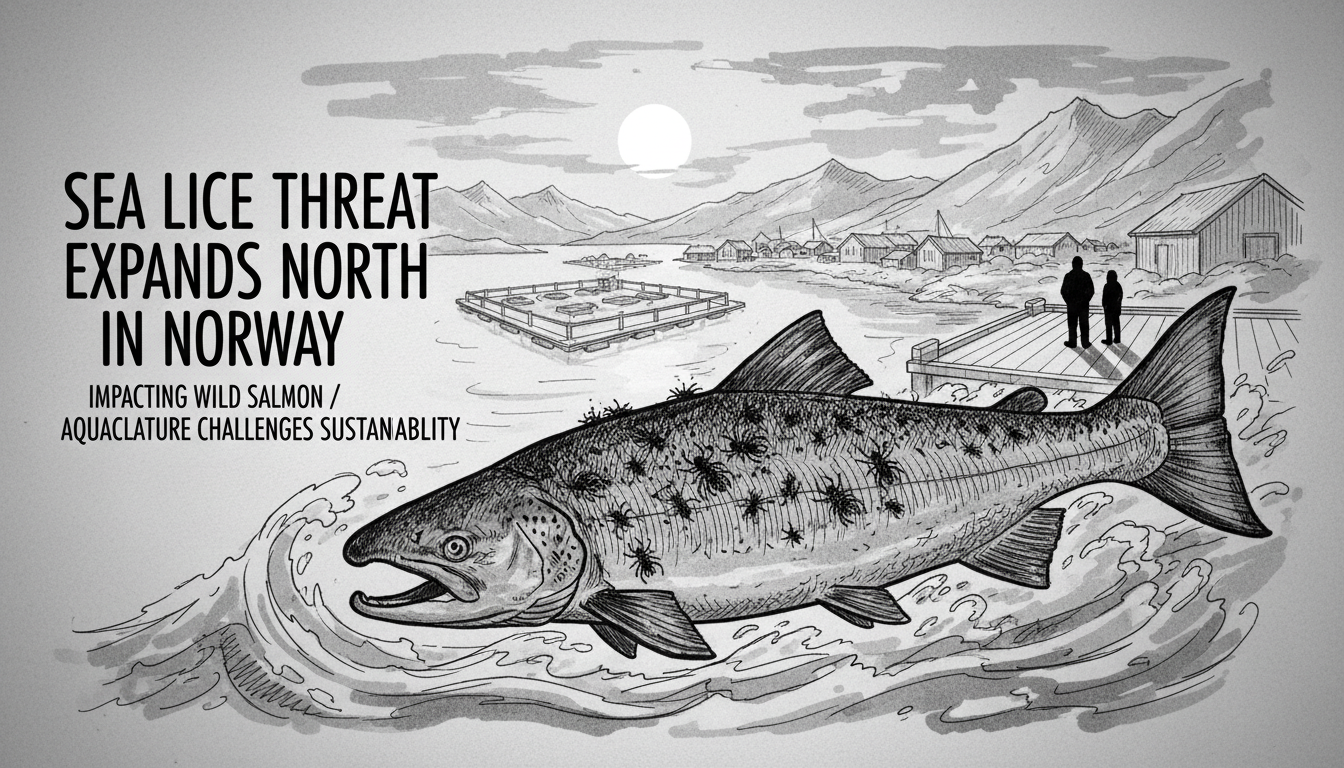
The sea lice parasite is spreading further north along Norway's coast. This poses a growing threat to wild salmon populations. The problem was once most severe in the Hardanger region. Now, northern areas are reporting increased infestations.
Ørjan Karlsen leads the sea lice project at the Institute of Marine Research. He said increased aquaculture production in the north has led to more lice in fish farms. This creates higher infection pressure for wild salmon migrating to sea. The small, migrating salmon smolts are most vulnerable in the spring. They swim out through fjords filled with lice from nearby aquaculture pens.
Karlsen noted heavy lice loads on smolts in the Hardangerfjord this past spring. Other areas showed moderate to low levels. The Boknafjord and Sognefjord had moderate infestation. The Romsdalsfjord and Altafjord had low levels. Sea trout are also heavily affected by lice across nearly the entire country. Even Arctic char in the far north now carry significant lice loads.
This expansion signals a systemic challenge for Norway's coastal ecosystem. The nation is a global leader in salmon aquaculture. This industry generates substantial export revenue. Balancing economic production with environmental sustainability remains difficult. The lice attach to salmon and feed on their skin and mucus. This causes wounds, stress, and can lead to death. Infected wild fish have reduced survival rates at sea.
Monitoring these trends is complex. Karlsen pointed out a low fish catch in trawl surveys in Sognefjord and Romsdalsfjord. This increases uncertainty about the observations from those areas. The data relies on consistent sampling. The northward spread follows a pattern observed in recent years. Warmer sea temperatures may be a contributing factor. The lice thrive in specific temperature ranges.
The situation has direct implications for Norway's international reputation. The country markets itself on pristine nature and sustainable seafood. Rising parasite levels in wild fish challenge that narrative. It also affects recreational fishing and tourism. Anglers travel to Norway for its legendary wild salmon rivers. Declining returns of adult salmon could impact local economies.
This is not just a Norwegian issue. Scottish, Canadian, and Chilean salmon farms face similar parasite challenges. Norway's approach to managing sea lice is watched globally. The industry employs various control methods. These include cleaner fish, laser treatments, and medicinal baths. The goal is to keep lice numbers below strict regulatory limits. The spread to new areas tests the effectiveness of these measures.
For international observers, this story highlights a classic Nordic dilemma. It pits a prosperous, technology-driven industry against environmental conservation. Norway has the resources and scientific expertise to address the problem. The question is whether political and economic will matches the scale of the ecological challenge. The northward march of the parasite suggests current efforts are insufficient. The health of wild Atlantic salmon, a key species, hangs in the balance.