
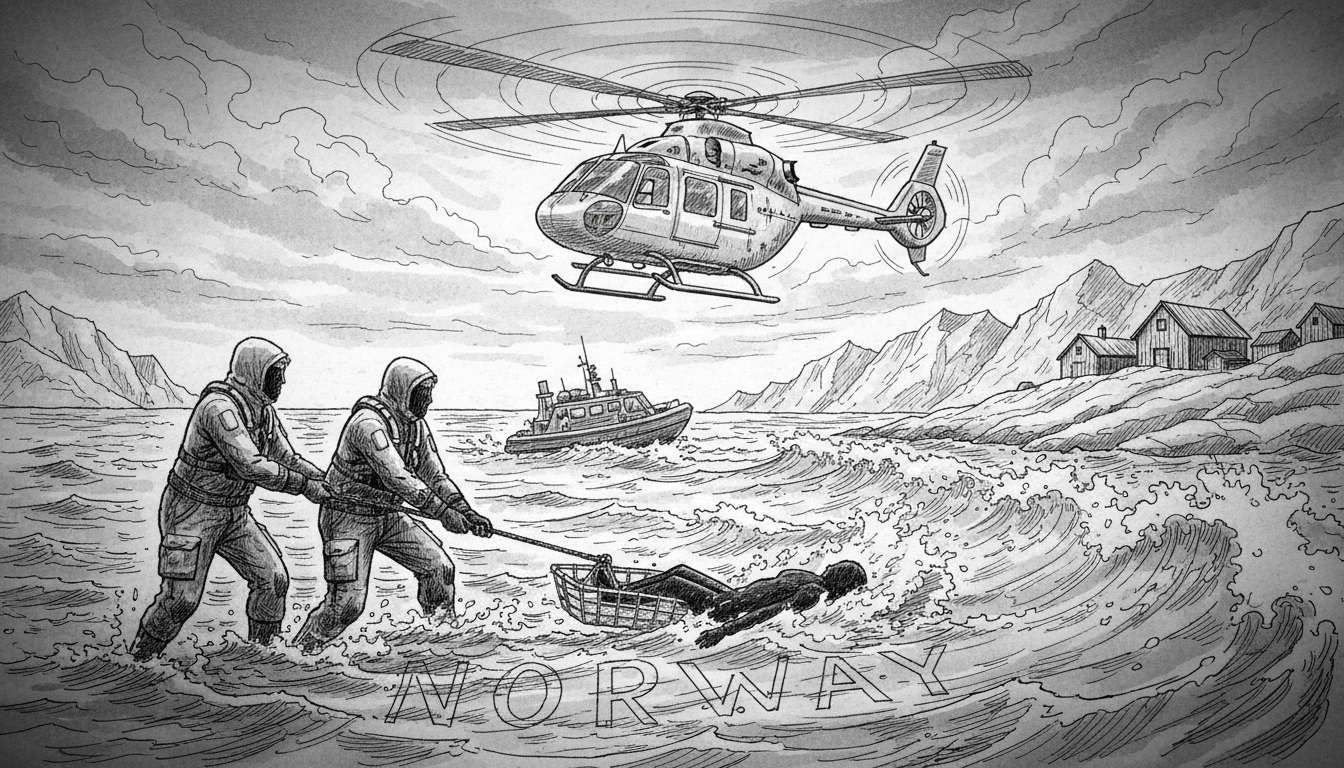
Norway's emergency services pulled a person from the cold waters near Kristiansund in a swift rescue operation. Police confirmed the individual was conscious but suffering from hypothermia and was transferred to medical personnel. The incident highlights the ever-present dangers of Norway's coastal environment, even for a nation with a world-class maritime rescue system.
A Swift Response in Coastal Waters
The rescue unfolded in Kristiansund, a town of 24,000 people built across several islands in Møre og Romsdal county. Local police, acting as first responders, coordinated the operation to retrieve the person from the sea. Details on how the individual entered the water were not immediately released. The successful recovery underscores the critical importance of rapid intervention in such cases. Water temperatures in Norwegian fjords and coastal areas, even in summer, can induce hypothermia quickly, drastically reducing survival time.
Police officials said the person was conscious when brought ashore, a positive sign given the circumstances. Emergency health services then assumed care to address the effects of cold water immersion. The condition of the individual was not disclosed, but the focus is now on medical treatment and recovery. This incident is a stark reminder of the unpredictable nature of the sea that surrounds much of Norway.
The Constant Threat of Cold Water
Hypothermia represents one of the gravest immediate risks in Norwegian water emergencies. Survival time is not a matter of hours but often minutes, depending on specific conditions. The waters around Kristiansund, situated on Norway's rugged northwestern coast, are particularly exposed to weather and currents from the Norwegian Sea. This environment demands respect from both residents and visitors engaged in maritime activities.
Norway's search and rescue infrastructure is a complex network designed for precisely this type of event. It integrates state resources like the Police, the Norwegian Coast Guard, and the Norwegian Sea Rescue Society (RS) with numerous local volunteer organizations. This layered system aims to ensure a quick response anywhere along the country's vast and intricate coastline. The Kristiansund operation appears to have functioned as intended, with different services working in concert.
"Time is the most critical factor in cold-water rescues," a veteran coast guard officer explained, speaking on the condition of anonymity as they were not directly involved in this case. "Every minute spent in the water reduces the chance of a positive outcome. The goal is always to get the person out and into professional medical care as fast as humanly possible. That requires seamless coordination from the first alert."
Maritime Safety in a Seafaring Nation
Kristiansund itself has a deep-rooted maritime history, historically known for fishing and shipbuilding. Its island geography, connected by bridges and tunnels, means the community's relationship with the sea is fundamental. For such towns, water safety is not an abstract concept but a part of daily life and community preparedness. Local knowledge of currents, weather patterns, and safe practices is passed down through generations.
Despite this ingrained maritime culture, accidents happen. They can result from slips on wet docks, sudden illness, equipment failure on boats, or simply underestimating the power of the sea. Norway invests heavily in public safety campaigns, especially during the summer months and the winter cod fishing season, when many recreational boats take to the water. These campaigns emphasize wearing life jackets, checking weather forecasts, and not going out alone.
The Norwegian government's White Paper on Search and Rescue services frequently highlights the challenge of maintaining readiness across such a large and sparsely populated area. It praises the volunteer contribution as indispensable. In many remote coastal communities, local volunteer rescue teams are the first to launch a boat when a distress call comes in, often before official assets can arrive from longer distances.
Analysis: A System Tested and Proven
This incident in Kristiansund, while brief in official reports, serves as a microcosm of Norway's approach to maritime safety. The response follows a well-established protocol: police secure the scene and manage coordination, specialized resources execute the physical rescue, and emergency medical services provide immediate critical care. The outcome—a conscious survivor—suggests the chain of survival remained unbroken.
From a policy perspective, successful operations validate continued funding and training for integrated rescue services. Parliament, the Storting, regularly debates the allocation of resources to the Coast Guard and support for volunteer organizations. Stories with positive outcomes, against daunting odds, strengthen the argument for maintaining this robust system. They demonstrate a tangible return on public investment in safety.
However, each rescue also prompts quiet reflection on prevention. Authorities often review incidents to see if additional public information efforts or physical safety measures—like better lighting on piers or more accessible lifebuoys—could prevent future occurrences. The balance between responsive rescue capability and proactive prevention is a constant focus for Norwegian maritime safety directors.
The Human Element of Rescue
Behind the coordinated response are individual rescuers—police officers, coast guard crew, volunteers, and paramedics—who train for these high-pressure situations. A successful recovery provides a profound sense of purpose and reinforces their commitment. The psychological impact on the rescued individual and their family is immense, turning a potential tragedy into a second chance.
The community of Kristiansund will likely view this event with sober gratitude. It is a reminder of their collective vulnerability to the natural environment that defines their home, but also of the protective network they have built. In towns where many make their living from the sea, there is a deep understanding that today's rescuer could be tomorrow's victim, and vice versa. This fosters a powerful culture of mutual aid.
As the individual receives treatment, the broader lessons remain. Norway's coastline offers breathtaking beauty and vital resources, but it demands vigilance. The effective rescue in Kristiansund proves the system works when called upon. It also asks every citizen and visitor to do their part: to respect the water's power, prepare adequately, and understand that even in a nation of skilled mariners, the sea always has the final say. The question is not if the rescue services are ready, but whether we all take the necessary steps to ensure they never need to be called.