
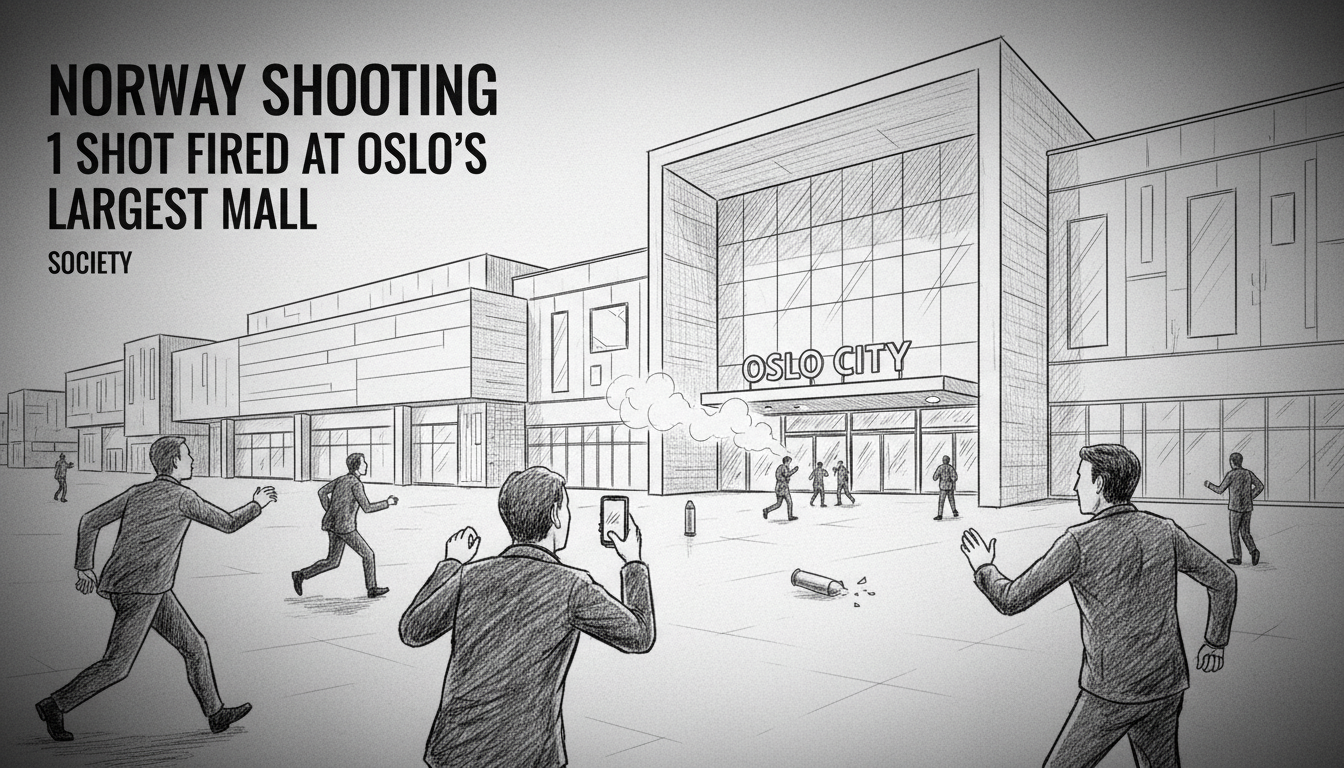
Norway police have one suspect in custody after a single shot was fired inside Oslo's largest shopping center, Storo Storsenter, on Tuesday. The incident triggered a mass evacuation and a major emergency response, sending shockwaves through a capital city unaccustomed to public gun violence.
"We have control of one perpetrator. One shot was fired," said police operations leader Tor Grøttum in a brief statement to assembled media. He confirmed that police had evacuated the entire center, which houses approximately 140 stores and cafes. "We ask the public to stay away from the center. We will report when the situation is normalized."
Witnesses described scenes of panic as shoppers and employees fled. One witness reported seeing a man enter the mall with a pistol before people began running. Center manager Unni Merethe Aasgaard confirmed the evacuation was complete. "Everyone is evacuated," she said.
Large contingents of police and health personnel remained on scene for hours. Police conducted a broad search but stated they had no suspicion of additional suspects at that time. The motive for the shooting remains unclear, and police have not released details about the suspect or any potential injuries.
A Breach in the Fabric of Safety
The event at Storo Storsenter represents a profound breach of Norway's social fabric. Public shootings, particularly in crowded civilian spaces like shopping malls, are exceptionally rare. The country maintains some of the world's strictest firearm regulations, requiring comprehensive background checks, mandatory training, and secure storage for gun owners.
Norway's overall crime rate is low by international standards. The sudden eruption of gunfire in a bustling mall—a place associated with routine family errands and social gathering—directly challenges the public's ingrained sense of security. "These incidents cut deeply because they violate spaces we consider safe and mundane," said Dr. Ingrid Moe, a sociologist at the University of Oslo who studies collective trauma. "In a society where this is not commonplace, the psychological impact on witnesses and the broader community can be significant, fostering a heightened, if temporary, sense of vulnerability."
The Emergency Response Protocol
The police response followed established protocols for an active threat situation. Securing the scene, evacuating civilians, and isolating the suspect were the immediate priorities. The presence of large forces from both police and health services indicates a response calibrated for a potential mass casualty event, a standard precaution despite the report of a single shot.
Security experts note that Norwegian shopping centers generally rely on a philosophy of open access rather than overt, high-security measures like metal detectors or armed guards. "The balance has always been between public accessibility and safety," explained security consultant Lars Holmen, a former police officer. "An event like this will inevitably lead to a review of that balance. Discussions will focus on surveillance, rapid lockdown capabilities, and the training of civilian staff to respond to critical incidents."
Storo Storsenter, located in the bustling Storo district, is a major transit and commercial hub. Its sheer size and daily foot traffic made the evacuation a complex logistical operation. The efficient clearing of the center suggests emergency plans were executed effectively.
Contextualizing a Rare Event
To understand the national impact, one must contrast this event with Norway's recent history of trauma. The 2011 Utøya island and Oslo government district attacks by a right-wing extremist remain a defining national tragedy, leading to a comprehensive overhaul of police emergency response systems and national security strategy.
The 2019 attack on the Al-Noor Islamic Centre in Bærum by another extremist was a stark reminder of persistent threats. However, random acts of gun violence in public commercial spaces do not form a pattern in Norway. Each isolated incident is therefore treated with extreme seriousness, scrutinized not just as a criminal act but as a potential indicator of shifting social dynamics.
"The rarity is what makes it news," Dr. Moe noted. "It disrupts the expected narrative of public life. The authorities are acutely aware that public confidence hinges on a transparent and competent handling of these rare crises."
The Path Forward: Investigation and Public Reassurance
The immediate police work now shifts to investigation. Forensics teams will examine the scene to corroborate the account of a single discharged round. Investigators will work to establish a motive, trace the firearm's origin, and determine whether the suspect acted alone. The suspect in custody will be interrogated, and formal charges are likely to follow in the coming days.
A critical task for Oslo Police District will be public communication. They must provide enough information to reassure a concerned public without compromising the judicial process. Updates on the suspect's status, the confirmed absence of further threats, and the eventual re-opening of the mall will be communicated step-by-step.
For the businesses and employees of Storo Storsenter, the incident means lost revenue and personal anxiety. The center's management will need to coordinate with police for re-entry and address the concerns of both tenants and the public before commerce can resume normally.
A Test of Resilience
While the physical danger appears contained, the episode serves as a test of Norway's civic resilience. The nation's approach to security and public safety, forged in response to past atrocities, prioritizes both prevention and social cohesion. The response to this mall shooting will be measured not only by the efficiency of the police operation but by the community's ability to process the event without a fundamental erosion of trust.
Norway's strict gun control framework will face renewed public scrutiny, though early reports suggest this incident may involve an illegally obtained weapon. The debate will likely center on enforcement and illegal firearm trafficking rather than the existing laws for legal ownership.
For now, Oslo residents are left with an unsettling image: the familiar, glass-walled expanse of Storo Storsenter, emptied by fear, surrounded by flashing blue lights. It is a scene that feels imported from elsewhere, a jarring anomaly in the Norwegian capital. The lasting question is how quickly the sense of normalcy—the very normalcy that makes such an event so shocking—can return.