
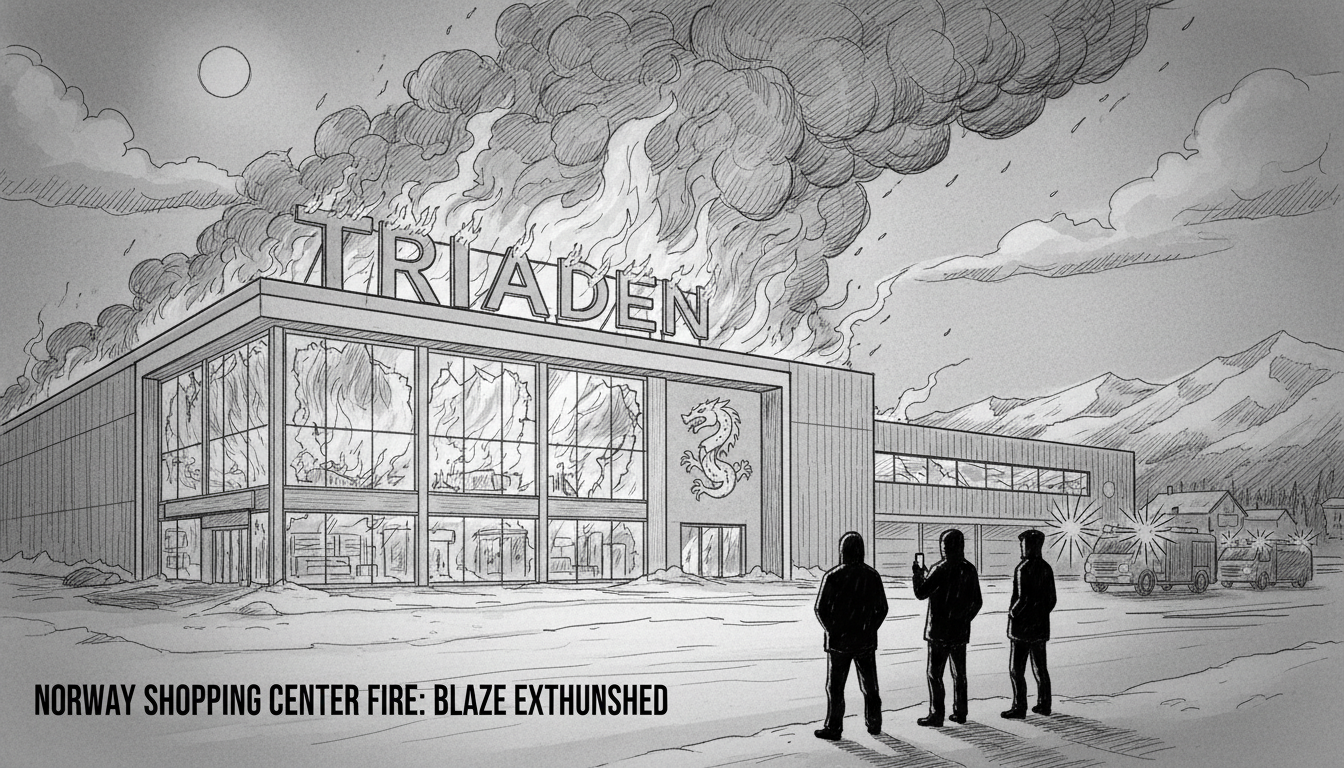
Norway's emergency services responded to a major fire at the Triaden Storsenter shopping center in Lørenskog on Thursday afternoon. Initial police reports described significant smoke and flames at the Meny supermarket within the complex. Authorities confirmed the fire was extinguished by 16:40 local time, preventing what could have been a catastrophic event at the popular retail hub just east of Oslo.
A Swift and Coordinated Response
The alarm sounded in the late afternoon, a time when shopping centers typically see moderate foot traffic. Police logs from the incident noted the presence of "much smoke and flames at Meny." Multiple emergency units from Lørenskog and neighboring municipalities converged on the scene. Their rapid deployment followed Norway's well-established protocols for commercial structure fires. Firefighters faced the dual challenge of suppressing visible flames and managing dense smoke that can spread quickly through interconnected retail spaces. The successful containment to a single unit within the large center points to effective compartmentalization, a key feature of modern Norwegian building codes.
Local authorities have not released information on potential injuries or the number of people evacuated. The focus remains on securing the structure and initiating an investigation. Shopping centers like Triaden are central to community life in Norwegian suburbs, particularly during winter months. They function as social and commercial hubs, making their safety paramount. This incident will inevitably trigger reviews of emergency plans at similar complexes across Akershus county.
Examining Safety in Commercial Spaces
Norwegian building regulations, particularly the TEK17 standards, mandate strict fire safety measures for large public buildings. These include requirements for non-combustible materials, extensive sprinkler systems, clearly marked escape routes, and advanced smoke ventilation. Triaden Storsenter, as a modern development, would have been subject to these rigorous codes. The fact that the fire was contained and extinguished relatively quickly suggests these systems functioned as intended. The specific cause, however, remains unknown and will be the subject of a thorough technical investigation by the fire service and possibly the Norwegian Safety Investigation Authority.
"The immediate priority is always life safety and preventing escalation," said a veteran fire safety engineer familiar with commercial properties, who spoke on background. "A fire in a supermarket presents unique hazards, from electrical systems to cooking equipment if there's a kitchen, and potentially flammable goods. The response time and outcome here indicate a high level of preparedness from both the building's systems and the emergency crews."
The economic impact on businesses within Triaden will be significant, even if localized. The affected Meny supermarket will likely remain closed for days or weeks for damage assessment, cleaning, and repairs. Neighboring stores may also face disruption due to smoke damage, power cuts, or access restrictions. For smaller tenants, even a short closure can create serious financial strain.
Community and Commercial Repercussions
Lørenskog, with a population of over 45,000, relies on centers like Triaden for daily groceries and services. The temporary loss of a major Meny store disrupts shopping patterns for thousands of residents. It also places pressure on alternative stores in the area. Community reaction often extends beyond inconvenience to concern, as such fires shake the perceived safety of everyday spaces. Local politicians and the center's management will need to communicate transparently about the investigation's progress and reopening timelines.
From a broader perspective, this fire serves as a live test of Norway's integrated emergency response framework. It involves police for evacuation and crowd control, the fire service for suppression, and medical teams for any casualties. The coordination between these entities in a dense suburban environment is complex. The apparent success in Lørenskog will be studied by other municipalities. It also highlights the ongoing need for investment in emergency service equipment and training, a perennial topic in local government budget discussions.
Insurance claims will follow, with adjusters examining compliance with safety regulations to determine liability and coverage. Norwegian property insurers pay close attention to fire prevention measures, and premiums for commercial centers are calculated accordingly. A serious fire can lead to increased costs for all tenants in the subsequent insurance period.
The Path Forward for Triaden
The coming days will involve structural engineers assessing any damage to the building's integrity, especially if water from firefighting efforts has affected load-bearing elements. Environmental teams may also be called in to address contamination from smoke and chemical runoff. The shopping center's management must balance the urgency of reopening with the absolute necessity of ensuring the safety of staff and customers.
This event, while swiftly resolved, raises quiet questions for consumers and regulators alike. How often are fire suppression systems inspected in private commercial spaces? Are evacuation drills for staff conducted with sufficient regularity? The public inquiry will likely focus on these operational details. For now, residents of Lørenskog are relieved the situation was not worse. The sight of emergency vehicles at a familiar local landmark is a stark reminder that safety protocols matter most when they are put to the test.
The final measure of this response will be in the restoration of normalcy. When Triaden Storsenter fully reopens, it will represent not just a return to commerce, but a confirmation of the systems built to protect it. The investigation's findings could influence safety practices in shopping centers across Norway, proving that even a contained fire leaves a lasting imprint on policy and community confidence.