
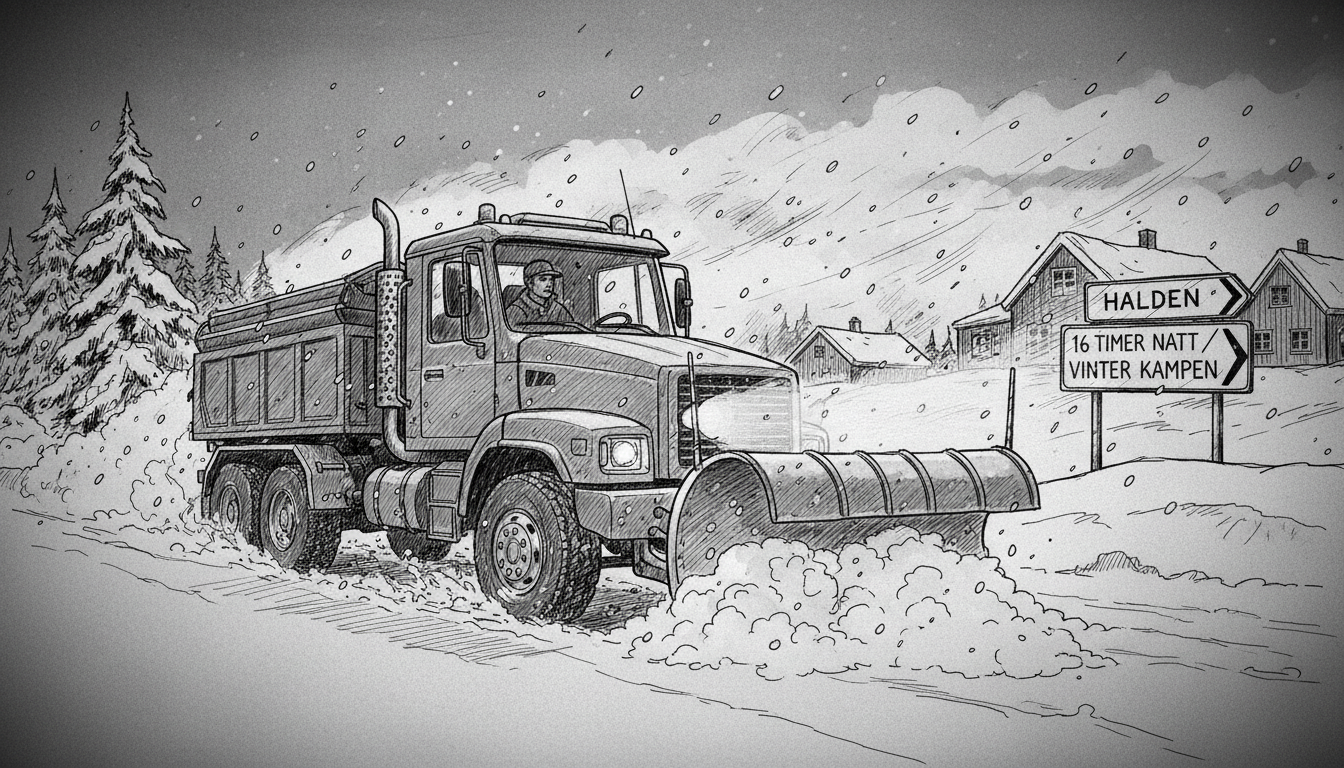
Norway winter road conditions tested municipal crews across the Østlandet region overnight as a persistent snowstorm blanketed streets. In Halden, near the Swedish border, 20-year-old snow plow driver Ole Henrik Hansen had been clearing roads for 16 consecutive hours when he spoke about the grueling shift. "It's been heavy at times, like last night when so much snow came," Hansen said, having started work at 9 PM Wednesday and still operating his vehicle into Thursday afternoon. His primary challenge wasn't the marathon hours, but parked cars blocking his path. "When cars are in the way, it gets tight the moment the plow arrives. That creates trouble immediately," he explained, appealing to residents to use their driveways to allow for complete and efficient clearing.
The Frontline of a Nordic Winter
Hansen's experience is a microcosm of the annual winter management operation that defines life in southern and eastern Norway for several months each year. The Norwegian Meteorological Institute had issued a yellow warning for snow across large parts of Østlandet, with Halden among the hardest-hit areas. These warnings trigger municipal emergency protocols, deploying drivers like Hansen across prioritized networks. The work is repetitive and physically demanding; Hansen reported having to drive the same streets multiple times as fresh snow continued to fall. "When you have to go through the streets several times, it gets heavy in the long run," he noted. The goal is straightforward but logistically complex: to restore safe passage on everything from national highways to residential lanes.
Citizen Complaints and Municipal Prioritization
By Thursday morning, the Halden municipality's technical operations center fielded calls from residents complaining their specific street had not yet been plowed. Bjørn Nøstvik, the technical officer on duty, addressed the frustration. "People call to say it hasn't been plowed in their exact street. But we are on our way. There's really no point in calling to say there's a lot of snow—we are out, and the streets are being taken care of," he stated. This tension between public expectation and operational reality is a perennial feature of Norwegian winters. Municipalities follow strict, pre-defined prioritization schedules. Main arterial roads and essential bus routes are cleared first to maintain regional mobility and emergency service access. Only after these critical networks are secure do crews move into residential side streets and onto sidewalks, a process that can take many hours after a storm ends.
The Systemic Challenge of Scandinavian Snow
Norway's approach to snow removal is a highly organized public service, but it operates under constant physical and logistical constraints. Viken county, where Halden is situated, is one of Norway's most populous regions, meaning decisions in Halden affect a significant number of residents and a vital economic corridor near the E6 highway and the Swedish border. The Norwegian Public Roads Administration sets national standards for winter maintenance, focusing on state highways. However, responsibility devolves to local municipalities for urban and residential roads, creating a patchwork of response capabilities dependent on local budgets, equipment fleets, and workforce. Experts in Nordic urban planning stress that efficient snow removal is less about brute force and more about strategic coordination, public communication, and resource allocation. Proactive planning aims to minimize the severe economic disruptions caused by paralyzed transport networks.
A Driver's Plea and the Public's Role
Ole Henrik Hansen's simple request—for residents to park off-street—highlights a critical, often overlooked, factor in winter crisis management: public cooperation. When vehicles remain on the road during a plowing operation, it creates dangerous bottlenecks, forces incomplete clearing, and significantly slows the entire municipal response. "It's good to get the whole road plowed when we are finally out," Hansen said, emphasizing that cooperation accelerates the service for everyone. In densely populated areas with limited private parking, this remains a significant hurdle. Municipalities occasionally issue temporary parking bans during major storms, but enforcement is difficult, and public adherence varies. The situation in Halden demonstrates that the technology of snow removal, while advanced, still depends on a social contract between the crews working through the night and the citizens waiting for their streets to be opened.
The Economic and Social Cost of Winter
Beyond the immediate inconvenience, inefficient snow removal carries real economic costs. Delays in freight transport, workforce absenteeism, and reduced commercial activity ripple through the local economy. For a border municipality like Halden, maintaining clear routes to Sweden is also important for cross-border commerce and commuting. Furthermore, there are social costs, particularly for pedestrians, the elderly, and those reliant on public transportation. Unsafe sidewalks and inaccessible bus stops can isolate portions of the community for days. The prioritization protocol, while necessary, inherently creates winners and losers in the short term, explaining the flood of calls to Halden's municipal office from residents feeling overlooked.
Looking Ahead: Climate and Preparedness
The Halden event, while routine in the Nordic context, raises longer-term questions about preparedness in a changing climate. While winters may fluctuate, the expectation of extreme weather events remains. Municipalities must balance investment in winter equipment—which can sit idle during mild winters—against the absolute necessity of being ready for a major storm like the one that hit Østlandet. Some experts advocate for greater regional resource-sharing agreements between municipalities to pool expensive machinery and specialized personnel. Others point to improved digital tools for public communication, providing real-time plowing maps to manage citizen expectations and reduce non-essential calls to overburdened operations centers. The core challenge, as seen through the weary eyes of a 20-year-old driver after a 16-hour shift, remains fundamentally human: applying finite resources against an infinite natural force, one street at a time.
The Unseen Infrastructure of Winter
Ultimately, the snow plow driver is a cornerstone of Norway's winter infrastructure. The work is shift-based, tiring, and often thankless, performed in the dark and cold while most of the country sleeps. Drivers like Ole Henrik Hansen operate complex machinery under demanding conditions, navigating not just snow but also the unpredictable element of other road users. Their effectiveness determines whether schools open, whether businesses operate, and whether emergency services can respond. The complaints registered in Halden are not merely about snow; they are a signal of disrupted daily life, a measure of dependency on this essential service. As the climate continues to introduce new uncertainties, the value of this workforce and the systems that support them will only become more pronounced, a critical line of defense between a functional society and a winter lockdown. The question for Norwegian municipalities is not if another major storm will come, but how the lessons from this night in Halden will shape the response to the next one.