
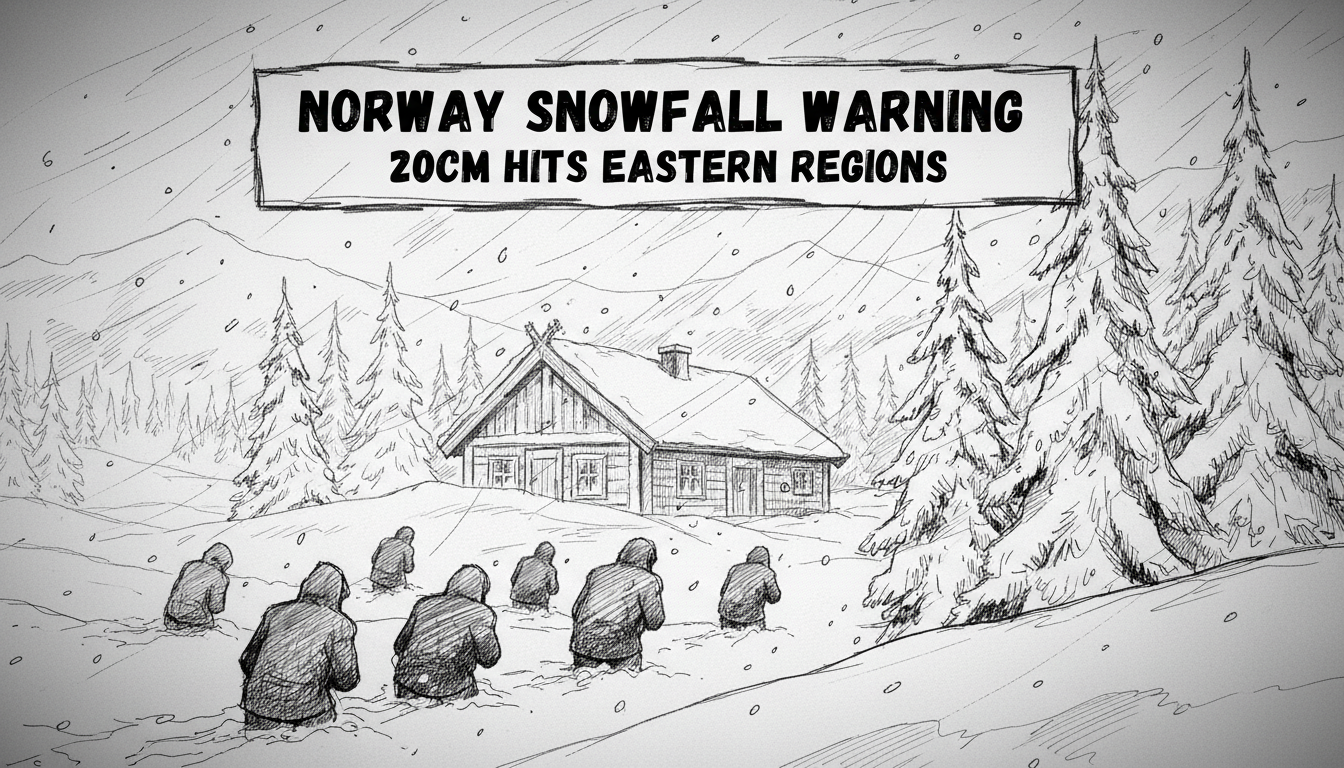
Norway's first major snowstorm of the season has arrived in the eastern counties, with up to 20 centimeters of fresh snow expected to blanket Østlandet. A yellow-level weather warning remains active across the region, as meteorologists adjust their forecasts and road authorities report early accumulations on major highways.
“It may be perhaps 20 centimeters and not 25, as we first said, but we are letting the yellow danger warning stand,” said duty meteorologist Ingrid Bentsen. This measured adjustment reflects the precise yet fluid nature of winter storm tracking. The initial warning, issued by the Meteorological Institute, prompted regional emergency preparedness protocols. By Wednesday evening, dense snow was already falling across several locations, with the State Road Administration confirming snow cover on key roads in Østfold and Akershus.
A Region Braced for Winter's Return
For residents of Eastern Norway, this snowfall marks a familiar seasonal shift. The counties of Østlandet, which include the capital region of Oslo and Viken, typically experience significant winter precipitation. Annual snowfall in these inland areas can exceed 200 centimeters in an average year. This early-season event tests the readiness of municipal services and commuters alike, serving as a wake-up call before the deeper winter sets in. The timing is critical, as many have not yet fully switched to winter tires or adapted their daily routines for hazardous driving conditions.
“The first substantial snow always presents a unique challenge,” explains Lars Holm, a senior advisor with the Norwegian Public Roads Administration. “People’s habits are still tuned for autumn. Our gritting trucks are deployed, but we always see an increase in minor collisions and delays on days like this.” The yellow warning, the second of three levels in Norway's alert system, advises the public to be prepared for transportation disruptions and to follow travel advice. Schools and workplaces in affected municipalities often activate contingency plans, allowing for flexible start times.
Transportation Networks Under Early Strain
Images from road cameras showed snow settling on the E6, Norway's vital north-south arterial highway, as well as on the E18 running east from Oslo. These are two of the country's most trafficked routes, carrying freight and commuters into the capital. Even a few centimeters of snow can reduce average speeds dramatically, leading to congestion during morning and evening rush hours. The Road Administration has its fleet of plows and salting vehicles operating, but priority is given to highways and bus routes, meaning secondary and local roads may remain slippery for longer periods.
Air travel can also face initial disruptions. Oslo Airport Gardermoen, located in Akershus, has extensive snow removal capabilities, but heavy snowfall during peak operations can lead to delays as runways require clearing and de-icing. Avinor, the airport operator, typically manages these events efficiently, but passengers are advised to check flight statuses. For rail commuters, the national operator Vy often implements “winter timetables” during severe weather, which can mean longer journey times as trains run more cautiously on icy tracks.
The Meteorological Precision Behind the Warning
The slight downgrade from 25 to 20 centimeters is not an admission of error, but a demonstration of modern forecasting refinement. Meteorologists at the Meteorological Institute use a combination of satellite data, ground observations, and sophisticated atmospheric modeling to predict snowfall. As a weather system moves closer, the data becomes more precise, allowing for fine-tuning. The decision to maintain the yellow warning underscores that the impact difference between 20 and 25 centimeters is minimal for public safety planning.
“The key variable is often temperature,” Bentsen noted. “A difference of one or two degrees at ground level can determine whether precipitation falls as snow, sleet, or rain, drastically changing accumulation totals.” The institute’s models also account for wind, which can cause drifting that makes some areas far worse than others, even within the same warning zone. This event is characteristic of early winter in the interior, where cold air masses settle over the land, meeting moisture-laden systems from the south or west.
Economic and Daily Life Impacts
Beyond transportation, the snowfall has immediate economic effects. Retailers of winter equipment see a spike in sales, while construction and outdoor service industries may face delays. Energy consumption begins its seasonal climb as households increase heating. For the crucial oil and gas industry, based offshore and in Western Norway, this particular storm has little direct effect. However, it serves as a reminder of the challenging winter operating environment that supply bases and logistics chains must contend with in the North Sea.
For the average citizen, the snow signals a change in rhythm. Parents dig out winter clothing for children, homeowners check their supplies of salt or gravel for pathways, and municipalities activate their snow removal contracts. The cultural acceptance of winter is deeply ingrained, but each first storm requires a collective recalibration. Social media fills with images of snow-covered landscapes and reports of commute times, creating a shared, real-time experience of the weather.
Preparedness in a Winter Nation
Norway’s approach to snowfall is one of managed expectation. Unlike regions where snow causes paralysis, Norwegian infrastructure and social norms are built around its inevitability. Strict laws mandate winter tires from November to Easter, and a vast network of snow-clearing equipment is maintained by municipalities. The weather warning system is a central tool in this preparedness, providing a clear, graduated signal to the public and authorities.
The yellow warning triggers specific actions. Municipal emergency services review their staffing. Home care services for the elderly plan for potentially difficult travel. Trucking companies may reroute or delay non-essential freight. This systemic response minimizes the storm's potential to cause serious accidents or isolation. It is a model born of long experience, though it is never foolproof against the unpredictability of nature.
Looking Ahead to the Winter Season
This week’s snowfall is likely just the opening chapter of the 2024-2025 winter season. Long-range forecasts from the Meteorological Institute suggest a winter with temperatures around or slightly above average for the east, but with normal precipitation levels. This implies more snow events are probable. Climate change adds complexity to these projections, potentially increasing the volatility of winter weather, with periods of mildness interrupted by intense cold snaps and heavy snowfall.
The current event will be closely studied by meteorologists and civil planners alike. Its progression, the public's response, and the performance of infrastructure will inform preparations for the next, potentially larger, storm. For now, the focus remains on the roads and pathways of Østlandet. As the snow continues to fall quietly through the night, it blankets the region in a hushed, familiar white, testing the nation’s perennial readiness for the long, dark, and beautiful Nordic winter. Will this early test lead to a smoother season ahead, or is it a precursor to greater challenges?