
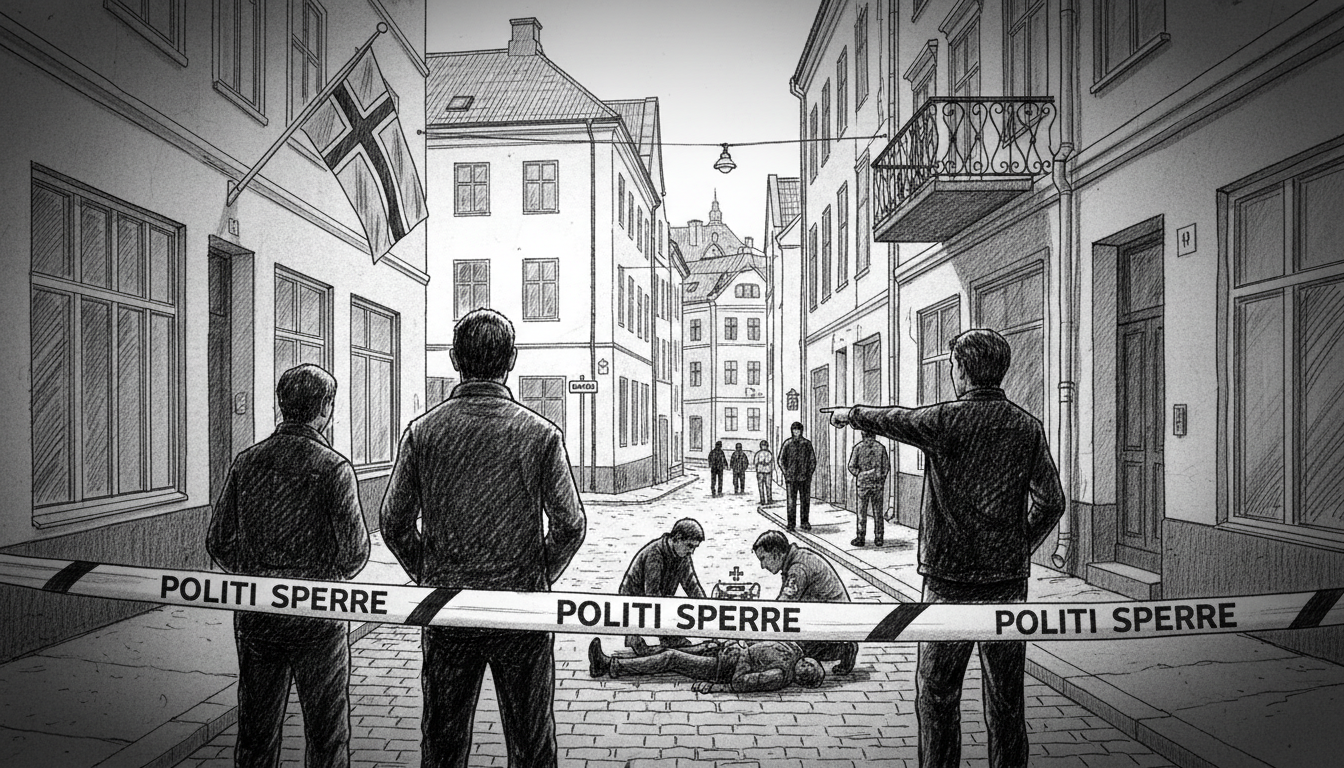
Norway's capital Oslo is investigating a serious stabbing incident that left one person critically injured in the central Brugata district. Police confirmed a person sustained injuries consistent with a knife attack late Tuesday evening. A man was seen fleeing the scene, and the victim was rushed to a hospital with life-threatening wounds. The event has shaken the typically tranquil city center, prompting a significant police response and raising questions about safety in a popular nightlife zone.
A Night of Violence in a Busy Corridor
Emergency services descended on Brugata following reports of a violent assault. The street, a main thoroughfare connecting Oslo's central station with the bustling Grünerløkka district, was cordoned off as forensic teams began their work. Witnesses described a scene of sudden chaos amid the usual flow of evening traffic and pedestrians. Police have not released the victim's identity or a possible motive, stating the investigation is in its earliest stages. The search for the observed fleeing man is ongoing, with officers reviewing CCTV footage from the area's many shops and businesses.
This incident strikes at the heart of Oslo's urban core. Brugata is lined with shops, cafes, bars, and a major public transportation hub. It is a street that rarely sleeps, representing the dynamic, sometimes conflicting, energies of a modern capital. While the area is generally considered safe, its high foot traffic and nightlife can occasionally be a backdrop for altercations. Police patrols are a common sight, yet the speed and severity of this attack highlight the challenges of preventing spontaneous violence.
Contextualizing Crime in a Low-Violence Society
Norway consistently ranks among the world's safest countries, with homicide rates a fraction of those in many other Western nations. Violent crime, particularly involving weapons, generates substantial media attention and public concern precisely because it is relatively rare. A serious stabbing in the city center is an anomaly, not a commonplace event. This statistical reality, however, offers little comfort to residents who perceive a breach in their everyday security.
"Every incident of this nature is treated with the utmost seriousness," said a senior police consultant, who spoke on background about urban policing strategies. "Our response is immediate and comprehensive, but the preventative work is continuous. Areas like Brugata require a balanced approach of visible presence and community engagement." Experts note that while Norway's overall crime picture is positive, urban centers everywhere face inherent risks. The concentration of people, especially during evening hours involving potential alcohol consumption, can create volatile situations.
Police statistics show that most violent crimes in Oslo are not random. They often occur between individuals known to each other, in private settings, or as escalations of disputes. A public stabbing, therefore, triggers a different kind of alarm, touching on fears of random violence. The police investigation will now focus on piecing together the relationship, if any, between the victim and the perpetrator, and the sequence of events that led to the attack.
The Ripple Effects on Urban Policy and Perception
Incidents like the Brugata stabbing have implications beyond the immediate criminal investigation. They ignite debates about police resources, street lighting, surveillance, and social services in the city center. Oslo's municipal government has invested heavily in urban renewal and safety initiatives over the past decade. The "City Security" program aims to create a welcoming and secure environment through environmental design and coordinated efforts between police, health services, and social workers.
These programs often focus on areas with higher instances of street-level crime or social distress. Brugata, with its mix of mainstream and alternative businesses, has been part of this focus. The effectiveness of such strategies is tested by acute events. Politicians from both the governing Labour Party and the opposition Conservative Party will likely call for evaluations of current measures. Questions will be asked about whether patrol patterns are adequate and if outreach programs are effectively reaching those at risk of either perpetrating or falling victim to violence.
Public perception is another critical factor. For Oslo's residents, the sense of safety is as important as the statistical reality. A single high-profile incident can disproportionately affect how people view their city. It can influence where people choose to go at night and increase demands for a more visible security apparatus. The challenge for authorities is to address legitimate concerns without fostering an exaggerated climate of fear that does not reflect the city's overall safety record.
A Look at Comparative Urban Safety
How does Oslo's experience compare? Cities like Copenhagen, Stockholm, and Helsinki share similar Nordic models of social welfare and policing. They also experience sporadic incidents of serious violence in their cores. The patterns are comparable: generally low rates of lethal violence punctuated by isolated, shocking events that dominate headlines. The response in these cities typically involves a swift police resolution followed by a period of public and political scrutiny of safety policies.
The Nordic model emphasizes prevention through social equity, but it is not immune to the complex problems of urban life. Mental health crises, substance abuse, and gang-related activity—though less prevalent than in many other regions—are still factors that police and social services manage. An attack in Brugata will prompt analysts to examine if these underlying issues played a role and whether the interconnected system of health, social, and justice services is functioning as intended.
The Path Forward for Oslo
As the investigation continues, Oslo Police will work to apprehend a suspect and provide clarity on the circumstances. The victim's condition will be closely monitored. In the coming days, the narrative will shift from the initial shock to a more detailed understanding of the event. Community leaders in the Brugata area may hold meetings with police to discuss local concerns. Business owners will be keen to assure customers that the area remains vibrant and safe.
Norway's capital is confronted with a jarring reminder that absolute safety is an elusive goal, even in societies that come closest to achieving it. The response will be measured, rooted in data and procedure, but it will also need to acknowledge the emotional impact on the community. The true test is not whether a city can prevent every act of violence—an impossible standard—but how it responds, learns, and maintains public trust when the unexpected occurs. For now, the lights of Brugata continue to shine, but under the shadow of a search for answers and a hope for the victim's recovery.