
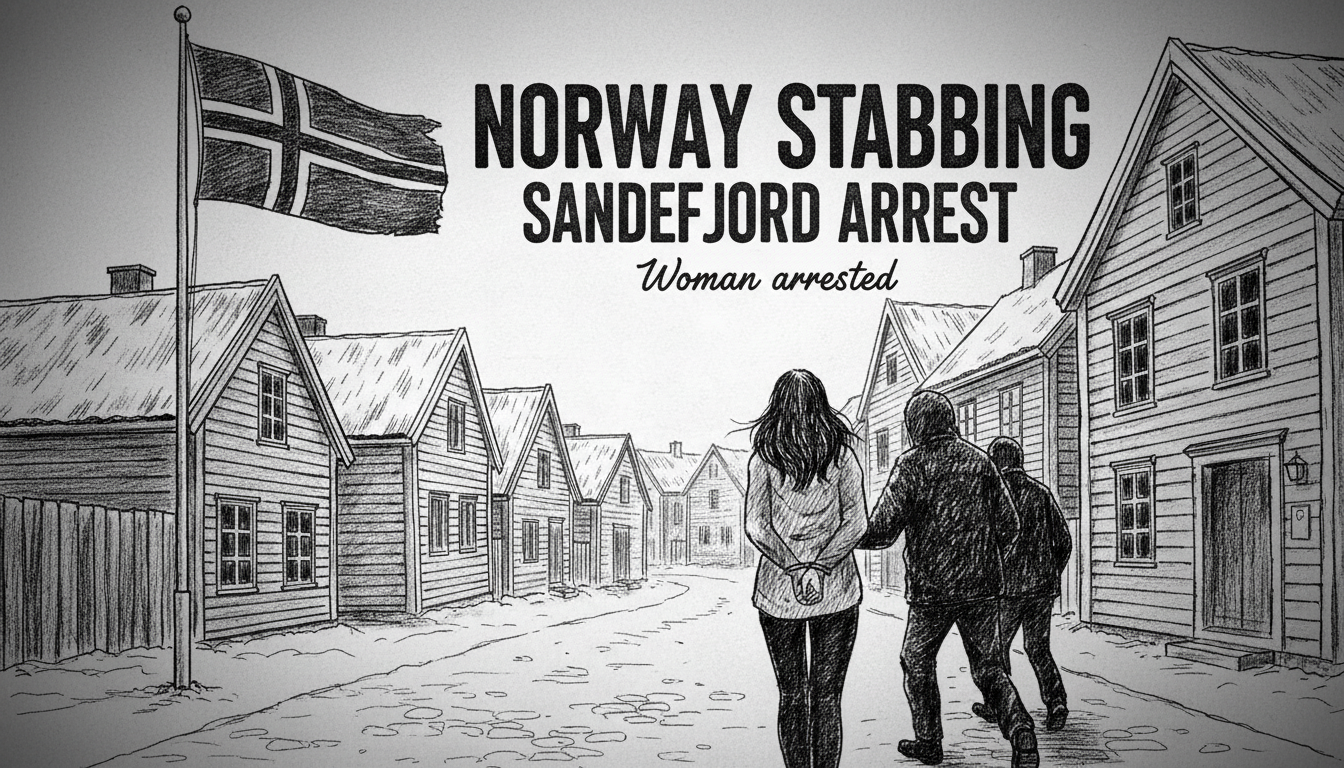
Norway's low crime rate was challenged by a violent incident in a quiet coastal city Monday night. A woman was arrested after stabbing a man with a sharp object at a private address in central Sandefjord. Police operations leader Tom Richard Skuggedal confirmed the male victim sustained minor injuries in the attack, which occurred around 9 PM.
This single act of violence stands out starkly against Norway's statistical backdrop of safety. The nation consistently records one of the world's lowest homicide rates, typically around 0.5 per 100,000 inhabitants. Reported violent incidents in smaller cities like Sandefjord remain uncommon, making this event a notable exception rather than a common occurrence.
A Statistical Anomaly in a Safe Society
Norway's crime statistics paint a picture of a remarkably secure society. According to data from Statistics Norway (SSB), overall rates of reported violence have shown fluctuations but remain low by international standards. The country's approach combines strict weapon control laws with a comprehensive social safety net and a justice system focused on rehabilitation. Most violent crimes that do occur are analyzed within contexts of domestic disputes, mental health challenges, or substance abuse rather than random street violence.
Sandefjord, a city of approximately 65,000 residents known for its whaling history and coastal charm, rarely features in national crime reports. The city's tranquil environment makes this stabbing incident particularly jarring for local residents and observers of Norwegian society. Police have not released further details about the relationship between the suspect and victim, nor the precise circumstances leading to the altercation.
The Norwegian Model of Public Safety
Criminologists often cite Norway's structural foundations as key to its public safety. The nation's strong welfare state, relative economic equality, and high levels of social trust create conditions where violent crime is less likely to emerge. Investment in social services, mental health care, and conflict mediation forms a proactive front against violence. The penal system's emphasis on rehabilitation over pure punishment aims to reduce recidivism, contributing to long-term safety trends.
This incident, while serious, does not indicate a shift in national crime patterns. Isolated violent events occur even in societies with robust preventive measures. The police response in Sandefjord—resulting in a swift arrest—demonstrates the operational readiness of local law enforcement to handle such exceptions. The victim's minor injuries also suggest the incident, while traumatic, did not escalate to the most severe possible outcome.
Contextualizing Violence in a Peaceful Nation
International observers sometimes view Nordic nations as uniformly peaceful, but experts caution against oversimplification. "No society is entirely free from interpersonal violence," noted a University of Oslo criminology researcher, who spoke on background about general trends. "The Norwegian model reduces the frequency and severity of such events, but it cannot eliminate every conflict. The focus is always on understanding the specific drivers behind each incident to improve systemic responses."
In cases like the Sandefjord stabbing, police investigations typically examine several factors. These include the history between involved parties, potential substance influence, and whether any protective services had prior contact with those involved. The arrest of a female suspect also engages with broader discussions about gender and violence, challenging stereotypes while underscoring that violent acts are committed by individuals across demographic categories.
The Local Impact and Police Protocol
For Sandefjord residents, the incident serves as a reminder that violence can occur anywhere. Yet the community's overall risk profile remains extremely low compared to urban centers in many other countries. Local police follow standardized national protocols for violent crimes, emphasizing secure apprehension, medical attention for victims, and thorough evidence collection. The "mindre skader" or minor injuries reported in this case likely mean the victim received treatment without long-term hospitalization.
Norwegian police media communication is typically restrained, releasing only confirmed facts to protect investigation integrity and privacy rights. The statement from Operations Leader Skuggedal reflects this approach, providing basic information without speculation. Further details may emerge if the case proceeds to prosecution, offering a clearer picture of the events and any underlying causes.
A Look at Broader Trends and Perceptions
Statistical reality sometimes conflicts with public perception. A single violent event in a safe community can feel more alarming than numerous incidents in a high-crime area because it disrupts the expected norm. This psychological impact is significant, even when data confirms the abnormality of the event. Norway's media coverage of crime reflects this tension, reporting incidents while contextualizing them within national safety frameworks.
Data from the Norwegian Ministry of Justice and Public Security shows that sharp instrument attacks constitute a small fraction of violent crimes. Most physical altercations do not involve weapons. The presence of a "stikkgjenstand" (stabbing object) in this case adds a layer of seriousness to the police response and the potential legal charges. Norwegian law treats weapon use as an aggravating factor in assault cases.
The Path Forward After an Arrest
The judicial process following an arrest for violence in Norway involves several stages. Police must present evidence to a prosecutor, who decides whether to charge the suspect. The courts then examine the case, considering self-defense claims, intent, and circumstances. Sentencing, if conviction occurs, balances punishment with rehabilitation goals. For minor assaults resulting in light injuries, penalties may include conditional sentences, fines, or short prison terms combined with counseling mandates.
This case will likely conclude without major fanfare, processed through a system designed for efficiency and fairness. The victim may access support services for trauma, while the accused will have legal representation. This procedural normality—the system functioning as intended—is perhaps the most Norwegian aspect of the entire episode. Even when violence erupts, institutional responses aim for resolution and restoration rather than retribution.
Safety in the Shadow of an Incident
Norway's reputation for safety remains intact despite isolated incidents like the Sandefjord stabbing. The nation's crime prevention model does not promise perfection but strives for continuous improvement through social investment and proportional policing. For international audiences, this event offers a nuanced lesson: even the world's safest countries are not utopias free from human conflict. Their success lies in containing violence's scale and frequency while addressing its root causes with compassion and rigor.
The true test of a society's safety is not the absence of crime but the quality of its response. By that measure, Norway's handling of this stabbing incident—swift medical care, rapid arrest, and procedural transparency—demonstrates the resilience of its approach. The people of Sandefjord will likely return to their peaceful routines, reassured by systems that worked but reminded of the fragile humanity underlying all statistics.