
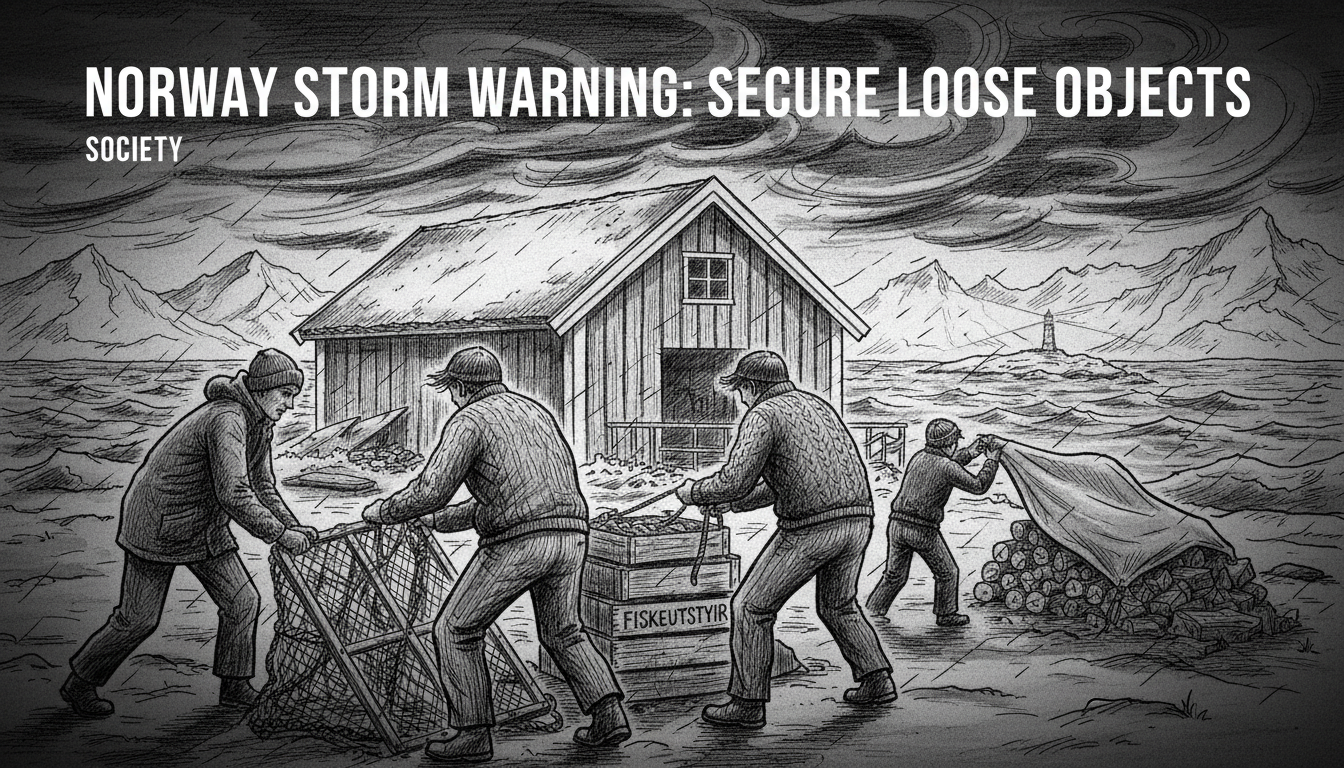
Norway's police in Troms have issued a direct public warning after receiving multiple reports of heavy objects being lifted by powerful winds in the Harstad area. Authorities are urging residents to secure loose items and limit non-essential travel as a potent storm system moves across the northern county. This alert highlights the routine yet serious weather challenges faced by communities along Norway's extensive and exposed coastline.
A Routine Yet Critical Warning
The police advisory is a standard but vital procedure in a region where weather can shift from calm to dangerous within hours. Harstad, a key city in Troms county with a population of around 25,000, is situated on the large island of Hinnøya. Its coastal location makes it particularly susceptible to strong winds funneled from the Norwegian Sea. Emergency services treat such warnings with high priority, as unsecured objects transform into dangerous projectiles capable of causing significant property damage, injury, or worse. "We are asking the public to take this seriously," a police representative said in a statement. "A garden table, a trampoline, or construction materials can become a hazard to people, vehicles, and buildings."
The Science Behind the Wind
Meteorologists explain that northern Norway's volatile weather stems from a collision of Arctic and Atlantic systems. The mountainous terrain and deep fjords of Troms can accelerate wind speeds, creating localized gusts far stronger than regional forecasts might suggest. During severe autumn and winter storms, wind speeds in exposed coastal areas can exceed 32.7 meters per second, which is classified as hurricane-force. While the current event may not reach that extreme, the potential for damage remains high. "The public often underestimates the kinetic energy of wind," says Lars Fjelldal, a meteorologist based in Tromsø. "An object doesn't need to be hurricane-force to be lethal. A 50 km/h wind can lift a common plastic garden chair and send it through a window."
Community and Infrastructure Preparedness
This warning triggers a well-rehearsed response from municipalities and residents. For local governments, it involves checking that public spaces are clear, ensuring emergency services have clear routes, and monitoring vulnerable infrastructure. For individuals, it means a physical check of their property: securing boats, tying down sheds and outbuildings, moving balcony furniture indoors, and parking vehicles away from trees or structures that could collapse. The cultural awareness of weather in Norway means most residents are familiar with the drill, but authorities stress complacency is a risk. New residents and businesses, particularly those from less windy climates, are a key focus for these safety messages.
The Broader Context of Norwegian Weather Readiness
Norway's approach to storm management is embedded in its national civil defense philosophy, known as beredskap. This concept encompasses individual responsibility and societal preparedness. The country's geography, with its long coastline and scattered population, means centralized emergency response can be delayed. Therefore, citizens are expected to be self-sufficient for the initial 72 hours of a crisis. A wind warning in Harstad is a small-scale activation of this principle. It relies on people taking personal action to reduce the collective burden on police and fire services, allowing them to focus on acute emergencies like road accidents or structural damage caused by the weather.
Economic and Safety Implications
Beyond immediate safety, these storms have tangible economic impacts. The fishing and maritime industries, vital to Harstad's economy, must secure vessels and port facilities. Construction projects face delays as cranes cannot operate and sites must be battened down. Transportation networks are disrupted, with potential cancellations of ferries crossing the Vågsfjord or flights from Harstad/Narvik Airport, Evenes. Power outages are also common, as falling trees or flying debris damage electricity lines. Each warning carries an implicit cost in lost productivity and preventative labor, but this is vastly outweighed by the cost of unmitigated damage. Insurance data consistently shows that claims for wind damage spike when warnings are issued but ignored.
Analysis: A Model of Preventative Communication
The police request, while simple, represents an effective model of preventative risk communication. It is specific, actionable, and timely. It tells people exactly what to do (secure objects, limit travel) and why (multiple reports of flying objects). This contrasts with vague advisories to "be careful." In a digital age, such warnings are amplified through social media, weather apps, and local news sites, reaching a broad audience quickly. The challenge, experts note, is warning fatigue. Northern Norwegians live with many such alerts from October to March. Maintaining a sense of urgency for each event, without causing unnecessary alarm, is a delicate balance for authorities.
Looking Ahead: Climate and Resilience
While single weather events cannot be directly linked to climate change, scientists project that northern Norway will experience more intense and frequent precipitation events, including storms. This makes community resilience even more critical. Municipal planning in places like Harstad increasingly considers wind patterns, mandating more secure building standards for new constructions and reviewing the stability of public infrastructure. The recurring cycle of warning and response serves as a continuous, real-world drill, strengthening community cohesion and preparedness for potentially larger future crises. The lesson from today's wind in Harstad is universal: preparedness is not about dramatic gestures, but about the simple, disciplined act of tying down what is loose before the storm arrives.