
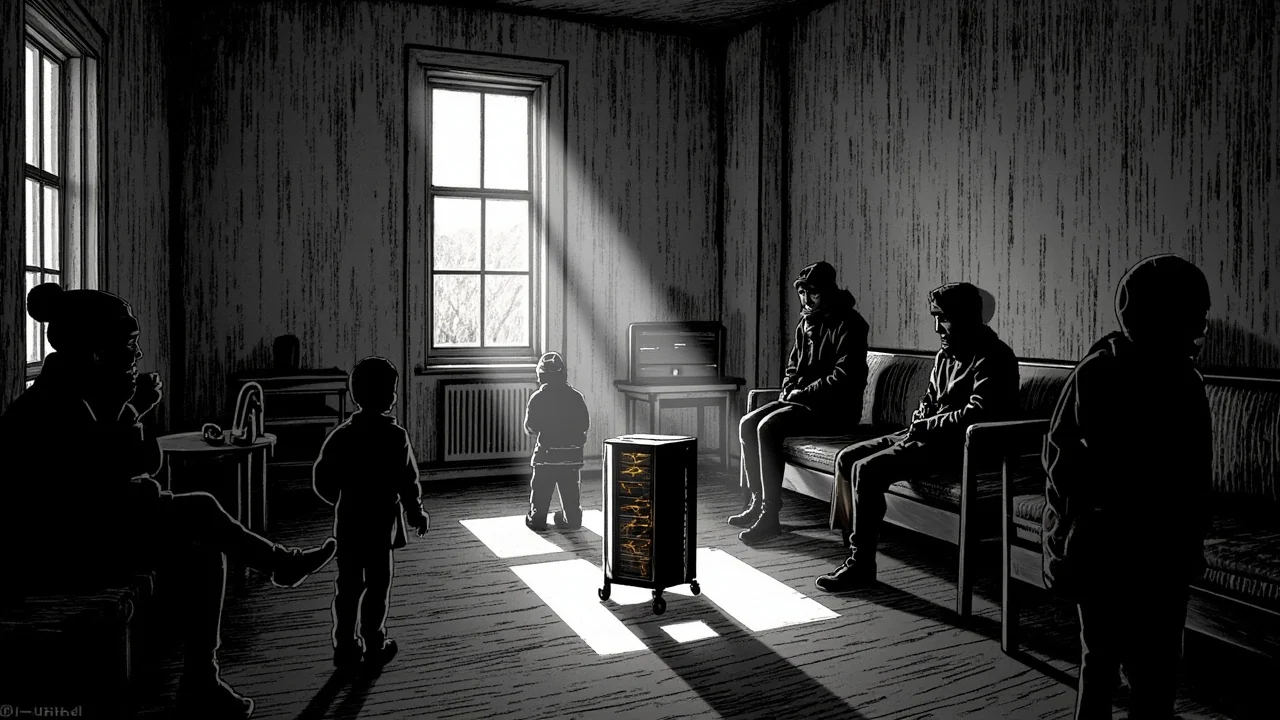
Norway's student housing crisis has reached a freezing new low, with temperatures measured at just 16 degrees Celsius in rooms at the St. Hanshaugen student village in Oslo. The situation highlights a stark paradox in one of the world's wealthiest nations, where future leaders and professionals are studying in conditions that fail to meet basic standards of comfort and dignity.
"It's the first time it's been as cold as it is now. Some neighbors we've talked to have measured 16 degrees Celsius at their place, but it also feels much colder at times," said student Uanda Mills. The statement, delivered without hyperbole, underscores a quiet crisis unfolding within the walls of state-subsidized housing. For international students arriving from warmer climates, or even Norwegians from well-heated family homes, such conditions represent a harsh introduction to independent life.
SiO, the Foundation for Student Life in Oslo, is the organization responsible for managing over 10,000 student housing units across the capital. In response to the complaints, SiO's housing director, Håvard Staff Brenno, stated that no systematic faults had been found in the heating systems. "These cases are a priority for us, and it should not be the case that the temperature in individual apartments creeps down to 16 degrees," Brenno said. This administrative response, focusing on individual cases rather than a potential systemic failure, has done little to reassure a growing number of shivering tenants.
A Systemic Failure in a Land of Plenty
The irony is profound. Norway is a global energy superpower, a nation that heats its streets, exports vast quantities of natural gas, and enjoys sovereign wealth fund assets exceeding $1.4 trillion. The concept of energy poverty is typically associated with other, less fortunate regions. Yet, in the shadow of the Storting parliament building and the sleek headquarters of Equinor, students are wearing winter jackets indoors. This disconnect points to deeper issues within the student housing sector: aging infrastructure, strained budgets, and a model that may prioritize quantity of units over quality of living.
Student organizations have been quick to frame the issue as one of welfare and rights. The Norwegian Student Organization (NSO) argues that adequate heating is not a luxury but a fundamental requirement for a conducive learning environment. "When you're constantly cold, your focus shifts from your textbooks to your own discomfort. It impacts sleep, concentration, and ultimately, academic performance," a representative noted. The situation at St. Hanshaugen is likely not an isolated incident but a visible symptom of a wider problem in older student housing blocks across major university cities like Oslo, Bergen, and Trondheim.
The Human and Economic Cost of Cold
The impact of sustained cold exposure extends beyond mere discomfort. Public health guidelines in Norway recommend a minimum indoor temperature of 20-22 degrees Celsius for living areas. Temperatures consistently below 18 degrees can increase risks of respiratory problems, exacerbate conditions like asthma, and contribute to dampness and mold growth—another perennial issue in older Norwegian buildings. The financial logic is also flawed. Students forced to use expensive, inefficient electric heaters to supplement faulty central heating face soaring electricity bills, negating the affordability that student housing is meant to provide.
For SiO, the challenge is multifaceted. Their housing stock ranges from brand-new, energy-efficient complexes to post-war buildings like parts of St. Hanshaugen. Retrofitting old concrete structures with modern, efficient heating systems is a colossal and expensive undertaking. Budgets are finite, and rents are kept artificially low by policy, limiting the capital available for major renovations. The organization walks a tightrope between maintaining affordability and ensuring habitability, a balance that appears to be failing in specific cases.
Political Accountability and the Road Ahead
The question now turns to political accountability. The St. Hanshaugen student village is located in a central Oslo borough, placing it squarely in the view of local and national politicians. Student housing is partially funded through the state education budget and falls under the purview of the Ministry of Education and Research. Opposition politicians have already begun to ask pointed questions about how Norway's immense wealth is being allocated for its future generations. Is this an acceptable standard for the students who will soon enter the workforce and contribute to the very economy that currently fails to keep them warm?
Comparisons with the private rental market are inevitable. While notoriously expensive, private apartments in Oslo rarely suffer from such extreme heating failures; landlords are legally obligated to provide a habitable space. The student housing system, operating as a closed, subsidized market, may lack the same competitive pressure and immediate legal recourse. This creates a power imbalance where students, often in their first independent housing situation and fearful of losing their coveted spot, may be reluctant to lodge formal, forceful complaints.
A Test of Norway's Social Contract
The freezing rooms at St. Hanshaugen represent more than a maintenance issue. They are a test of Norway's social contract. The country's model is built on high taxes funding a comprehensive welfare state, from cradle to grave. Higher education is virtually free, and student housing is a key part of that support system, intended to give every young person an equal opportunity to study regardless of family wealth. When that system delivers 16-degree rooms, it betrays its own principle of equal opportunity. A wealthy student can buy a heater; a student on a tight stipend cannot.
SiO's commitment to investigating individual cases must be followed by a transparent, system-wide review of heating infrastructure in its oldest properties. This will require a political commitment to increased funding, likely framed as an investment in student welfare and academic success. The timeline for repairs and upgrades must be public and ambitious. Temporary measures, such as providing subsidized or loaner heating units to affected students, should be implemented immediately while long-term fixes are developed.
As the Nordic winter continues its grip, the situation remains urgent. Norway presents itself to the world as a model of social democracy and enlightened policy. This image is tarnished by every student who studies in a winter coat. The resolution of this crisis will show whether Norway's priorities truly lie in nurturing its future or merely managing its present. The cold, hard truth is that in the heart of Oslo, the basic promise of warmth and shelter is being broken. How the authorities choose to respond will be a clear indicator of the value they place on the students who are the country's tomorrow.