
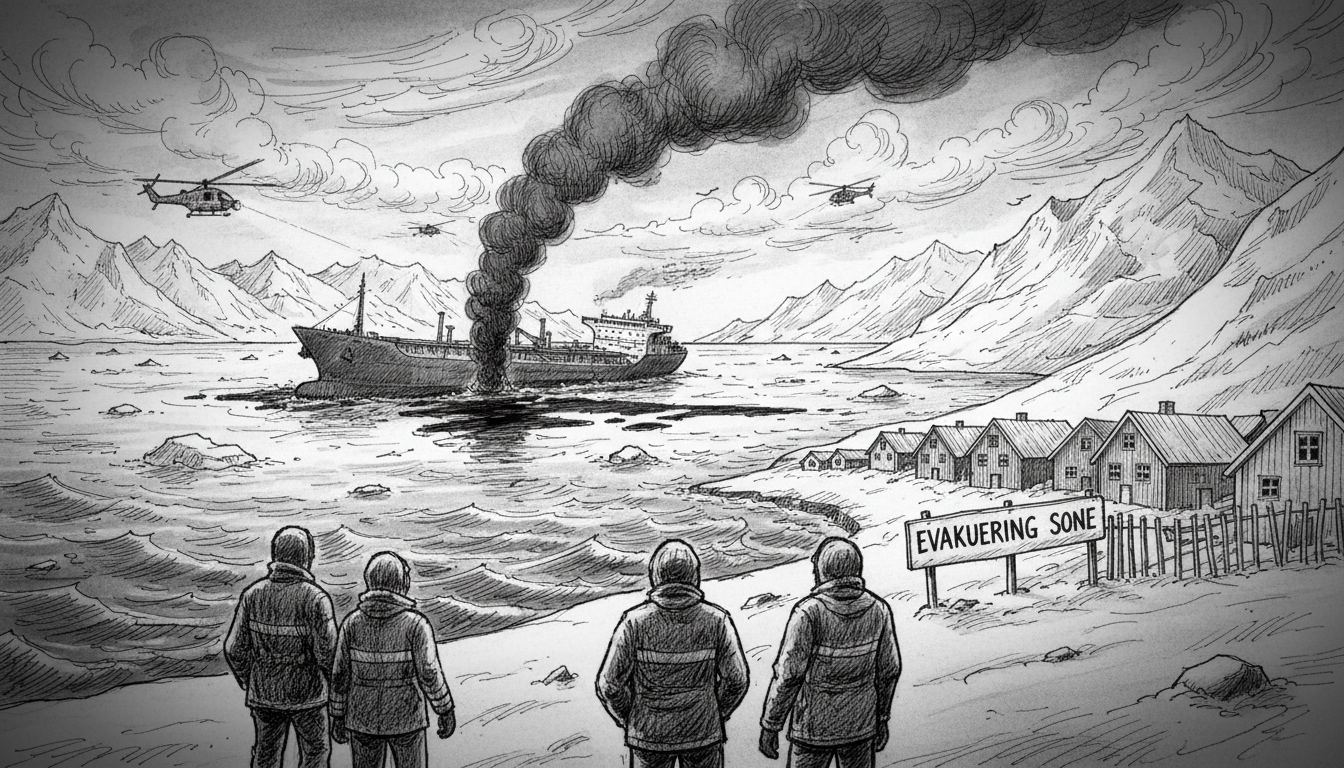
Norway emergency services have established a safety zone and evacuated residents after a tanker truck overturned. The incident, which required a coordinated response from police and local authorities, highlights the nation's strict protocols for managing hazardous material spills. No immediate risk was reported while the vehicle remained in its current position, but precautionary measures were enacted as a standard procedure.
Police confirmed the establishment of a security perimeter to facilitate the safe emptying and recovery of the vehicle. "A safety zone is being established in connection with the emptying and recovery of the vehicle," police said in a statement. They added that the situation did not currently pose a risk while the truck remained stationary. The local municipality is assisting with informing and evacuating residents within the designated area. Recovery operations are scheduled to begin around 10:30 AM the following day.
A Coordinated Emergency Response
The immediate response to a hazardous materials incident in Norway follows a well-rehearsed chain of command. Police take the lead on overall scene security and public safety, while fire and rescue services handle containment and technical recovery. The local municipality, as seen in this case, plays a critical role in civilian communication and welfare. This tripartite structure is designed to prevent confusion and ensure all aspects of the emergency are addressed simultaneously.
"The timing of the tanker recovery is the single biggest factor determining how long an evacuation lasts," explains Lars Holmberg, a former emergency response coordinator for the Norwegian Directorate for Civil Protection (DSB). "Every minute of delay in establishing control increases potential risk, but rushing the operation can be catastrophic. The announced 10:30 AM start suggests a deliberate, risk-assessed approach, likely waiting for specialized equipment and optimal daylight conditions."
The Science of Safety Zones
Establishing an evacuation zone is not an arbitrary decision. It is based on the tanker's contents, volume, environmental factors like wind direction and topography, and proximity to populated areas. Norwegian regulations mandate specific setback distances for different classes of hazardous goods. First responders use pre-defined guidelines and real-time data to draw the perimeter, always erring on the side of caution.
The primary threats include fire, explosion, and toxic vapor release. Even if the tanker appears intact, the structural stress from an overturn can cause a sudden failure. The safety zone protects residents from these initial blast or vapor hazards and provides a buffer for emergency crews to operate. In many Norwegian communities nestled in narrow valleys or near fjords, local geography can trap dangerous gases, making evacuation a necessary step even for seemingly stable incidents.
Municipal Duty: Informing the Public
While police secure the scene, the legal responsibility for evacuating and caring for residents falls to the municipality. This involves door-to-door notifications, setting up a temporary information center, and, if necessary, providing shelter. Clear, calm, and frequent communication is essential to maintain public trust and compliance. Residents need to know why they must leave, how long it might take, and what support is available.
"The phrase 'the municipality assists with information' encapsulates a major operational task," says Kari Nilsen, a professor of crisis management at the University of Bergen. "It's not just a press release. It means activating local networks, possibly using emergency SMS alerts, and ensuring vulnerable populations—the elderly, those without transport—are not overlooked. This local knowledge is irreplaceable for an effective response."
Norway's Framework for Hazard Management
This incident operates within Norway's broader commitment to industrial and environmental safety, a principle deeply embedded in its management of the oil, gas, and chemical transport sectors. The country has developed some of the world's most stringent regulations for transporting dangerous goods by road, sea, and rail. These rules cover vehicle standards, driver training, route planning, and emergency preparedness.
Regular drills involving multiple agencies ensure that responses are coordinated. The goal is to prevent incidents like the 2020 chemical tanker spill in Svinesund, which caused significant environmental damage. Each real incident provides data to refine these models and protocols. The post-incident report from this overturn will be analyzed by the DSB and the Norwegian Road Administration to identify any potential improvements in route safety, vehicle design, or response tactics.
The Economic and Logistical Ripple Effect
Beyond the immediate safety concerns, an overturned tanker creates significant disruption. Road closures can last for days, especially in rural areas with few alternative routes. This impacts local businesses, commuters, and freight movement. If the tanker is carrying fuel, it can affect supply chains for remote communities. The cost of the recovery operation, involving specialized heavy lift cranes and hazardous material teams, runs into millions of kroner.
For the transport company involved, the consequences are severe. They face hefty fines for any regulatory breaches, immense recovery costs, and potential civil liability. Norway's strict liability regime for environmental damage means companies bear the full cost of cleanup, regardless of fault. This financial pressure is a deliberate policy tool to incentivize maximum safety investment.
A Test of Preparedness Passed
The successful management of this event—with no reported injuries, a clear plan, and controlled public messaging—demonstrates the value of Norway's investment in civil protection. It stands in contrast to more chaotic responses seen elsewhere in Europe, where unclear authority and poor communication have exacerbated similar incidents. The measured response, prioritizing methodical recovery over rushed action, reflects a confidence born from rigorous planning.
However, experts note that complacency is the enemy of safety. "The system worked today, but we must ask if it will work every time," Holmberg cautions. "Was the driver adequately rested? Was the route risk-assessed for that specific cargo? The investigation must be thorough. Our harsh weather and challenging terrain mean we cannot afford to learn the same lesson twice."
As the recovery crews prepare to right the tanker at 10:30, the evacuated residents wait. Their temporary displacement is an inconvenience, but it is the visible outcome of a safety culture that chooses precaution over peril. In a nation whose wealth and identity are tied to the transport of hazardous energy, such incidents are a sobering reminder of the constant balance between economic necessity and public safety. The true test is not preventing every accident, which is impossible, but ensuring that when one occurs, the response is so effective it barely becomes news.