
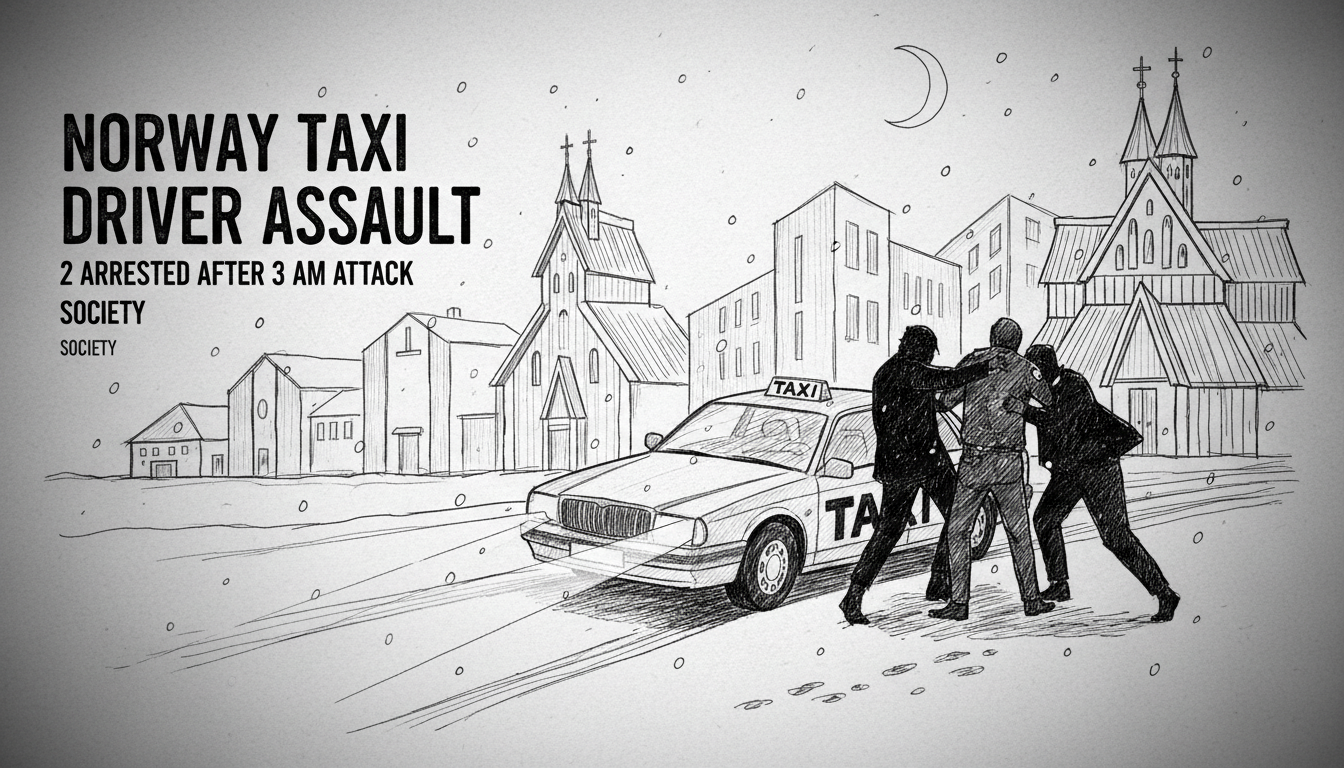
Norway taxi driver assaults are a persistent safety issue, highlighted by a violent incident in Oslo early Friday morning. A driver was beaten and kicked by three passengers following a dispute over payment. Police have arrested two young suspects and are searching for a third. The attack underscores the vulnerability of drivers working the late-night shift in urban centers.
Police were called to the scene at 3:50 AM. The driver, found with facial injuries, was transported to an emergency medical clinic for treatment. Operational leader Helene Rygg Ims confirmed the arrests in a statement. "The perpetrators are young. We know there were three of them," Ims said.
A Recurring Pattern of Violence
This assault fits a troubling pattern of violence against taxi drivers in Norwegian cities. While not an everyday occurrence, such attacks are a recurring concern for the industry. Disputes over fares, routes, and payment are frequently cited as triggers. The late-night and early-morning hours, when passengers may be intoxicated and tensions run high, present the greatest risk. Drivers operate in a confined space, often alone, making them easy targets for aggression.
Oslo's taxi regulations, managed by the municipal government, set fare structures and licensing requirements. These rules aim to ensure fair service but can also be a source of conflict when passengers dispute metered charges. The isolated nature of the work, combined with the handling of cash and card payments, creates a unique set of security challenges that many other professions do not face.
The Human and Systemic Cost
The immediate human cost is clear: physical injury, psychological trauma, and lost income for the driver. The systemic cost is a workforce operating under constant, low-level threat. Many drivers report adopting defensive strategies, such as avoiding certain areas at night or ending their shifts early. This impacts the availability of transport during hours when it is often most needed, particularly in city centers on weekends.
Industry representatives have long called for concrete measures to improve driver safety. "Every attack like this is one too many," said a representative from a major taxi operator, who asked not to be named while the police investigation is ongoing. "It creates fear and makes it harder to recruit drivers for night shifts. We need to see this as a serious workplace safety issue."
Expert Calls for Tangible Safety Upgrades
Security experts point to several practical measures that could reduce risks. Improved in-car surveillance systems with clear signage can act as a deterrent. Direct panic button systems linked to police dispatch centers would allow drivers to summon help silently and instantly. Some operators have experimented with protective screens, though these are not universally popular with drivers or passengers.
"Technology exists to create a much safer environment," said Lars Holen, a security consultant specializing in transport. "The challenge is often cost and implementation across a fragmented industry. A coordinated effort between companies, driver associations, and authorities is needed. Simple steps, like mandatory digital payment options to reduce cash disputes, can also help."
Holen also notes the role of alcohol consumption in such incidents. Late-night assaults often involve intoxicated individuals whose inhibitions are lowered and who may react aggressively to perceived slights or disputes. This does not excuse the violence, but it informs prevention strategies, including better training for drivers in de-escalation techniques.
The Police Response and Ongoing Search
Oslo Police Department's swift response led to the apprehension of two suspects near the scene. Their investigation is now focused on locating the third individual involved. The police have not released the identities of those arrested, citing their age. The driver's condition has not been publicly detailed beyond the initial report of facial injuries requiring hospital treatment.
Police statistics on assaults against taxi drivers are not always categorized separately, making the full scope of the problem difficult to quantify precisely. However, anecdotal evidence from driver unions and company reports suggests these incidents represent a significant portion of workplace violence cases in the service and transport sectors.
A Question of Public Responsibility
This attack raises broader questions about public responsibility and respect for service workers. Taxi drivers provide an essential service, especially during hours when public transit options are limited. They ensure people get home safely from nights out. When that relationship breaks down into violence, it signals a failure that extends beyond the individuals involved.
Municipal regulators in Oslo and other cities face pressure to consider safety protocols as part of licensing agreements. Could mandatory safety equipment be a condition for operating a taxi license? Should there be a shared, funded initiative to roll out panic buttons across the fleet? These are questions policymakers must address in collaboration with the industry.
The incident also highlights the need for public awareness. Passengers hold a responsibility for their own conduct. Disputes over fares should be resolved through company complaint channels, not violence. The consequences for assault are severe, including criminal charges, fines, and potential imprisonment.
Looking Ahead: Safety as a Priority
As Oslo continues to grow as a metropolitan center, ensuring the safety of all its workers is paramount. The taxi industry is a vital artery of the city's nighttime economy and social infrastructure. Protecting its drivers is not just a matter of corporate policy but of public interest.
The memory of this early morning attack will fade for most, but for the driver involved and his colleagues, it is a stark reminder of their vulnerability. The true measure of progress will be whether this incident galvanizes action toward tangible, systemic safety improvements or becomes just another statistic in a recurring cycle of violence. Will the search for the third suspect end with an arrest, and will the judicial process deliver a clear message that such attacks are unacceptable? The industry and its drivers are watching closely, hoping for a safer road ahead.