
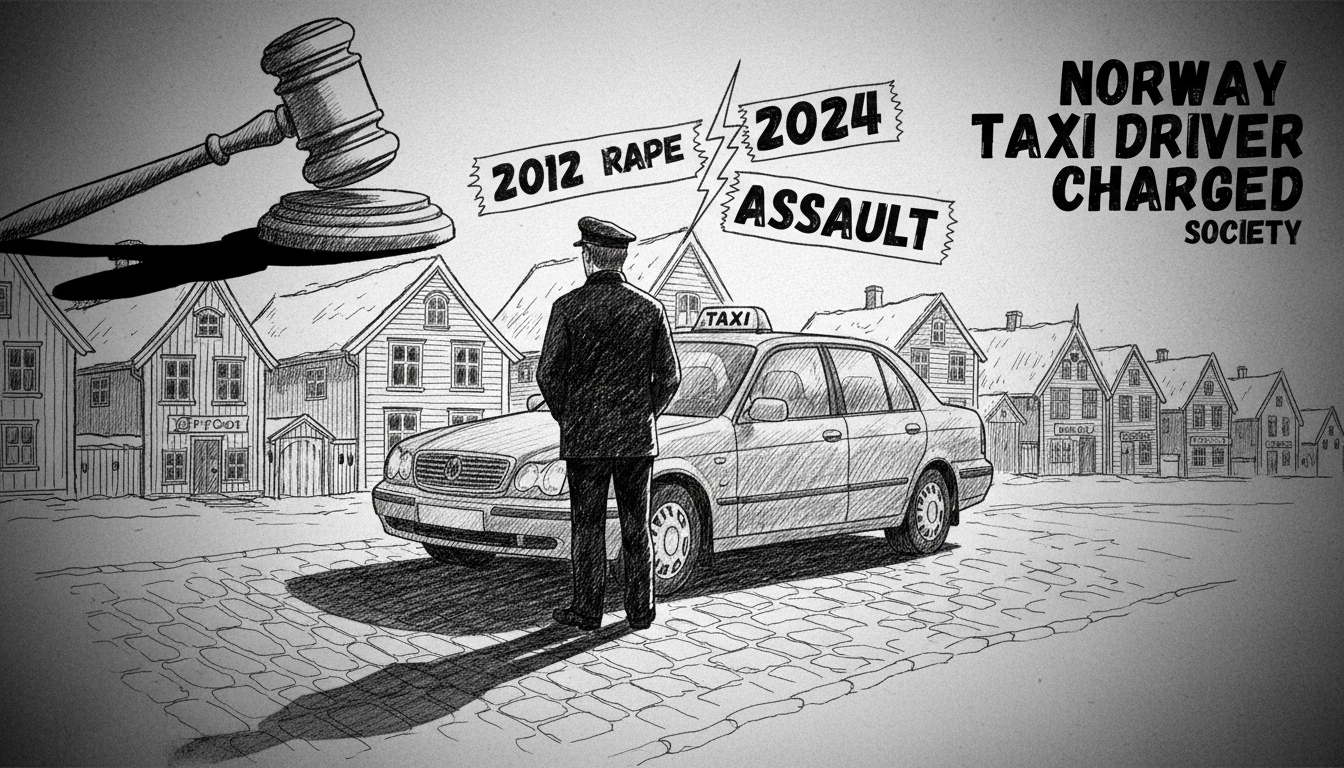
Norway taxi crime has resurfaced with a case linking a 2012 rape to a 2024 assault. A 41-year-old taxi driver faces charges for both crimes, and he continues to drive for Oslo Taxi, one of the capital's largest operators. DNA evidence from a recent alleged attack connected him to the cold case, raising urgent questions about passenger safety and industry oversight.
A Cold Case Solved, A New Case Opened
The charges are severe. Prosecutors allege the driver raped a passenger in his taxi in 2012. That case remained unsolved for over a decade. Then, in 2024, he is accused of beating and sexually touching a different female passenger. Forensic analysis of evidence from the 2024 incident provided a DNA match to the 2012 rape. This scientific link transformed an old, dormant file into an active, serious prosecution. The specific taxi company he worked for in 2012 remains unclear, but during the 2024 incident, he was driving for Oslo Taxi.
His continued employment with Oslo Taxi after the 2024 allegations is a central point of public concern. The company, a major player in Oslo's transport network, has not suspended him pending trial. This decision places the firm under intense scrutiny. Passengers trust taxi companies with their safety, especially during late-night rides. The optics of a driver charged with two separate sexual offenses remaining behind the wheel are damaging to that trust.
The Legal Framework and Prosecution Challenges
Norwegian law treats sexual violence with gravity. Rape is defined under Penal Code § 291 and can carry a significant prison sentence. The legal process, however, is meticulous and can be lengthy. Prosecutors must prove guilt beyond a reasonable doubt, a standard that applies even with compelling DNA evidence. DNA can place someone at a scene, but defense arguments may focus on consent or the context of the encounter.
Cold cases solved by DNA present unique challenges. Memories fade, witnesses become harder to locate, and physical evidence beyond the DNA sample may be lost. The 2012 case's revival hinges almost entirely on the forensic link to the 2024 case. This connection strengthens the prosecution's position but also means the two cases are now inextricably linked. A weakness in one could affect the other.
"DNA technology is a powerful tool for justice, especially in cold cases," said a Norwegian legal scholar who requested anonymity due to the ongoing case. "But it doesn't replace a full investigation. The court will examine the circumstances of both alleged incidents thoroughly. The fact that two separate events, years apart, are connected will weigh heavily on the proceedings."
Passenger Safety and Industry Responsibility
Taxi regulation in Oslo aims to ensure safety. Drivers must be licensed, and vehicles are tracked. However, this case exposes potential gaps in the system, particularly regarding how companies respond to serious allegations against employees. Background checks are standard, but they primarily reveal past convictions, not pending charges or unresolved allegations.
The immediate question for Oslo Taxi is one of risk management and duty of care. Most Norwegian companies in customer-facing roles have internal protocols for suspending employees accused of serious crimes, especially those involving customers. This protects the alleged victims, other potential customers, and the company's reputation during an investigation.
"The trust between a passenger and a driver is absolute," said Kari Jensen, a researcher in urban safety at the University of Oslo. "When that trust is broken in such a violent way, it sends shockwaves. The industry's response must be transparent and decisive. It's not just about one driver; it's about the system that allows him to keep working while facing these charges. Public confidence is at stake."
The Human Cost and Societal Impact
Behind the legal and corporate questions are the victims. Sexual assault inflicts deep and lasting trauma. The 2024 victim reported the incident promptly, triggering the investigation that solved the 2012 case. For the 2012 victim, the news of an arrest after twelve years may bring a complex mix of relief and renewed pain.
Victim support organizations in Norway emphasize the long-term support needed in such situations. The court process itself can be re-traumatizing. These two cases will now proceed through the Norwegian legal system, requiring the victims to engage with painful memories. Their willingness to testify is crucial for the prosecution.
Reported sexual offenses in Norway have seen fluctuations in recent years, according to Statistics Norway. No specific statistics isolate taxi-related incidents, which makes assessing the scale of this particular problem difficult. Each case, however, has an outsized impact on the public's perception of safety.
A Test for Corporate and Public Policy
Oslo Taxi now faces a significant test. Its decision to keep the driver employed will be analyzed by customers, the media, and likely, the authorities. The Norwegian Parliament, the Storting, has previously debated stricter regulations for the transport industry. High-profile cases often act as catalysts for legislative review.
Potential policy responses could include mandatory suspension protocols for drivers charged with violent or sexual crimes, enhanced real-time monitoring in vehicles, or more rigorous periodic re-screening of drivers beyond initial licensing. The industry may resist some measures as costly or intrusive, but public pressure for safety can be a powerful force.
The case also highlights the evolving role of forensic science in law enforcement. Norway's national DNA database is a key tool. The successful match in this instance demonstrates its value in solving crimes that would otherwise remain mysteries. It also raises ethical questions about the database's scope and usage, debates common to many advanced democracies.
As the legal wheels turn, the core paradox remains stark: a man accused of using his taxi as a venue for violence against passengers is still permitted to drive one. The outcome of his trial will deliver legal justice. But the court of public opinion is already in session, judging not just the driver, but the systems that are meant to protect the vulnerable. How Oslo, and Norway, respond will define safety standards for years to come. Can the trust, once broken, ever be fully repaired?