
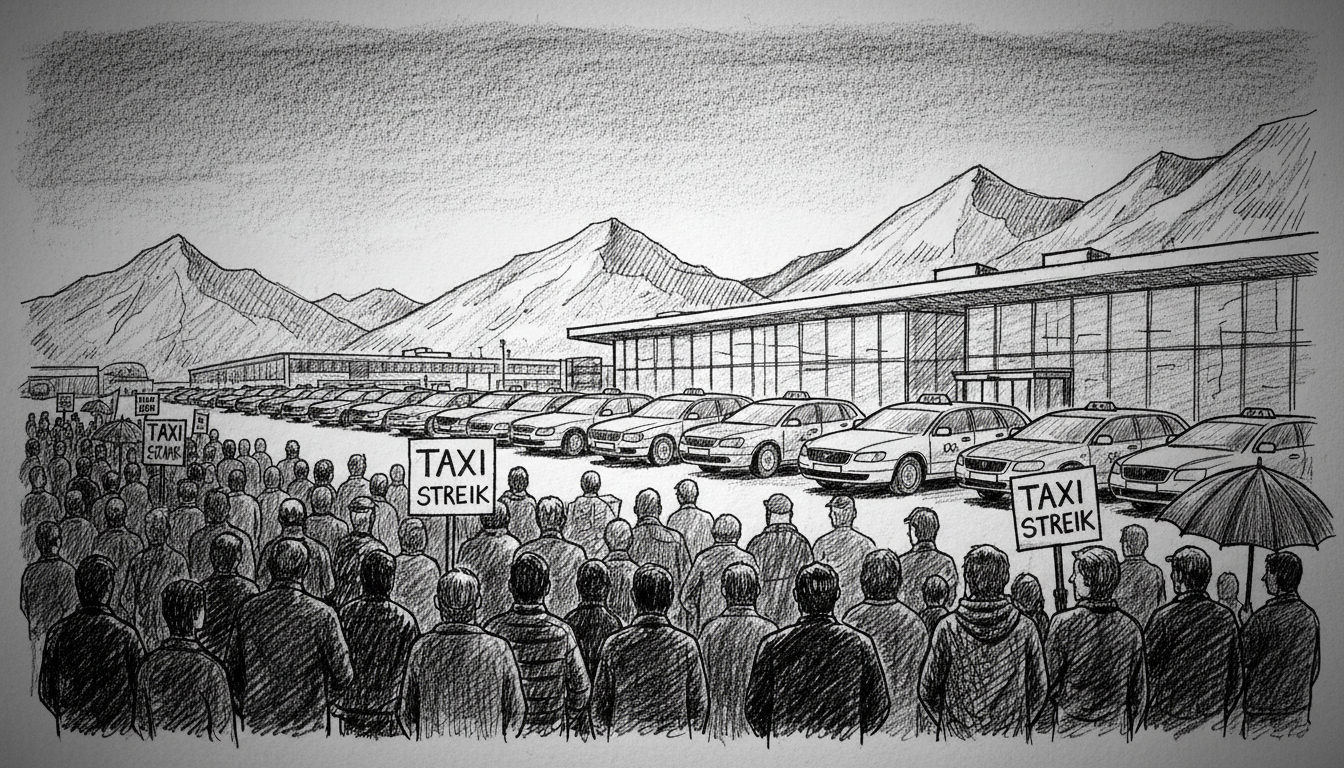
Norway's taxi industry faces a major disruption as over 150 drivers launched a strike at Bergen Airport Flesland on Thursday morning. The protest, timed for the peak 7-10 AM rush, targeted a new centralized booking system that drivers say threatens their livelihoods and autonomy. Organizer Reza Hovlandsdal stated the aim was to create maximum chaos to force a renegotiation of the airport's access rules.
A System Designed for Passengers, Not Drivers
The core dispute centers on new ordering kiosks installed in the terminal. Passengers now select their taxi company, car type, and agree on a fixed price before leaving the building. This system, operated by the company Fast Travel, ends the traditional practice of drivers waiting directly outside arrivals. Instead, drivers must queue at a designated holding area further from the terminal, only proceeding when electronically dispatched by a passenger's kiosk selection.
To operate at Flesland, individual taxi license holders must now sign an access agreement with Fast Travel. Approximately 350 of the airport's regular drivers have signed, but a significant coalition of 150 refused, choosing protest instead. They argue the system strips them of direct customer interaction and turns them into passive contractors for a third-party platform.
The Financial Stakes for Norway's Taxi Operators
Drivers contend the new model will slash their income. Under the old system, drivers waiting at the terminal could secure fares quickly and maintain high vehicle utilization. The mandatory holding area, they say, creates unpredictable wait times and reduces the number of lucrative airport runs they can complete per shift. There are also concerns about the financial terms of the Fast Travel agreement and whether the pre-agreed kiosk prices will adequately compensate for Norway's high operating costs.
"This isn't just about convenience; it's about economic survival for many small business owners," said a taxi representative who asked not to be named due to ongoing negotiations. "A taxi license in Norway represents a significant personal investment. This system devalues that by inserting a mandatory intermediary who controls the customer relationship."
Norway's Long Road to Taxi Market Reform
This conflict is the latest chapter in Norway's turbulent taxi deregulation process. National reforms aimed to boost competition and lower prices, moving away from a heavily regulated system. However, implementation varies by municipality and specific venues like airports, creating a patchwork of local rules. Bergen's Flesland airport, operated by the state-owned Avinor, has chosen this centralized kiosk model to modernize passenger flow and ensure price transparency.
Industry analysts see the strike as a clash between modernization and tradition. "The airport authority's goal is efficient, predictable, and fair service for passengers arriving in Norway," said Lars Moe, a transport economist based in Oslo. "But for drivers, this feels like a loss of control and a potential race to the bottom on pricing. The challenge is finding a model that ensures good service without eroding driver earnings to unsustainable levels."
Passenger Experience: Clarity vs. Availability
For travelers, the new kiosks offer clear advantages: upfront pricing eliminates surprise costs, and selecting a car type accommodates groups or those with extra luggage. The system is designed to prevent queue-jumping and ensure orderly service. During the strike, however, these benefits vanished. Passengers faced long waits and limited options, highlighting the system's dependency on driver participation.
The critical question is whether the promised benefits will materialize in the long term. If driver opposition leads to a permanent reduction in the number of taxis serving the airport, passengers could face higher prices due to scarcity, or longer waits despite the digital system. The success of the model hinges on maintaining a large, reliable pool of drivers who find it financially worthwhile.
A Broader Battle for Norway's Gig Economy
The Bergen airport dispute reflects wider tensions in Norway's approach to platform-based work. The country has strong labor protections and a tradition of social dialogue, but new digital intermediation models often challenge these norms. The taxi drivers are essentially freelance business owners, not employees, which complicates collective bargaining. Their protest is a collective action by independent operators against a powerful system imposed by a major transport hub.
This scenario may repeat as digital platforms expand into other sectors of Norwegian transport and services. The outcome at Flesland could set a precedent for how airports in Stavanger, Trondheim, and even Oslo Gardermoen manage taxi access in the future.
What Comes Next for Bergen's Travel Hub?
As the strike ended, the immediate disruption eased, but the underlying conflict remains unresolved. The airport authority and Fast Travel have a signed agreement with a majority of drivers, giving them a strong position. The protesting drivers, however, have demonstrated their capacity to halt a key service at Norway's second-largest airport.
Negotiations will likely focus on specific grievances: the location and conditions of the holding area, the fee structure within the Fast Travel system, and the transparency of the dispatch algorithm. A compromise may involve adjustments to the operational details rather than scrapping the kiosk system entirely.
The Bergen taxi strike is more than a local labor dispute. It is a case study in how Norway balances technological efficiency with social equity. Can a system designed for passenger convenience also provide a sustainable livelihood for the service providers? The answer at Flesland will resonate far beyond the airport's perimeter fence, influencing the future of work in Norway's evolving digital economy.