
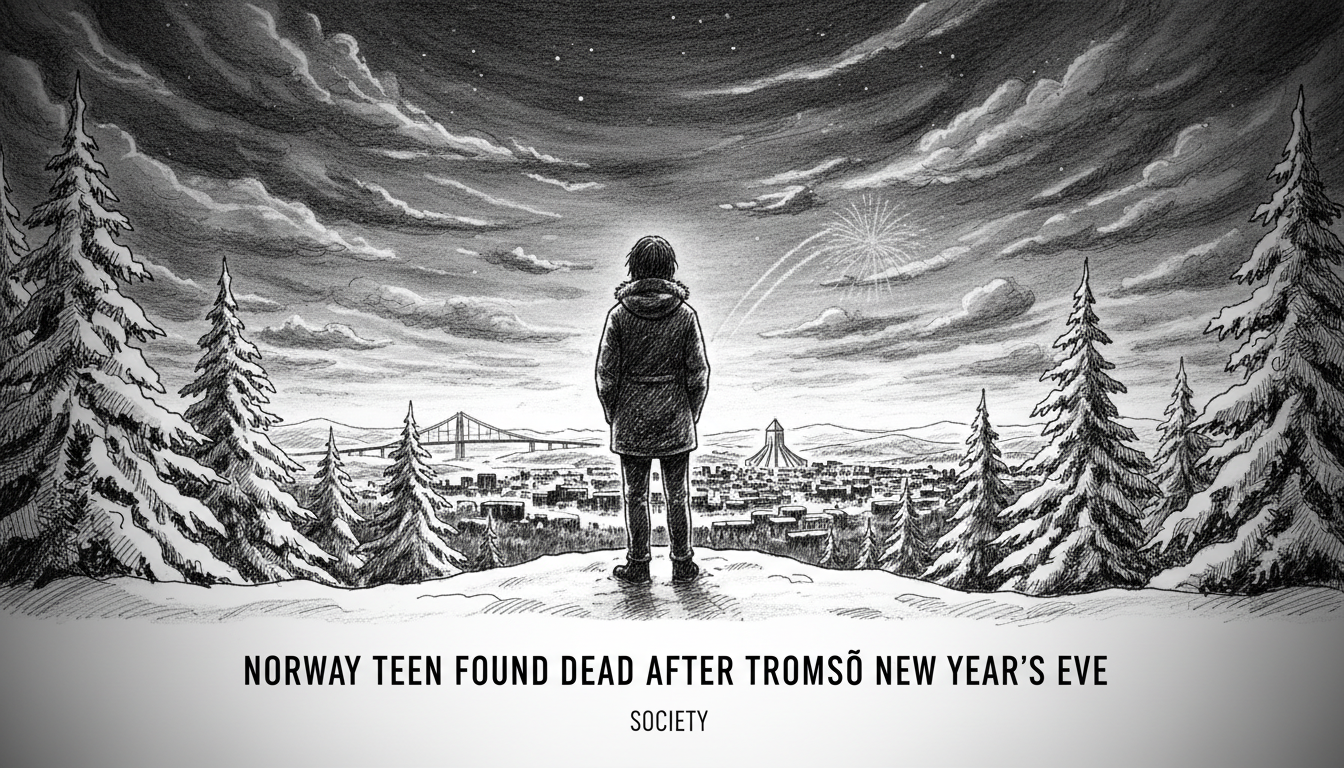
Norway's Arctic city of Tromsø is mourning the death of a teenage boy found dead after a New Year's Eve party. Police confirmed the tragic conclusion to a search operation early Friday morning. The boy, last seen leaving a gathering on the island of Tromsøya for fresh air just before midnight, was discovered deceased. Authorities stated they do not suspect criminal activity. This incident highlights the acute dangers of Arctic winters, even in urban settings, during widespread celebrations.
A Celebration Turns to Tragedy
The teenager was attending a New Year's Eve party on Tromsøya, the main island of the northern Norwegian city. Around 11 PM, he reportedly stepped outside to get some fresh air. He never returned. His absence was noted, prompting friends and later authorities to initiate a search. Troms Police District launched an operation involving multiple resources. The harsh Arctic environment became an immediate concern for search teams. "The missing person, a boy in his late teens, went out to get some fresh air while he was at the party. Since then, no one has seen him," police operations manager Eirik Kileng stated Thursday night. The search continued through the night under challenging conditions.
Police announced the grim outcome in a statement at 00:46 AM Friday. "The operation is concluded. The man has been found deceased and next of kin have been notified," said police operations manager Mari Rasmussen Sagen. The confirmation ended hours of anxious waiting for the local community. The police have been clear that foul play is not currently suspected. Their focus now shifts to determining the precise circumstances leading to the tragedy. Investigators will examine the route he likely took and the environmental factors at play during the crucial hours.
The Arctic Winter: An Invisible Threat
The death underscores the lethal risks posed by Norway's winter climate, even within city limits. Tromsø, while a modern city of over 75,000, is situated 350 kilometers north of the Arctic Circle. New Year's Eve saw temperatures hovering around -5°C (23°F), but the perceived cold can be far more severe due to wind and humidity. Exposure to such conditions without proper clothing can lead to hypothermia with shocking speed. A person becoming disoriented in the dark, perhaps after consuming alcohol, can quickly find themselves in a life-threatening situation.
Search and rescue experts note that Arctic urban environments present unique challenges. "The boundary between the safe, lit streets and the wild is often very thin in northern cities," explains a veteran of the Norwegian Red Cross search teams, who requested anonymity as they were not directly involved in this case. "You can walk from a party into a park or along a shoreline and suddenly be in complete darkness, on slippery ice, or in deep snow. Orientation fails, phones lose battery faster in the cold, and the cold itself impairs judgment." Limited daylight—Tromsø experiences the polar night with only a few hours of twilight in late December—drastically reduces the window for safe, visible outdoor activity.
Community and Cultural Context
New Year's Eve (Nyttårsaften) is one of Norway's most significant celebrations. It typically involves gatherings with family or friends, a festive dinner, and often, fireworks at midnight. Many young people attend parties. The tradition of stepping outside at midnight to watch fireworks or simply greet the new year is common. This cultural practice, when combined with Arctic conditions and potential alcohol consumption, creates a predictable risk scenario that safety campaigns repeatedly warn about.
The tragedy has sent shockwaves through the close-knit community of Tromsø. Local schools and support services are mobilizing to offer grief counseling to students and friends of the deceased. Social media channels are filled with messages of condolence and support for the grieving family. The incident serves as a somber reminder to the entire region about the importance of the "buddy system" during winter festivities and the need for constant vigilance regarding friends' whereabouts in the cold.
Police Protocol and Investigation
The Norwegian police follow a rigorous protocol for missing persons, especially minors. The immediate launch of the search operation reflects the high priority given to such cases, particularly in winter. Resources can include patrol officers, dog units, the Red Cross, and sometimes volunteer alpine rescue groups, depending on the suspected area. The police's swift statement that criminal activity is not suspected is based on their initial assessment. It helps manage public speculation and allows the investigation to focus on environmental and accidental factors.
A full police report will now be prepared for the local prosecutor. This will include autopsy results to determine the exact cause of death, witness statements from the party, and a reconstruction of the teen's last known movements. The findings may influence future public safety advisories from the police and municipal authorities in Tromsø, particularly around major holidays. While the case is profoundly personal for the family, its outcomes may contribute to broader preventive safety measures.
A National Conversation on Winter Safety
While uniquely acute in the Arctic, winter safety is a national issue in Norway. Every year, incidents occur where individuals become lost or succumb to the cold after leaving social gatherings. National public health organizations like Folkehelseinstituttet and organizations such as the Red Cross run annual awareness campaigns. They emphasize planning, dressing in warm, reflective layers, staying in groups, and monitoring alcohol intake in the cold. This tragedy in Tromsø is likely to reignite these crucial discussions nationwide.
The balance between enjoying Norway's rich social traditions and respecting its powerful natural environment is a constant learning process. For newcomers and young people, understanding the speed at which conditions can turn dangerous is not always instinctive. Community leaders and educators often stress that in the Norwegian winter, nature is never just a backdrop; it is an active participant. Ensuring that this respect is passed on to each new generation is an ongoing communal responsibility.
The loss of a young life at the start of a new year leaves a profound mark. For the family and friends in Tromsø, the journey of grief is just beginning. For the community and the nation, it is a moment to reflect on the invisible lines between celebration and peril in the world's northernmost reaches. How can the joy of long-standing traditions be made safer without diminishing them? The search for that answer continues, even as the specific search for the missing teen has heartbreakingly ended.