
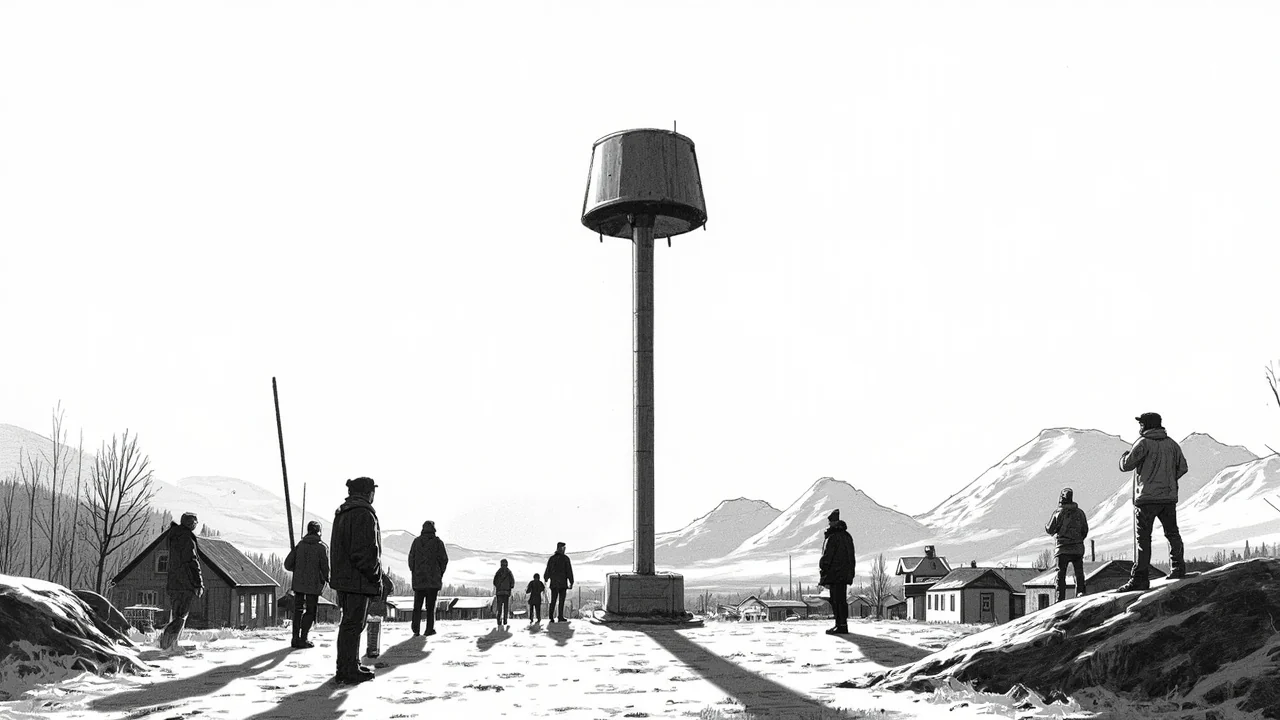
Norway's nationwide emergency alert system will sound its sirens and send mobile warnings at noon on Wednesday, January 14th. The biannual test is a critical check of the country's civil defense preparedness in an era of heightened geopolitical tension. The piercing sound of the sirens and the accompanying push notification will carry the message: "Important message – seek information."
Elisabeth Aarsæther, Director of the Directorate for Civil Protection (DSB), framed the routine exercise in stark terms. "Protecting the civilian population is a core task for the authorities in crisis and war," Aarsæther said in a statement. "Alert tests are a critical part of testing national preparedness to be able to protect the civilian population in war as well." Her language reflects a significant shift in Norway's public security discourse, moving drills from abstract procedure to tangible national defense.
A Routine Test in Unroutine Times
For decades, the siren tests were a semi-annual curiosity for many Norwegians. The sirens, originally installed during the Cold War, would wail at noon on designated Wednesdays. People might pause briefly before continuing with their day. The context in 2025 is fundamentally different. Russia's war in Ukraine and increased military activity in the High North have reshaped Norway's security outlook. The Norwegian Intelligence Service's annual threat assessment consistently highlights state-sponsored hybrid threats, including cyber attacks on critical infrastructure and disinformation campaigns. A functioning, reliable public warning system is now viewed as a first line of defense.
The test on January 14th will involve both the physical sirens, known as 'tyfoner,' and the national mobile broadcast system. Not every smartphone will receive the alert simultaneously due to network load, but the vast majority should. The DSB emphasizes that no public action is required during the test. The purpose is solely to verify the technical functionality of the systems from the central control point to local receivers across the country's challenging geography.
The Technology of Trust and Terror
The sound of a civil defense siren is engineered for psychological impact. It is meant to cut through ambient noise, trigger immediate attention, and instill a controlled sense of urgency. In Norway, the test signal is a steady tone lasting for about one minute. A real alert for a major accident or imminent threat would use a wailing tone. The mobile broadcast system, which bypasses regular SMS channels, is designed to reach everyone with a connected device in a targeted area, crucial for localized incidents like chemical spills, major fires, or extreme weather.
Experts in societal security point to the dual nature of these tests. "They serve a technical purpose, but an equally important social one," says a senior analyst at the Norwegian Institute of International Affairs (NUPI), who spoke on background. "It familiarizes the public with the sound and the process. In a real crisis, panic can stem from the unfamiliar. A known signal, even an alarming one, can provide a cognitive anchor. People recall, 'This is what they test. Now I must seek information.' That reflex is what saves lives." The DSB directs citizens to official sources like their website, radio broadcasts from NRK, and TV news for information following any alert.
From Fjord to Frontier: A Nationwide System
Maintaining this system across Norway is a formidable logistical task. The country's population is scattered across nearly 400,000 square kilometers, from the southern coast near Kristiansand to the Arctic frontier of Svalbard. Sirens must be placed to cover populated areas, accounting for wind patterns and terrain that can muffle sound. In remote fjord communities, the mobile network might be the primary, or only, warning channel. The biannual test provides a vital health check for this entire network, ensuring that a failure in one region can be identified and addressed.
This geographic challenge directly ties the alert system to national security policy. A significant portion of Norway's critical energy infrastructure, including oil and gas platforms in the North Sea and onshore processing plants, is located in remote or coastal areas. The government's recent Long-Term Defence Plan significantly increased funding for the Home Guard and territorial defense. A reliable public warning system is considered a force multiplier for these efforts, enabling the rapid safeguarding of civilians and freeing military and emergency resources for direct response.
Public Perception in the Digital Age
While authorities stress importance, public reception can vary. Social media during past tests often features a mix of humorous posts from startled individuals and genuine questions from newer residents unaware of the drill. Some cybersecurity advocates have also questioned the resilience of the mobile alert system against sophisticated spoofing or jamming attacks, a concern the DSB says it actively monitors. The test itself is a moment of collective, state-initiated interruption—a rare phenomenon in a fragmented digital media landscape.
This interruption is precisely the point. In an age of information overload and misinformation, establishing clear, authoritative channels is a security imperative. The test reinforces a simple protocol: when you hear this sound or receive this message, stop and find official information. It cuts through the noise. The DSB uses the test to promote its own preparedness resources, encouraging households to have a radio with batteries, stored water, and basic supplies for at least three days.
A Siren's Call to Preparedness
Wednesday's noon siren is more than a technical check. It is a brief, audible manifestation of Norway's social contract regarding security. The state invests in and maintains the system; the public's responsibility is to recognize it and respond appropriately. Elisabeth Aarsæther's explicit linkage of the test to war preparedness is not accidental. It is a deliberate, sobering communication strategy for a population that has enjoyed decades of peace but now lives in a less stable geopolitical neighborhood.
The unassuming Wednesday test is a cornerstone of what security professionals call "total defense," where military, civil, economic, and psychological resilience are intertwined. As the sirens fall silent after one minute, the question lingers: in a true crisis, would this system command the attention and trust required? The regular, predictable wail is Norway's bet that the answer is yes. It is a sound meant to signal not just danger, but order—a directive that, even in chaos, there is a prescribed path to safety. In the quiet that follows, the real work of individual and collective preparedness continues.