
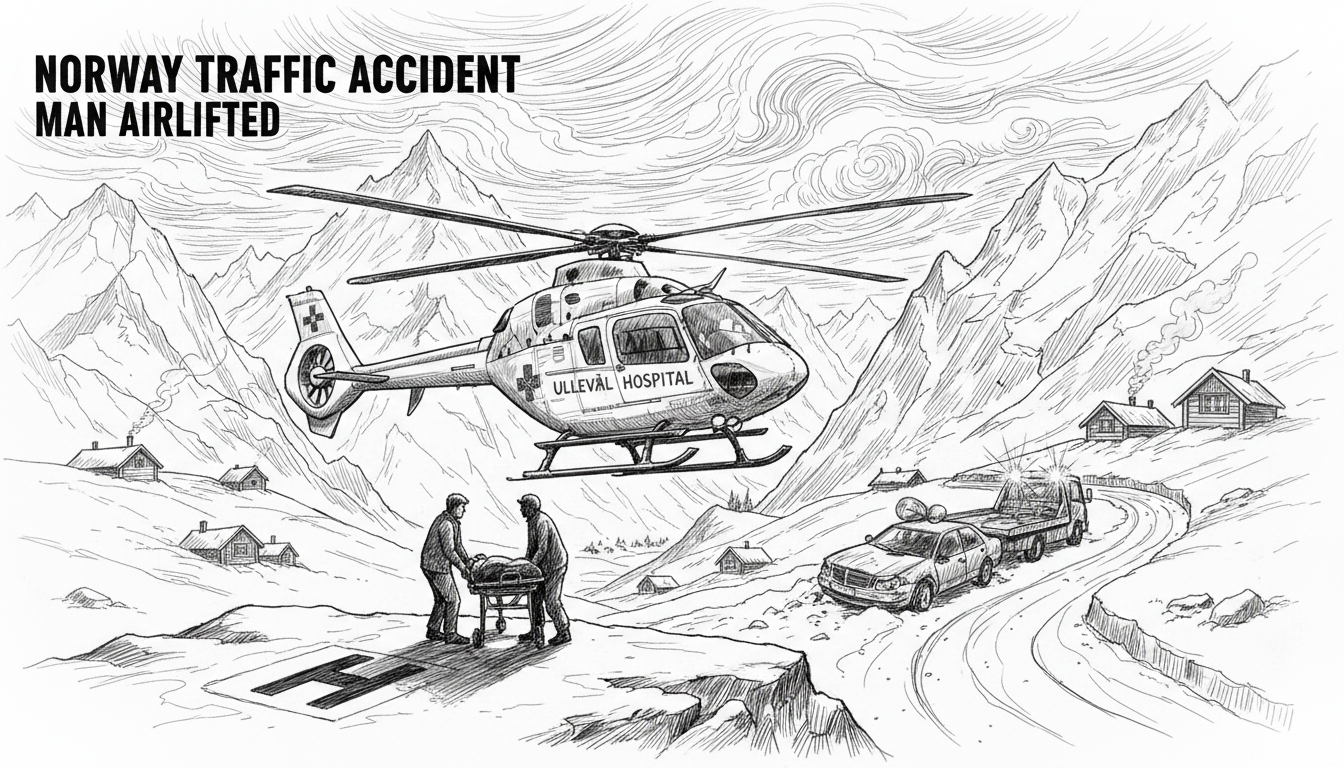
Norway's road safety record faces scrutiny following a serious traffic collision in Porsgrunn. A man was airlifted to Oslo’s Ullevål University Hospital with critical injuries after being struck by a car in the city center on Sunday afternoon. The incident occurred at a location without a designated pedestrian crossing, raising immediate questions about urban infrastructure and driver awareness. Police closed the road for over an hour during their initial investigation, concluding the on-scene work at 16:06 local time.
Initial police statements indicate they do not suspect any of the involved parties were under the influence of drugs or alcohol at the time of the crash. This shifts the focus of the inquiry toward other potential factors, such as vehicle speed, road design, and visibility conditions. The rapid response, culminating in a medical helicopter evacuation, underscores the severity of the injuries sustained in the collision.
Investigation Focus Turns to Road Design
The absence of a marked crosswalk at the accident site has become a central element in the police investigation. Porsgrunn, a city within the county of Vestfold og Telemark, features a mix of historic and modern urban planning. Traffic safety experts often stress that pedestrian safety relies on a combination of clear infrastructure, appropriate speed limits, and driver vigilance. "When a crossing occurs outside a designated area, investigators must piece together a complex puzzle," said a senior traffic safety analyst based in Oslo. "They examine sightlines, lighting, vehicle data, and witness statements to understand the sequence of events."
Police officials have not released the identities of those involved, nor have they specified the exact model of the vehicle. Standard procedure in such serious incidents involves a technical examination of the car and a detailed reconstruction of the collision dynamics. The findings will determine whether any traffic laws were violated and could influence future safety measures in that part of the city center.
Ullevål Hospital's Critical Role in Trauma Care
The decision to airlift the victim directly to Ullevål University Hospital highlights its pivotal role in Norway's emergency medical system. As one of the nation's largest and most advanced trauma centers, Ullevål serves the entire southeastern region, equipped to handle the most severe injuries. Specialized trauma teams are on constant standby, capable of performing complex surgeries immediately upon a patient's arrival. This centralized, high-level care model is a key component in improving survival and recovery outcomes for victims of serious accidents across a wide geographic area.
Medical helicopters, often called “LUFTAMBULANSE,” are deployed based on strict criteria involving injury severity, distance to advanced care, and time sensitivity. The swift medical evacuation from Porsgrunn to Oslo, a distance of approximately 150 kilometers, would have been coordinated by the emergency services operator to bypass intermediate hospitals and deliver the patient directly to the required specialist teams. The man's condition upon arrival and his subsequent treatment have not been disclosed by hospital authorities, citing patient confidentiality.
Norway's Road Safety Paradox
This incident occurs against the backdrop of Norway's globally recognized road safety achievements. The country consistently records one of the world's lowest rates of traffic fatalities per capita, a result of decades of stringent policy. Measures include a zero-tolerance policy on drinking and driving, aggressive promotion of vehicle safety technology like Electronic Stability Control (ESC), and substantial investment in road engineering. Preliminary figures for 2022 show 116 road fatalities in Norway, a number that, while low internationally, represents a deep human tragedy for each affected family and community.
However, this strong national record can mask local vulnerabilities and the persistent danger faced by pedestrians in urban environments. Even within a safe system, individual collisions reveal points of failure. "Every single accident is a reminder that our work is never done," the traffic analyst noted. "High national standards must translate into safe conditions on every street, at every hour. The goal is to create an environment where human error does not lead to catastrophic outcomes."
The Human and Community Impact in Porsgrunn
Beyond the statistics and investigations, such events send shockwaves through local communities. Porsgrunn is a city defined by its industrial history and tight-knit social fabric. A serious accident in the city center on a Sunday afternoon disrupts the sense of everyday safety residents expect. Witnesses to the collision may require support, and the aftermath prompts collective reflection on the shared use of public space.
Local authorities often review traffic patterns and pedestrian infrastructure following serious incidents. This can lead to renewed discussions about traffic calming measures, the placement of additional crosswalks, or changes to speed limits in specific zones. While police determine the legal causes of this specific crash, municipal planners may concurrently assess the area for potential preventative upgrades, balancing the flow of vehicles with the safety of people on foot.
A Broader Look at Pedestrian Safety Priorities
The Porsgrunn accident brings the topic of pedestrian safety back into focus. Experts point to a multi-layered approach for prevention: engineering safer roads, enforcing traffic laws, and fostering a culture of responsibility among all road users. Vehicle technology, such as autonomous emergency braking (AEB) systems that detect pedestrians, is becoming more common and is likely to be a point of interest in this investigation. Norwegian vehicle import standards already encourage such safety features, but their real-world effectiveness in diverse scenarios is part of an ongoing evaluation.
The road to Vision Zero – the goal of having no fatalities or serious injuries on Norway's roads – requires continuous adaptation. Each incident provides hard data and, unfortunately, a case study. The detailed report from the Porsgrunn police, expected in the coming weeks, will contribute to the broader understanding of risk factors outside marked crosswalks. For now, the community's thoughts are with the injured man and his family during a difficult and uncertain time, while officials pursue the facts that could help prevent a similar tragedy in the future.